The Lone Ranger: “Hi-Yo, Silver!” and the TV Western That Started Early

https://www.theretrosite.com/wp-content/uploads/2026/06/lone-ranger.mp4

Before TV westerns took over the 1950s, The Lone Ranger was already riding across the small screen.

The series premiered on ABC on Thursday, September 15, 1949, making it one of the early major television westerns. It ran until 1957, with 221 episodes over five seasons. Clayton Moore played the Lone Ranger for most of the series, with Jay Silverheels as Tonto. John Hart briefly took over the role of the Lone Ranger during part of the run.

The character had already been famous from radio, but television gave kids the mask, the white horse, the silver bullets, and that famous call: “Hi-Yo, Silver!” The setup was simple and memorable. A Texas Ranger survives an ambush, puts on a mask, and rides with Tonto to fight outlaws and help people in trouble.

Looking back, The Lone Ranger had everything a kid could want in a western: a hero with a secret identity, a loyal horse, a trusted partner, clear-cut villains, and a story where good usually won before the half hour was over. It wasn’t complicated, and that was part of the appeal.

For many viewers, Clayton Moore became the Lone Ranger. He carried the role so strongly that even decades later, people still pictured him when they heard the William Tell Overture or the words, “Who was that masked man?”

Did you watch The Lone Ranger when it first aired, or did you catch it later in reruns? And when you heard “Hi-Yo, Silver, away!” did you want a mask and a horse of your own?

Reddy Kilowatt: The Little Electric Man Who Got Expensive

https://www.theretrosite.com/wp-content/uploads/2026/06/Reddy.mp4

Never did I think when they were pushing Reddy Kilowatt that he would end up representing such a large portion of people’s monthly bills.

Reddy Kilowatt was the smiling cartoon mascot for electric companies for much of the 20th century. He was created in 1926 by Ashton B. Collins Sr., a commercial manager for the Alabama Power Company, as a way to give electricity a friendly face. After all, electricity itself was invisible, but Reddy made it look cheerful, modern, safe, and ready to work.

His design was clever: lightning-bolt arms and legs, a light-bulb nose, wall outlets for ears, gloves, shoes, and a big smile. He was often promoted as “Your Electric Servant,” back when electric companies were trying to sell the idea that more electricity meant more comfort, convenience, and progress.

Reddy showed up in ads, school materials, recipe books, buttons, signs, utility trucks, safety campaigns, and even promotional items. By the late 1950s and 1960s, hundreds of utility companies around the world had licensed him. He helped sell everything from electric heat to appliances to the general idea that the modern home should run on electricity.

Looking back, Reddy is a perfect little time capsule. He came from an era when electricity was being sold as the future, and in many ways, it was. But today, when the electric bill shows up, that smiling little lightning man feels a little different.

He was once the friendly face of convenience.

Now he might be the mascot for opening the bill and saying, “How much?”

Safe in PF: The B.F. Goodrich Sneaker Campaign That Made History

In the late 1940s and into the 1950s, American playgrounds and ballfields were filled with kids sporting canvas sneakers that promised something more than style. Ads like the one proclaiming “Safe in PF Canvas Shoes by B.F. Goodrich” pushed a new kind of athletic footwear — PF Flyers — complete with a patented Posture Foundation insole and innovative suction-cup soles.

First introduced in 1937, PF Flyers were designed to give wearers “more speed, greater endurance, and better athletic performance.” By the postwar era, B.F. Goodrich had perfected its marketing, targeting children, teens, and parents with bold claims that sneakers could improve safety and sports performance. The campaign worked. PF Flyers quickly became one of America’s top-selling athletic shoes, rivaling Converse Chuck Taylors and cementing themselves as a cultural icon of mid-century sportswear.

The display pictured here, highlighting “The Tip-Off” sole with its suction-cup grip, is a classic example of B.F. Goodrich’s efforts to link science with play. It dates to around 1948–1955, a period when PF Flyers dominated basketball courts, baseball diamonds, and school gymnasiums across the country.

B.F. Goodrich, of course, no longer makes sneakers. In 1972, the company exited the footwear business to focus solely on tires, selling off the PF Flyers brand. Over the years, PF Flyers changed hands several times, even landing under New Balance in 2001. In 2021, entrepreneur Kassia Davis — founder of KADA — acquired the label, giving the heritage sneaker line new life.

Today, PF Flyers remain available as a standalone brand, with modern reissues of their vintage classics keeping the spirit of those mid-century ads alive. While the exact suction-cup sole model may not always be in production, the legend of “Safe in PF” continues to resonate with sneaker enthusiasts and nostalgia lovers alike.


Your purchase helps fund Retrosite.com to produce more memories for you through the Amazon Affiliate Program.

Takes A Licking, But….

https://www.theretrosite.com/wp-content/uploads/2025/04/Timex-Complete-1.mp4

🕰️ Timex: A Watch That Made History
Founded in 1854 as the Waterbury Clock Company in Connecticut, Timex began by making affordable timepieces for everyday Americans. The brand reinvented itself in the 1940s with a sleek new name—Timex, a blend of “Time” and “Kleenex”—to match its modern, mass-produced watches known for durability and reliability.

But it wasn’t just engineering that made Timex a household name—it was television, and one unforgettable man.

🎙️ John Cameron Swayze, a former NBC news anchor turned enthusiastic pitchman, became the trusted face of Timex in the 1950s. He hosted live commercials that put the watches through outlandish “torture tests”: strapped to outboard motors, frozen in ice, dropped off buildings, even attached to a jackhammer. Time and time again, the watch survived, and Swayze would deliver the now-legendary line:

“It takes a licking and keeps on ticking.”

📺 That catchy slogan, born in a golden era of live TV and hard-sell advertising, helped Timex become one of the best-known and best-selling watch brands in the world. Even today, the phrase still echoes as a symbol of toughness and timeless style.

Know when packages arrive! No subscription fees.

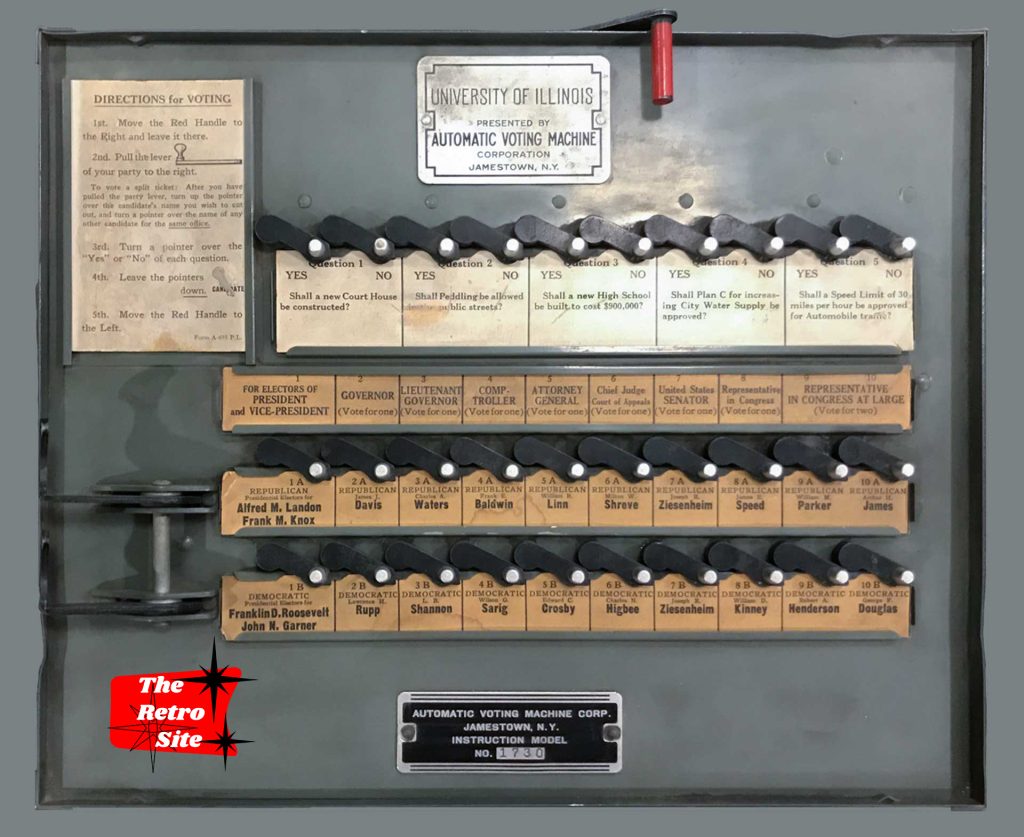
The Voting Machine

Here is the voting machine I remember most. In my school, they were kept by the custodian’s office and we thought we were so clever discovering where they store them. They’d wheel them out the night before election day and set them up in the gymnasium. I also remembered when the bars had to remain closed until the polls closed so the “drink” would have an influence on the person’s vote.

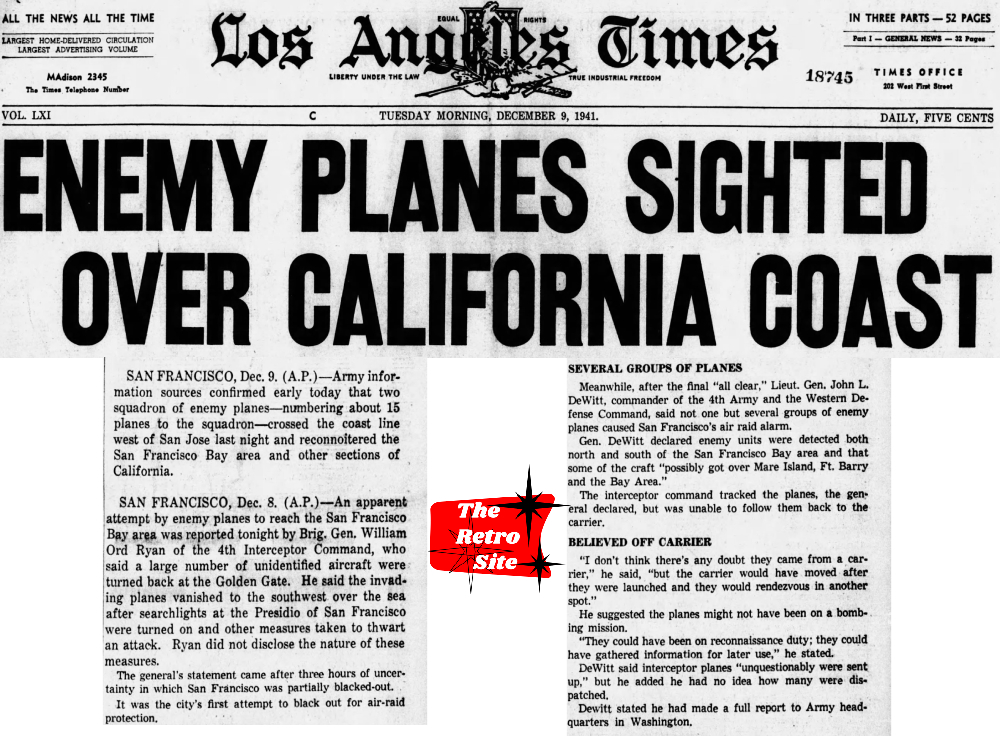
Enemy Plane Over California

Right after the invasion of Pearl Harbor, the newspapers often had headlines like this such as in San Francisco and Los Angelos. Reports were confirmed by the military but there was never any proof of the enemy planes. After the war, Japan confirmed that it never flew over the coast of California. If you look at the history books and newspapers from that time frame you would see that Japan was very busy in the China Sea with major offensives. Wikipedia has an interesting write-up about this called Battle of Los Angeles where they say it might have been weather balloons.

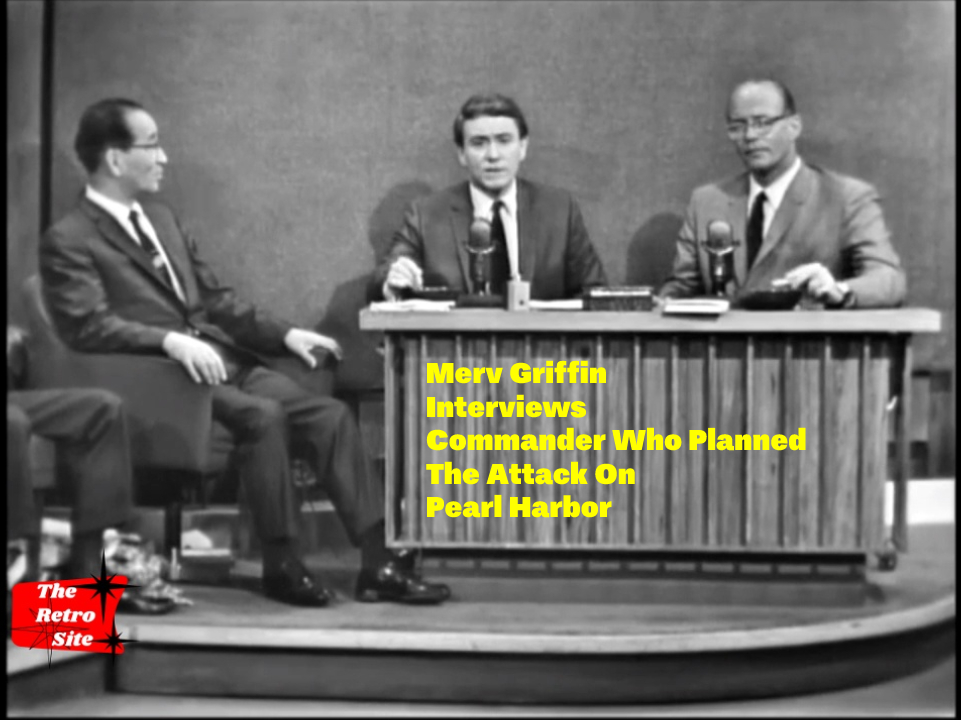
The Commander That Planned The Attack On Pearl Harbor

Some interesting interviews of the 20th century are now streaming on various online services. Johnny Carson, Dick Cavett, and Merv Griffin all interviewed the headliners of our time.

One such episode was on August 26, 1965 The Merv Griffin Show had two interesting figures of World War II.

Mitsuo Fuchida was the commander of the Japanese attack force during the attack on Pearl Harbor on December 7, 1941. He explained to Merv and the audience that there were no plans to occupy Pearl Harbor or the mainland USA, just diminish the naval capacity by destroying the ships docked there.

Frederick Ayer Jr was also a guest on the show. Ayer in 1941 was a young FBI agent who was following the traffic of the rumblings of war with Japan. General George Patton was Ayer’s uncle.

The thing I found most fascinating about the interview was how Ayer and Merv discussed how on the night of the invasion how there was a huge traffic jam in San Francisco going to the beach to watch the Japanese arrival!

Captain Fuchida agreed that dropping nuclear weapons saved lives. After the Japanese surrender during General MacArthur’s occupation, Fuchida met a street minister and turned his life over to Jesus Christ. Fuchida spent the rest of his life as a minister and as an author writing about the war. Fuchida died in 1976.

I did not link this interview because it will change to and from various streaming services. This was season 2 episode 79.

https://www.theretrosite.com/wp-content/uploads/2022/12/Jap-Commander-Interview-edited-TRS.mp4

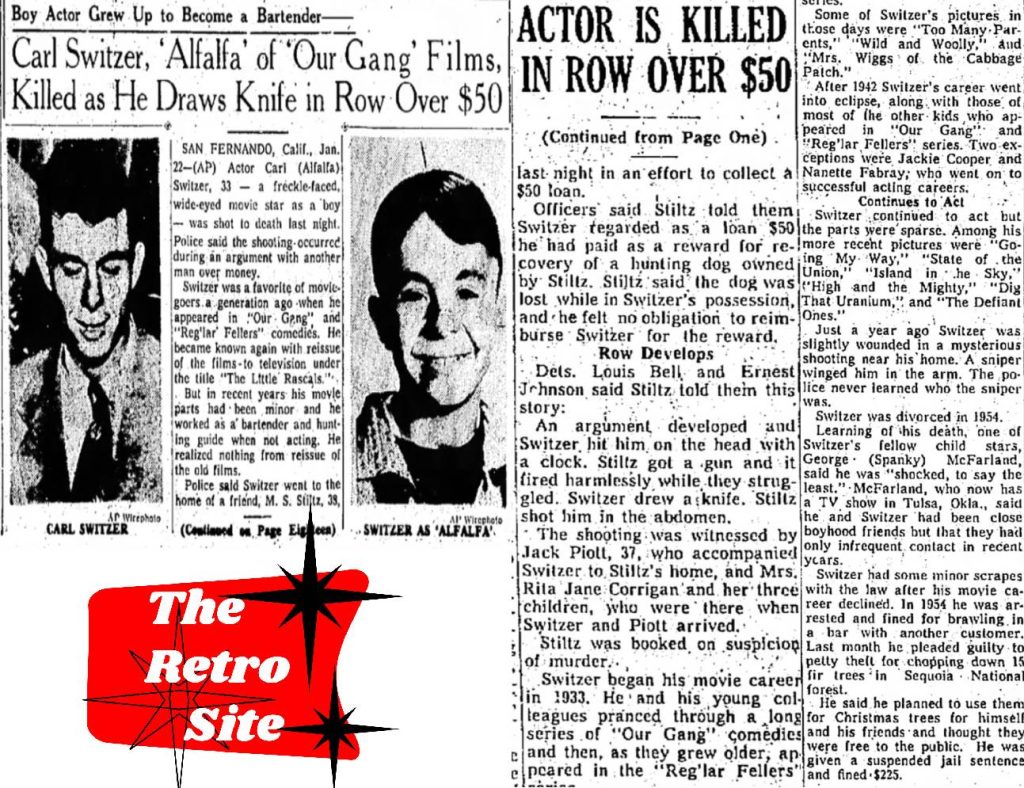
Alfalfa Shot To Death Over $50

Carl Dean Switzer also know as Alfalfa in the series Our Gang was one of the earlier actors who were type casted and unable to find work after being a child star when his run with Our Gang ended in 1940 at the ripe old age of twelve. He did turn to television and had some luck with the Roy Rogers and a few other television shows. Switzer also trained hunting dogs and guided hunting expeditions. It was over $50 for the reward for the return of one of his dogs that caused an argument that lead to his death. The shooting was judged to be self defense as Switzer pounded on the shooters door demanding to be let in. 42 years later n 2001 a witness came forward saying it was more like a murder (see Wikipedia for the full story).

Howard Johnson Restaurant Specials

What was your favorite item or special at Howard Johnson’s? Who didn’t love their clams? My all time favorite was the strawberry ice cream, the only brand that I chose over chocolate ice cream!

Howard Johnson chairman, George Carter was quoted as saying back in 1987 to the Orlando Sentinel “We have the concept, but it desperately needs to be modernized, internally and externally. Howard Johnson was allowed to become tired and stale. We must get rid of that plastic image… Anything can be salvageable if a great deal of time and money and effort is put in it. And Howard Johnson needs all those same things.” So they just let the restaurant chain die. Sadly, only the hotel chain remains.

Exit mobile version