online community focused on sharing and reminiscing about video, audio, and images that stir our memories of the past – old television, theme songs, commercials, print advertisements, the sights and sounds you remember
Another viewer request! “Yer yella!” Only an old mustard commercial could turn lunch into a Wild West confrontation. Gulden’s took that familiar cowboy insult and made it about what was going on your sandwich. Apparently, choosing mustard was serious business in this saloon!
⠀
I love how quickly these commercials could establish a scene and deliver a joke. A couple of cowboy hats, a suspicious look, and a jar of spicy brown mustard were enough. Nobody needed a lengthy explanation—or a celebrity telling us what to eat.
⠀
The history behind the jar goes back much further than this commercial. Charles Gulden learned the mustard business from his uncle and built his company in New York City. At one point, Gulden’s even included a spoon with every jar. By 1883, the company offered 30 varieties of mustard!
⠀
And here’s the funny part: despite making yellow mustard the punchline, Gulden’s introduced its own prepared yellow mustard in 1949. There was room for both colors in the family after all.
⠀
Do you remember this commercial—and are you a spicy brown mustard person or a yellow mustard person?
This old Cathy Rigby Stayfree commercial brings back a completely different Cathy Rigby memory for me.
Back in the 1990s, I worked as a Communications Specialist at Caldor’s corporate headquarters in Norwalk. We were opening a new store in Pennsylvania and Cathy Rigby was there to meet customers and sign autographs. What I remember most about her personally was how soft-spoken and very polite she was. Nothing flashy at all, and that stuck with me.
Most of us remember Cathy first as the young American gymnast who became one of the faces of the sport. She competed in the 1968 and 1972 Olympics, but something I had forgotten is that her most historic medal didn’t come at the Olympics. In 1970, she won silver on the balance beam at the World Championships, becoming the first American gymnast ever to win a World Championships medal.
After retiring from competition, she did something a lot of famous athletes struggle to do — she kept finding ways to turn that recognition into a long career.
There were the Stayfree commercials, which became one of her best-known endorsement campaigns. She also spent 18 years covering gymnastics for ABC Sports, did other television and fitness work, and then built a whole second career on stage.
And that second career became huge. Rigby began playing Peter Pan in the 1970s and returned to the role for decades, eventually earning a Tony nomination in 1991. She and her husband also moved into producing through McCoy Rigby Entertainment.
Then there’s Caldor itself, another memory for a lot of us. The chain was founded in 1951 by Carl and Dorothy Bennett, and even the name came from them — CAL from Carl and DOR from Dorothy. By the time I worked there, it had grown into one of the Northeast’s best-known discount chains.
So for me, this commercial connects three different things: a familiar face from television, a remarkable post-Olympic career, and my own memory of meeting Cathy Rigby years later through Caldor.
Do you remember her most from gymnastics, the Stayfree commercials, Peter Pan, or somewhere else?
This 1975 commercial begins with customers confidently attempting to describe a Big Mac. Most of them quickly stumble over the ingredients until the familiar jingle takes over: “Two all-beef patties, special sauce, lettuce, cheese, pickles, onions on a sesame-seed bun.”
The Big Mac was created by Pennsylvania McDonald’s franchisee Jim Delligatti and first sold in 1967 for 45 cents. McDonald’s initially considered calling it the Aristocrat or Blue Ribbon Burger, but 21-year-old advertising secretary Esther Glickstein Rose suggested the much simpler name “Big Mac.” It became available nationwide in 1968.
The ingredient chant arrived in 1974 through a campaign developed by Keith Reinhard’s creative group at Needham Harper & Steers. The ingredient list had first appeared in college newspaper advertising before Mark Vieha turned the words into music and performed the original jingle.
The campaign became so popular that some McDonald’s restaurants offered a free Big Mac to customers who could recite the complete list correctly within just a few seconds. A longer version of the commercial also appeared during Super Bowl IX in 1975.
The commercial lasted only seconds, but it taught generations exactly what was inside a Big Mac. In 1986, The Economist even began using Big Mac prices around the world to compare the purchasing power of different currencies.
Can you still say the entire Big Mac chant without stumbling?
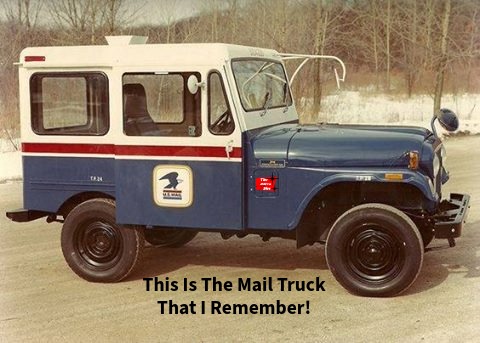
Before the boxy Grumman LLV became the familiar neighborhood mail truck, the Jeep DJ-5 was the little right-hand-drive postal Jeep that seemed to be everywhere. It was simple, tough, and built for curbside delivery, with the driver sitting on the mailbox side and a tray inside for sorting letters.
These Jeeps were a common sight through the 1970s and 1980s, and in some places lasted into the 1990s before finally being replaced. It may not have been fancy, but when you saw one coming down the street, you knew the mail was here.
Thumbelina was introduced by Ideal in 1961 and quickly became one of those baby dolls that stood out because she actually moved. The original was a wind-up doll, and once wound, she would wiggle and squirm like a real baby, making her feel more lifelike than many dolls of the time.
Thumbelina stayed popular through the 1960s and into the 1970s, with different sizes and versions along the way. Then in 1992, the name was brought back with Tyco’s Twinkling Thumbelina, but that version was updated for its time as a battery-operated doll rather than the original wind-up style.
For many, though, the classic 1960s Thumbelina is the one they remember best — the baby doll that moved just enough to make a child believe she was almost real.
As The World Turns. This post will never go viral, but if someone remembers their mom or grandma watching this, it is well worth the effort for the post!
As the World Turns was a long-running CBS daytime soap opera that aired from 1956 to 2010, centered mainly around the lives, loves, scandals, and struggles of families in the fictional town of Oakdale, Illinois. At its heart was the Hughes family, with stories built around romance, marriage, betrayal, illness, family conflict, and the everyday drama that made soap operas part of the afternoon routine for generations. It was slower and more character-driven than some later soaps, which helped make it feel like viewers were checking in on people they knew every day.
Long before memes and over-the-top confidence were everywhere, Johnny Bravo was already doing it—with shades, muscles, and a whole lot of attitude. Here are five quick facts even fans might not know:
Johnny wasn’t just an Elvis parody. Creator Van Partible blended influences from Elvis Presley, James Dean, and even Michael Jackson to create that signature swagger.
The show actually started as a college project. Partible created a short film that caught Cartoon Network’s attention and turned into a full series.
At one point, the network tried to “fix” the show by adding more characters and softening Johnny’s personality—but fans weren’t into it, and it eventually returned to its original style.
The series also featured surprising real-life cameos, including appearances by Shaquille O’Neal and Adam West—something rare for cartoons at the time.
And that iconic voice? It was created on the spot. Voice actor Jeff Bennett improvised Johnny’s sound during auditions, and it stuck.
Whether you grew up watching or just remember the catchphrases, Johnny Bravo proves one thing—confidence never goes out of style.
Reports say Chuck Norris was hospitalized in Hawaii after a medical emergency—but sources confirm the emergency has already apologized and is expected to make a full recovery.
The 86-year-old Walker, Texas Ranger legend just celebrated his birthday saying, “I don’t age. I level up. I’m 86 today.” Doctors are currently running tests to figure out what thought it could slow him down.
In related news, Hawaii remains on high alert—because when Chuck Norris goes down, it’s usually just to do pushups. 💪
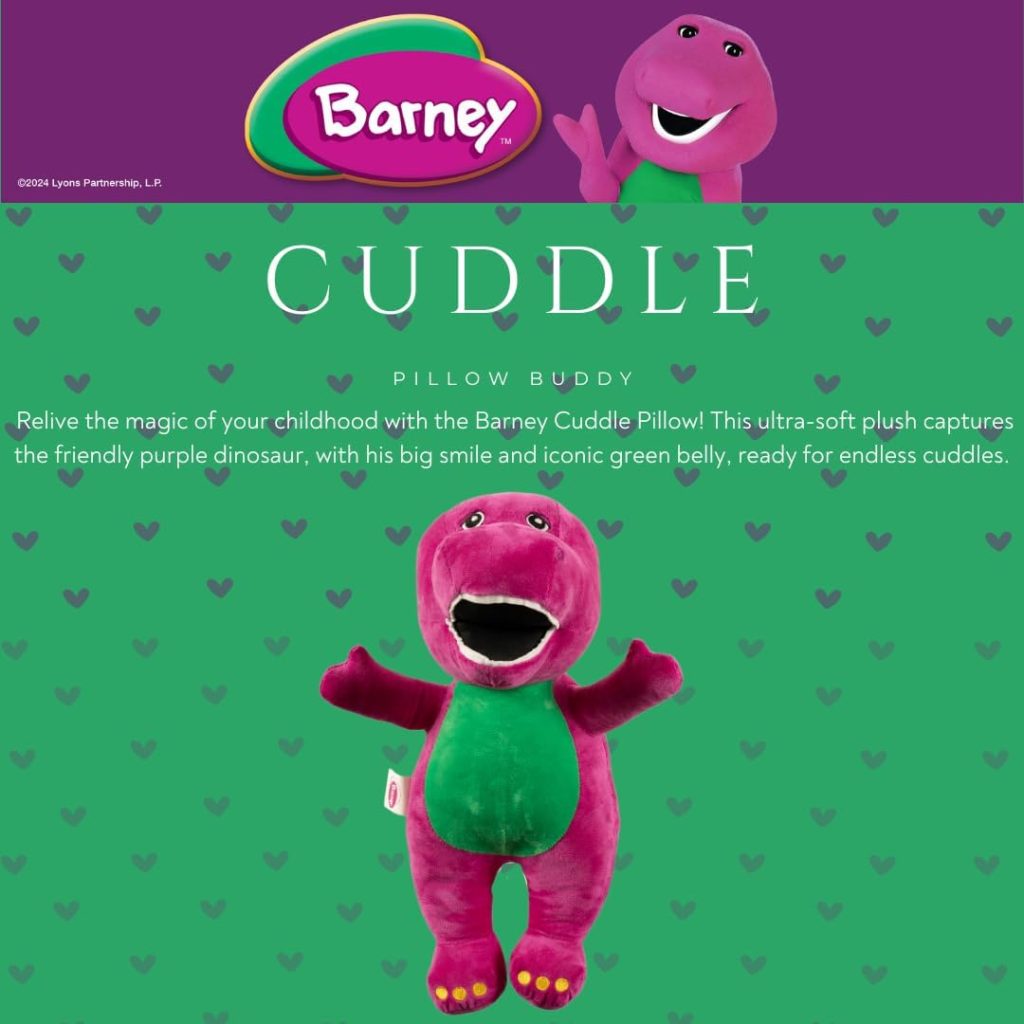
In a festive Fourth of July-themed segment, Barney and his young friends come together to celebrate America’s birthday in a fun and educational way—by building the American flag out of blocks.
The scene begins with excitement as the children collaborate to carefully place red, white, and blue pieces, forming the stars and stripes in a colorful tribute to the United States. As they build, Barney explains the importance of the flag and what it represents, making the moment both meaningful and age-appropriate for preschool viewers.
The video also features familiar patriotic songs like “You’re a Grand Old Flag” and “Yankee Doodle,” encouraging children to sing along and learn about American symbols and traditions. Through teamwork, music, and hands-on creativity, the episode delivers a message of unity and pride in a way that’s accessible and entertaining for young audiences.
The segment blends celebration with learning—showing that even through simple play, kids can connect with big ideas like patriotism and community.
Dave Thomas, the beloved founder of Wendy’s, wasn’t just a fast-food innovator — he was a man shaped by humble beginnings, guided by strong values, and driven by a desire to make life better for others. His story is as memorable as the square burgers that made his restaurant famous.
Born in 1932 in Atlantic City, New Jersey, Dave was adopted as an infant and raised by a working-class couple. He moved frequently throughout his childhood and began working in restaurants at a young age. Though he dropped out of high school at 15 to support himself, he never stopped believing in the importance of education — a belief that led him to earn his GED at age 61.
Before launching Wendy’s, Dave made a name for himself helping turn around struggling Kentucky Fried Chicken franchises. Working directly with Colonel Harland Sanders, he helped revamp operations and marketing. Dave sold his stake in KFC and used the proceeds to open the first Wendy’s restaurant in Columbus, Ohio, in 1969. Named after his daughter Melinda Lou, whose nickname was “Wendy,” the chain was built on a promise of fresh, made-to-order food served with respect and honesty.
One of Wendy’s most distinctive features — its square burger patties — was Dave’s way of saying, “We don’t cut corners.” He wanted customers to see the quality hanging over the edge of the bun. Wendy’s also helped pioneer the drive-thru window, setting a new standard in fast food convenience.
Though initially reluctant to appear in commercials, Dave eventually became the face of Wendy’s. With his warm demeanor and plainspoken charm, he starred in over 800 TV ads and became one of the most recognizable spokespeople in advertising history.
Beyond business, Dave Thomas was a tireless advocate for adoption and children’s welfare. Drawing from his own experience, he founded the Dave Thomas Foundation for Adoption, which continues to help thousands of children in foster care find permanent, loving homes. He also established the Dave Thomas Education Center, encouraging others to pursue their education, no matter their age.
Dave Thomas passed away in 2002, but his legacy lives on — not just in the Wendy’s brand, but in the values of hard work, honesty, and compassion that defined his life. His story is a reminder that you don’t need to cut corners to get ahead — you just need to do what’s right.