
When Cartoons Were Just Ads in Disguise: The Era of Toy-Tie In Animation

In the 1980s and 1990s, Saturday morning cartoons weren’t just entertainment—they were part of a broader marketing strategy designed to sell toys directly to kids. These shows blended colorful characters, high-stakes storylines, and action-packed sequences with one clear goal: move merchandise.

It all started to shift in 1984, when the Federal Communications Commission (FCC) rolled back rules restricting how children’s programming could promote products. This opened the door for shows to be built entirely around toy lines, so long as they weren’t technically “commercials.” The result? A wave of cartoons whose primary purpose was to advertise action figures, vehicles, and playsets—just without calling it that.

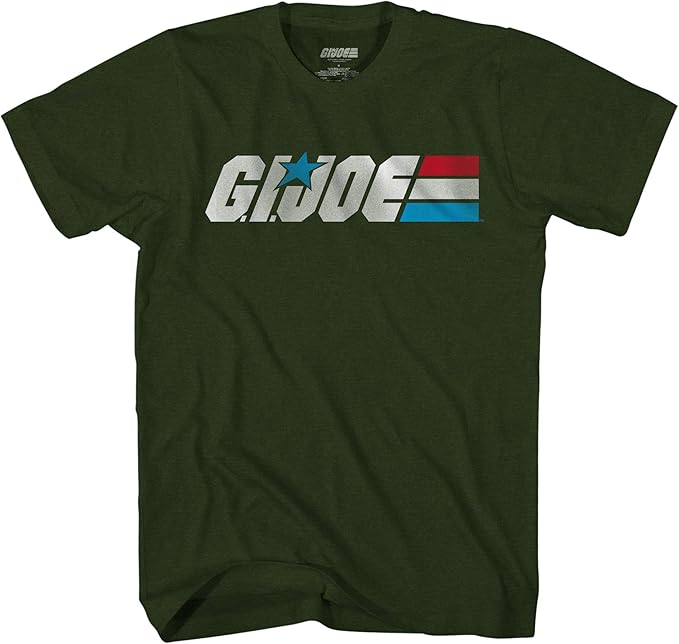
One of the early and most influential examples was G.I. Joe: A Real American Hero, which launched in 1983 as a five-part animated miniseries. Created in collaboration between Hasbro and Marvel, the series introduced new characters and gear in sync with upcoming toy releases. Each episode essentially served as a preview for the next round of toys hitting store shelves.

Teenage Mutant Ninja Turtles followed in 1987, turning a dark independent comic into a brightly-colored, kid-friendly franchise. The show’s ever-expanding cast of mutants, gadgets, and villains made it a merchandising powerhouse. In fact, toy ideas often drove the direction of the show’s plots, with new characters or weapons added simply to match what was about to hit retail.

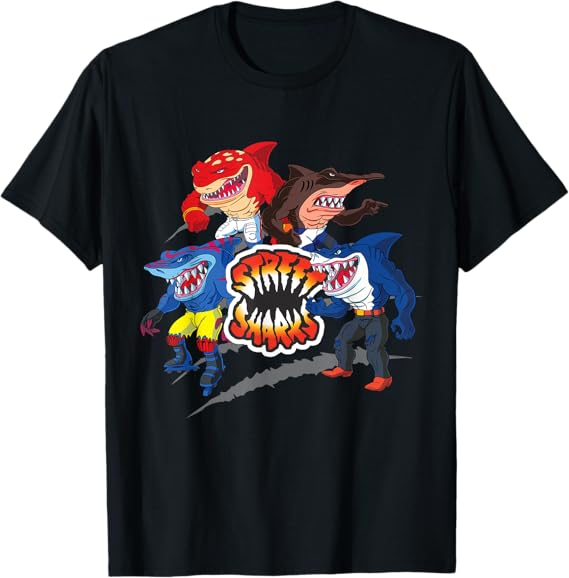
By the 1990s, the formula was fully in motion. Street Sharks, debuting in 1994, was practically reverse-engineered from a toy line. With oversized muscles, bold colors, and gimmick features, the characters were built to stand out in toy aisles. The show followed suit, showcasing their signature powers and vehicles in ways that emphasized how fun they’d be to own.

Behind the scenes, studios were choosing shows based on toy shelf appeal, not storytelling strength. It became common for animation writers to get notes not from producers, but from toy companies. The logic was simple: if a character couldn’t be turned into a toy, why write them into the script?

But as the 2000s neared, this model faced increasing criticism. Advocacy groups and concerned parents began pushing back, arguing that these cartoons blurred the line between content and advertising in ways that exploited children’s impressionability. The FCC responded with stricter rules around advertising to kids, especially regarding shows that aired during weekend mornings or claimed to be “educational.”

Networks, under pressure, began stepping away from overt toy tie-ins. At the same time, the rise of cable TV and digital platforms gave studios more freedom to create content not strictly tied to merchandise. Slowly, the golden age of the toy-based cartoon faded, leaving behind a legacy of plastic nostalgia—and a generation that grew up watching ads they didn’t even realize were ads.

A Look Back at the Wild World of Early 2000s Novelty Lollipops

https://www.theretrosite.com/wp-content/uploads/2025/04/Ring-Pop.mp4

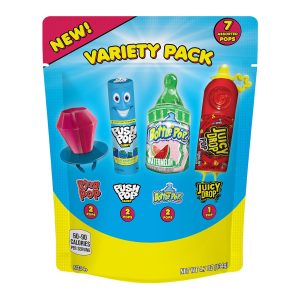
If you were a kid in the late ’90s or early 2000s, odds are your childhood wasn’t just fueled by sugar—it was weaponized by it. This was the golden age of novelty lollipops: candy that doubled as a fashion statement, a toy, or sometimes just a chaotic mess in your backpack. Push Pops, Ring Pops, Baby Bottle Pops, and the short-lived Lollipop Paint Shop weren’t just treats; they were experiences. Messy, colorful, slightly dangerous experiences.

While Lollipop Paint Shop is no longer a thing, you can relive your childhood and try out the other three here! Let us know if you want more videos on retro candies from your childhood

Push Pops hit shelves back in the ‘80s, but they hit their stride in the late ‘90s and early 2000s. The idea was simple: a tube of flavored hard candy you could push up and save for later. In theory. In reality, that cap was either instantly lost or coated in a layer of sticky backpack lint. And trying to bite into one after it dried out felt like gnawing on a sugar geode.

Ring Pops actually debuted in the late ’70s, invented by a man who wanted to help his child kick a thumb-sucking habit. But it was the ’90s reboot that turned them into candy royalty. Suddenly, every playground had kids strutting around like royalty, showing off their syrupy gemstones. Cool—until your fingers turned blue from the dye and the once-smooth candy started forming edges sharp enough to leave a mark.

Then there was Baby Bottle Pop, launched in 1998 and absolutely engineered for kids raised on commercials and catchy jingles. It was half candy, half toy: a baby bottle-shaped lollipop you dipped into sour powder again and again until it was crusted, sticky, and impossible to put down. The bottle shape made it feel interactive, and if you were a kid at the time, the jingle was permanently etched into your brain.

Lollipop Paint Shop followed a similar formula, taking the same powder-dipping concept and turning it into an art project gone sideways. The lollipop came in the shape of a paintbrush, and you’d dunk it into candy “paint” before brushing it across your tongue. It didn’t last long on shelves, but it was absolute chaos while it was here—finger-staining, powder-spilling, high-fructose chaos. It felt more like a craft activity than a snack.

Baby Bottle Pop and Lollipop Paint Shop shared the same core concept: interactive, hands-on candy with powder-dipping mechanics. But where Baby Bottle Pop had structure and branding, Paint Shop leaned hard into the messier, more chaotic energy—and probably stained more T-shirts in the process.

What tied all of these together was their strange obsession with hard, glassy sugar. They were fun, loud, and dangerous in a way candy just isn’t anymore. And let’s be honest—most of us walked away with blue tongues and at least one small cut from the sugar shiv left behind at the end.

Creepy Crawlers Through the Years: The Toy That Never Quit Creeping

https://www.theretrosite.com/wp-content/uploads/2025/04/Creepy-Crawlers-1.1.mp4

If you were a kid in the ’60s, ’70s, or ’90s, you probably remember Creepy Crawlers—the make-your-own-bugs toy that managed to feel like a science experiment and craft project in one. With the smell of melting Plasti-Goop and a little oven that could probably burn your hand off, it was the kind of toy that made you feel like you were getting away with something.

The original Creepy Crawlers debuted in 1964, released by Mattel under the name “Thingmaker.” The concept was simple: pour colored “Goop” into metal molds shaped like bugs, snakes, lizards, and more, then heat them up in a small electric oven until they solidified. Kids loved it. Parents were… hesitant. But even with the risk of third-degree burns, the toy line thrived through the late ’60s and into the early ’70s. Eventually, though, growing safety concerns and stricter regulations led to the line being discontinued.

While the classic Creepy Crawlers is no longer in production, you can finally do safely what every kid who had this did at least once and eat the bugs!

After its run in the ’60s and ’70s, Creepy Crawlers faded out, mostly due to increasing concerns over safety. But by 1992, ToyMax brought it back with a modern twist for a new generation. This updated version swapped the metal molds and high heat for safer plastic molds and a lightbulb-powered “Magic Maker” oven. The Plasti-Goop came in wild neon colors, glow-in-the-dark varieties, and even color-changing formulas. The whole thing felt perfectly at home in the world of early ’90s toys—loud, messy, and built to grab your attention.

The commercials reflect that shift. The original ’70s ad played more like an eerie PSA, complete with a sing-songy jingle and haunting atmosphere that made the toy seem like a forbidden ritual. The ’90s spot, on the other hand, went all in on excitement: wild colors, fast edits, and kids shouting like they were in a monster truck rally. Both ads captured the spirit of their time, and both left an impression in totally different ways.

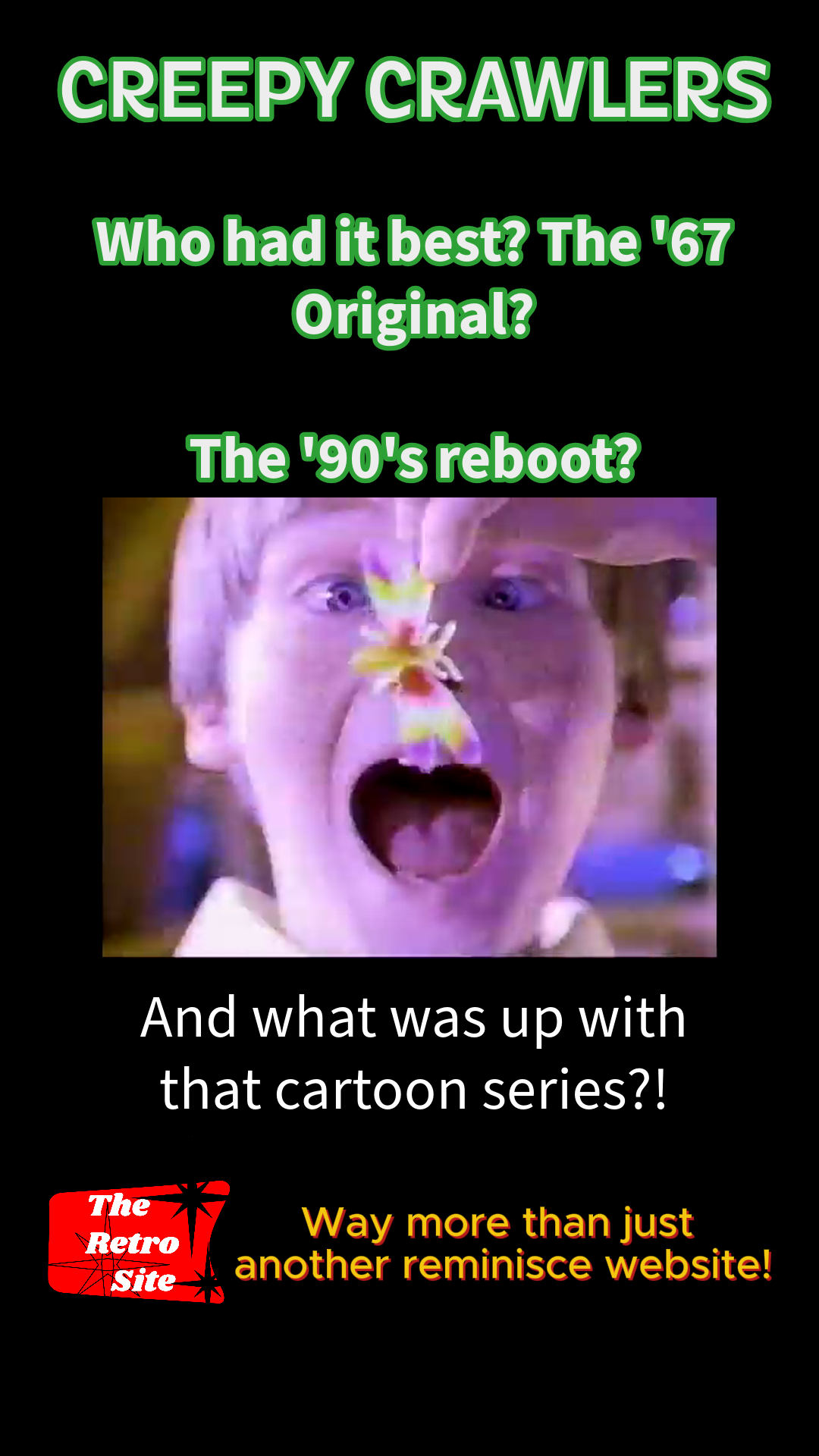
In 1994, riding the wave of toy-to-TV synergy, Creepy Crawlers made the jump to animation. Saban Entertainment produced a cartoon loosely based on the toy, following a boy named Chris who gains the ability to create living bug-creatures using a special machine. The show only lasted one season and was a flash in the pan, adding to the ’90s mania of trying to turn every toy into a series, whether or not it needed one. And it’s one more weird little footnote in the long, surprisingly twisty history of this franchise.

TV Cartoons Of The 60s

Remember those Saturday & Sunday morning cartoons we watched as kids? Some of us watched them in the 60’s, kids and us still watch them today. All of these aired in the 60’s, though some were made even earlier then that. So take a look back and see if you can remember them all. Music is by Classics IV and Spanky & Our Gang.

https://www.theretrosite.com/wp-content/uploads/2020/11/TV-Cartoons-Of-The-60s-Video.mp4

The Swear Box

This sketch is from one of the most popular TV comedy shows in the UK. It ran for almost seventeen years and regularly drew a large audience. The Two Ronnies as it was called starred Ronnie Barker and Ronnie Corbett and in my house was required Saturday night viewing.

https://www.theretrosite.com/wp-content/uploads/2020/11/The-Swear-Box-skit.mp4

Honda Accord ad done in 606 takes

And you thought those people that set up a room full of dominos to knock over were amazing… believe it or not, just unbelievable!! When the ad was pitched to senior executives, they signed off on it immediately without any hesitation, including the costs. There are six, and only six, hand-made Honda Accords in the world. To the horror of Honda engineers, the filmmakers disassembled two of them to make this film. There are no computer graphics or digital tricks in the film. Everything you see really happened in real time, exactly as you see it. The film took 606 takes. On the first 605 takes, something, usually very minor, didn’t work. They would then have to set the whole thing up again.

https://www.theretrosite.com/wp-content/uploads/2020/11/Honda-Accord-606-takes.mp4


The crew spent weeks shooting night and day. The film cost six million dollars and took three months to complete including full engineering of the sequence. In addition, it is two minutes long so every time Honda airs the film on British television, they’re shelling out enough dough to keep any one of us in clover for a lifetime. Everything you see in the film (aside from the walls, floor, ramp and complete Honda Accord) are parts from those two cars. And how about those funky windshield wipers…?? At a cost of $6.2 million for 90-sec commercial, this is the world’s costliest ad and hands down winner in the world of ads.

East German Steroid Swimmers

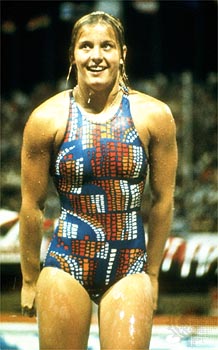
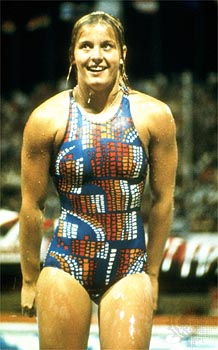
At the 1976 Montreal Olympics, American Shirley Babashoff was supposed to be the female version of Mark Spitz. Babashoff was a threat to win six gold medals. Instead, she won just one gold medal and four silvers. In every race she lost, she lost to an East German. The star of the East German women’s swimming team was Kornelia Ender (pictured here). Babashoff was immediately suspicious of the East Germans because of their muscular builds and deep voices. She claimed the dressing room ‘sounded like a coed room.’ At the time, Babashoff was criticized as a sore loser. The press dubbed her ‘Surly Shirley.’ After East Germany collapsed in 1989 the truth came out: East German athletes were regularly given steroids via injections to increase their athletic capabilities. Babashoff now campaigns to have the East German medal results nullified.

Undated: Kornelia Ender of West Germany smiles after a swimming event. Mandatory Credit: Tony Duffy/Allsport

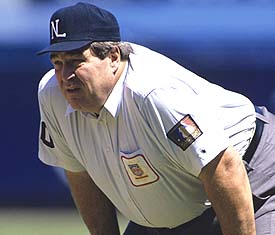
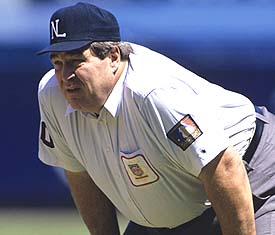
Umpire John McSherry Dies During Game

On April 1, 1996, the Cincinnati Reds opened the Major League Baseball season by hosting the Montreal Expos. Seven pitches into the game, 51-year-old umpire John McSherry staggered away from home plate on unsteady legs and collapsed face-first to the ground. He likely died immediately of a massive heart attack, but he was officially pronounced dead an hour later. Another umpire, Tom Hallion, accompanied McSherry to a Cincinnati hospital. The remaining two umpires, after consulting with the Reds and Expos, decided to postpone the game. The decision did not sit well with outspoken Reds’ owner Marge Schott who was unhappy about having to issue rainchecks to the 50,000 spectators. (She later sent flowers to McSherry’s funeral, but reports claimed they were second-hand flowers she herself had received on Opening Day from a local TV station.) McSherry, who tipped the scales at over 300 pounds, was a stereotypical out-of-shape MLB umpire. Beginning in 1997, MLB insisted on tough new physical fitness standards for its arbiters.

Exit mobile version