


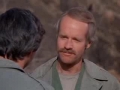
From February 28, 1983–the most watched program in American TV history. Hawkeye and B.J. part ways in the final episode of MASH. (An incredible total of 106 million people watched this episode!)
Author: Alex


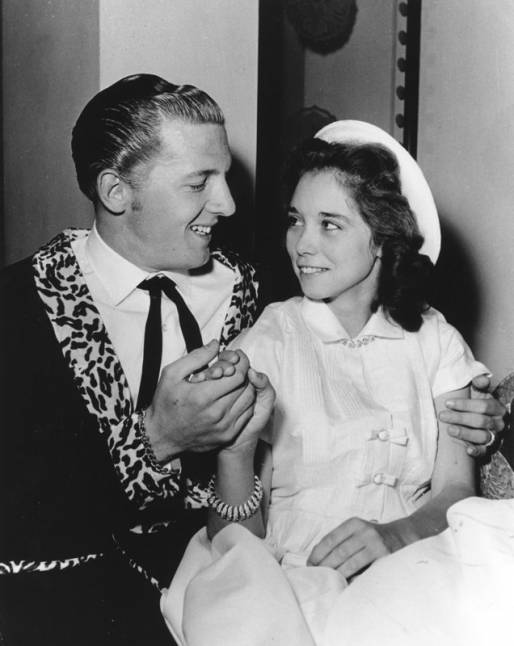
Jerry Lee Lewis Marriage Scandal
Jerry Lee Lewis was one of early rock-and-roll’s pioneers and leading performers. In December 1957, when he was 22 years old, Lewis secretly married for the third time. The bride was Myra Gale Brown–who happened to be just 13 years and five months old. Myra’s father was Lewis’ cousin, J.W. Brown, a member of Lewis’ band. News of the strange marriage did not surface until May 1958 when a British journalist uncovered the story as Lewis was beginning a tour of England. The adverse publicity caused the tour to be cancelled after just three concerts. The backlash followed Lewis to the United States. Many radio stations refused to play Lewis’ songs. Lewis went from $10,000-per-night engagements to small-time bookings where he was lucky to pick up $250. Moralists declared the scandal was proof of rock-and-roll’s inherent evil. The couple stayed married until 1970. Today Brown is a real estate agent.


Festus Parts the Waters
Gunsmoke, the TV show was based on a Radio show by the same name. Gunsmoke ran from 1955 to 1975, with 635 episodes in total. In this scene, Festus explains the story of Moses, and how he parted the waters.

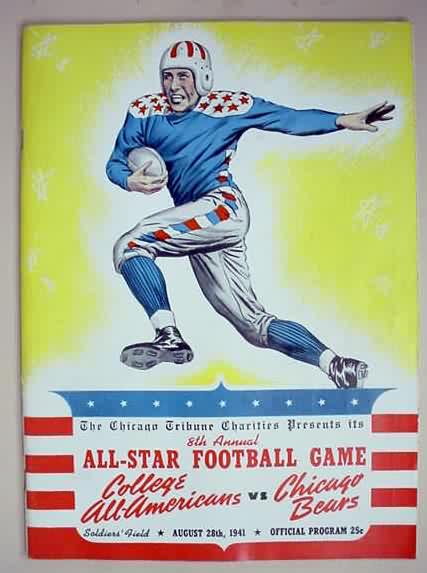
NFL Champs Vs. College All-Stars 1934-1976
The Chicago Charities College All-Star Game was a preseason football tilt played annually (except 1974) from 1934 to 1976 between the National Football League champions and a team of star college seniors from the previous year. (There was one exception: The 1935 game involved the 1934 runner-up Chicago Bears instead of the champion New York Giants.)
The game originally was a benefit for Chicago-area charities. Except for the 1943 and 1944 games which were held at Northwestern University, the game was always played at Soldier Field in Chicago.

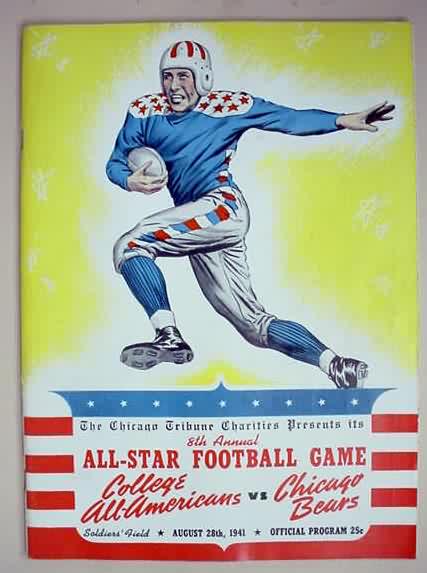
The first game, played before a crowd of 79,432 on August 31, 1934, was a scoreless tie between the all-stars and the Chicago Bears. The following year, a game that included future president Gerald Ford, the Bears won, 5-0. The first all-star win was in 1937 for a squad that featured Sammy Baugh.
In the 1940s the games were competitive affairs that attracted large crowds to Soldier Field. But as the talent level of pro football improved, the all-stars had diminishing success. The last all-star win came in 1963, when a team coached by legendary quarterback Otto Graham beat the Green Bay Packers 20-17.
By the 1970s, crowds for the event were dwindling. In addition, NFL coaches were reluctant to part with their new draftees (who would miss part of training camp) for a meaningless exhibition in which the players might be injured.
A players’ strike forced the cancellation of the 1974 game. The last game took place in a torrential downpour on July 23, 1976. Despite featuring stars such as Chuck Muncie, Mike Pruitt, Lee Roy Selmon and Jackie Slater, the collegians were hopelessly outclassed by the Pittsburgh Steelers. Pittsburgh was leading 24-0 late in the third quarter when play was suspended due to the awful weather conditions. The game was not restarted. Chicago Tribune Charities Inc., the sponsor of the game, elected not to bring it back for 1977. A program from the 1941 game is shown here.
Overall, the NFL teams won 31 of the 42 games. The all-stars won nine. Two games ended in ties.

Karsten Braasch vs Williams Sisters
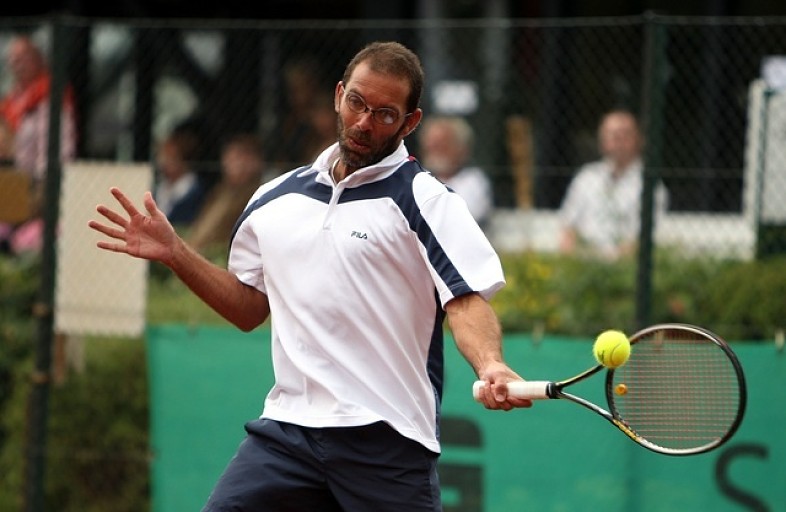
One ‘battle of the sexes’ sports event that has curiously not gotten much attention was the impromptu beatdown that an obscure male German professional tennis player named Karsten Braasch handed to both Serena and Venus Williams during the 1998 Australian Open. At that event, the Williams sisters confidently walked into the Australian ATP office and boldly announced that either one of them could beat a top-200 male player. The 30-year-old Braasch, who had been ranked 38th in the world at his peak in 1994 but had dropped to 203rd by 1998, accepted the sisters’ crazy challenge. On January 26, 1998, with no advance publicity, the three of them went to a distant practice court to play a couple of sets. There were no officials and no TV cameras present–and only a smattering of spectators who happened to wander near the court by chance. Serena, then 16, was blasted 6-1 by Braasch. Venus, a year older than her sister, fared only slightly better, losing 6-2. Braasch gleefully rubbed in his dominance by smoking cigarettes and drinking beers during the changeovers. Serena, who would win the women’s title at the U.S. Open later that year, was humbled by the shellacking. “It was extremely hard,” she told reporters who descended upon the challenge match. “I didn’t know it would be that hard. I hit shots that would have been winners on the WTA Tour, and he got to them easily.” When Braasch was asked if either of the Williams sisters could beat a top male player, he opined, “Against anyone in the top 500, no chance–because I was playing like [number] 600 today.”

The Beatles HEY JUDE
This song, recorded by The Beatles in 1968, and originally titled ‘Hey Jules’, was written by McCartney to comfort John Lennon’s son, Julian, during his parents’ divorce. Julian discovered the song had been written for him almost twenty years later. He remembered being closer to McCartney than to his father: ‘Paul and I used to hang about quite a bit more than Dad and I did. We had a great friendship going and there seems to be far more pictures of me and Paul playing together at that age than there are pictures of me and my dad.’ Although McCartney originally wrote the song for Julian, John thought it had actually been written for him: ‘I always heard it as a song to me. If you think about it… Yoko had just come into the picture. He’s saying. ‘Hey, Jude—Hey, John.’ I know I’m sounding like one of those fans who reads things into it, but you can hear it as a song to me. Subconsciously, he was saying, ‘Go ahead, leave me.’ On a conscious level, he didn’t want me to go ahead at all.’

Jose Canseco baseball blooper
Watch Jose Canseco of the Texas Rangers commit a classic baseball blunder against the Cleveland Indians.
Great Ads from Bud Light and DHL


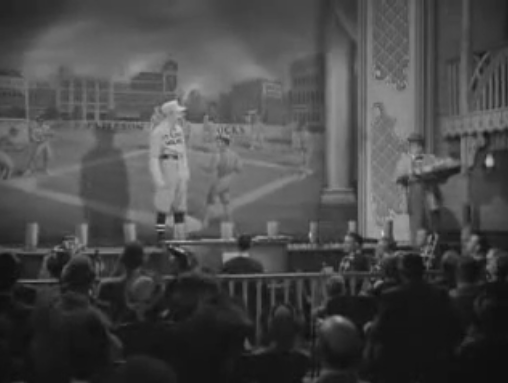
Abbott and Costello Who’s on First
Sit back and enjoy Abbott and Costello as they perform the classic Who’s on First baseball sketch from their 1945 film The Naughty Nineties, first performed as part of their stage act.

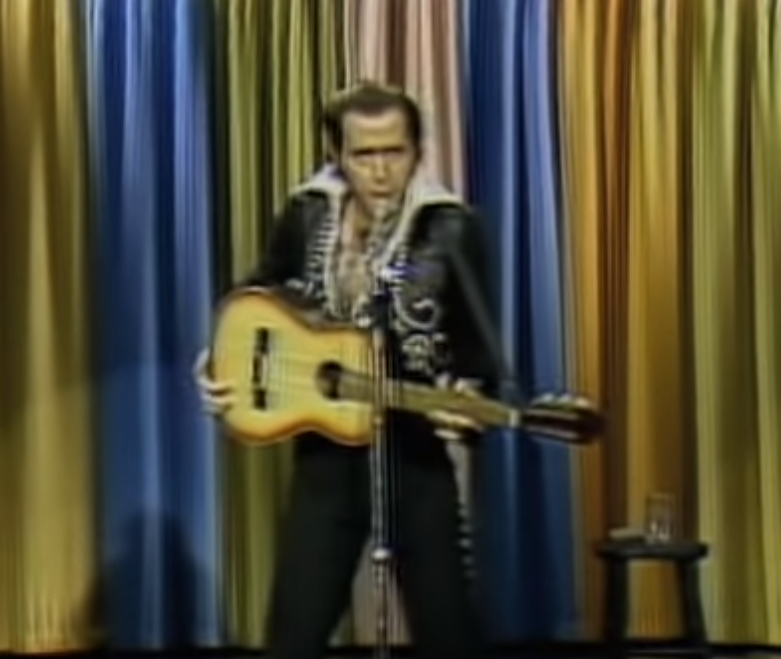
Andy Kaufman Imitates Elvis on Johnny Carson

From his March 3, 1977 appearance on The Tonight Show, Andy Kaufman segues from his “foreign man” shtick to a terrific impersonation of Elvis Presley. Elvis himself said that Kaufman did the best imitation of him.