When Local Businesses Supplied the Classroom

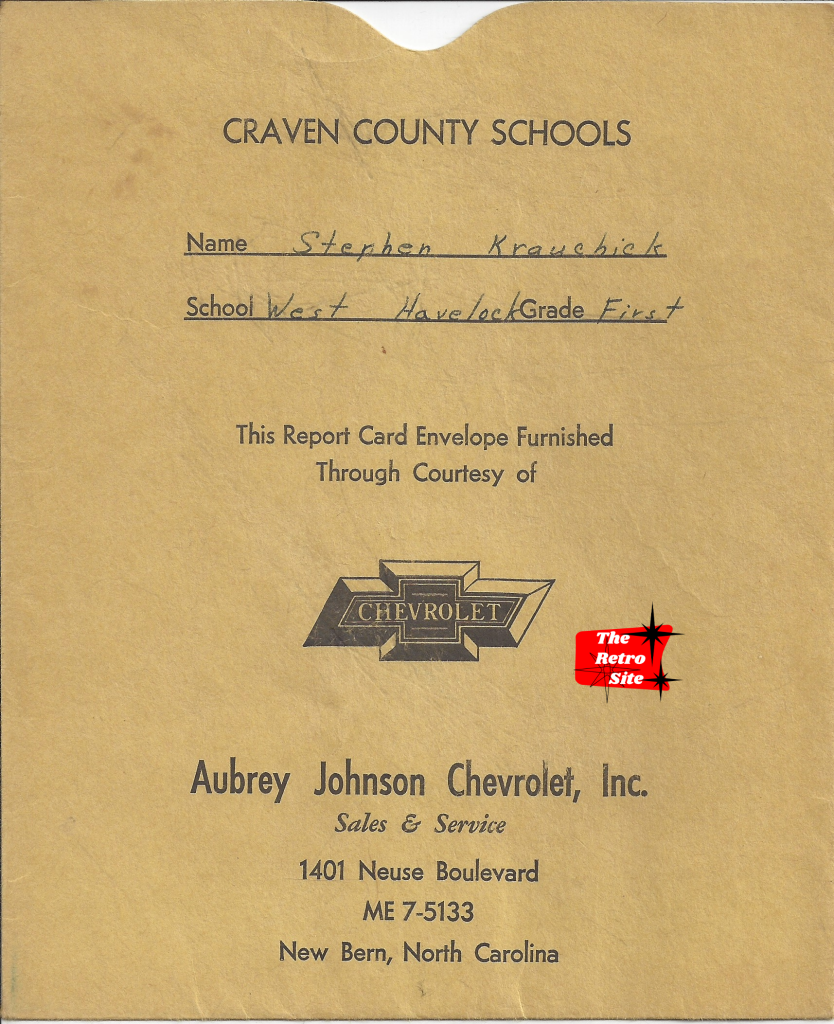
A recently found report card envelope from West Havelock School, belonging to first-grader Stephen Krauchick (RetroSite founder), offers a snapshot of a time when local businesses played a key role in supporting public education. Printed on sturdy kraft paper and bearing the Chevrolet bowtie logo, the envelope was provided courtesy of Aubrey Johnson Chevrolet, Inc. of New Bern, North Carolina.

From the 1940s through the 1970s, schools across America often relied on partnerships with local merchants to furnish essential printed materials. Budgets were limited, and items such as report card envelopes, homework folders, and event programs were commonly paid for by nearby businesses in exchange for advertising space. This arrangement not only saved schools money but also gave companies a unique and lasting presence in local households.

Chevrolet dealerships were among the most visible sponsors, leveraging their strong community ties to keep their names in front of families year-round. Each grading period, parents would see the dealership’s logo when reviewing their child’s progress—an inexpensive, high-impact form of marketing in an era before mass digital communication. These simple supplies were more than paper and ink; they were a reminder of the close-knit relationship between schools and the businesses that helped support them.

Every purchase made through our links directly contributes to keeping DoingItLocal running. Thank you for helping us serve the community!

“I Want My Maypo” Campaign — The Oatmeal Heroes Cry For!

In the late 1960s, the makers of Maypo cereal launched a humorous twist on their famous “I Want My Maypo” slogan by recruiting some of the biggest names in sports. Baseball legend Mickey Mantle, football great Johnny Unitas, and basketball star Oscar Robertson—along with other sports icons—were featured in TV and print ads dramatically declaring, “I want my Maypo!”

https://www.theretrosite.com/wp-content/uploads/2025/08/I-want-my-maypo-final.mp4

The campaign, created by ad man George Lois, played off the tough, competitive images of these athletes by showing them in exaggerated, childlike poses, pleading for the maple-flavored oatmeal. Originally popularized in the 1950s by the animated character Marky Maypo, the slogan was given fresh life by this star-powered approach, turning a children’s breakfast cereal into a pop culture talking point. The ads became memorable for their unexpected humor and helped keep the brand in the public eye for years.

The RetroSite is a participant in the Amazon Services LLC Associates Program, an affiliate advertising program designed to provide a means for sites to earn advertising fees by advertising and linking to Amazon.com. As an Amazon Associate, we earn from qualifying purchases.

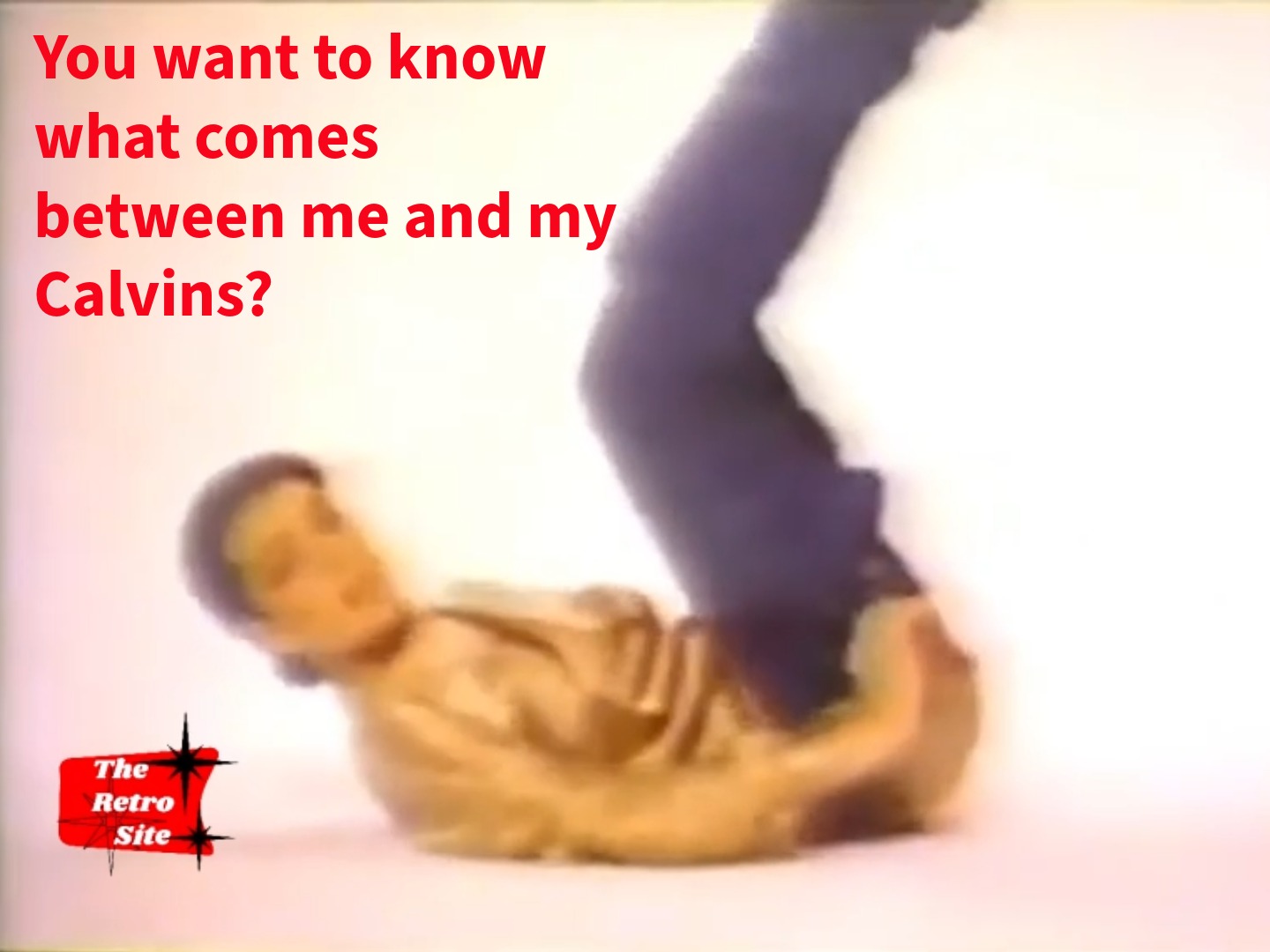
“You want to know what comes between me and my Calvins? Nothing.”

In short, what made the campaign memorable wasn’t just its tagline, but its boldness: daring to feature a teenager in a suggestively styled ad at a time when sexual innuendo in fashion marketing was still emerging. It launched Calvin Klein into new heights of fame—and sparked ongoing debates about exploitation, youth, and the limits of advertising. Let me know if you’d like to see the original commercials or how Brooke Shield’s perspective on this evolved over time!

https://www.theretrosite.com/wp-content/uploads/2025/07/Calvin-Klein.mp4

In the early 1980s, 15-year-old Brooke Shields became the face of a provocative Calvin Klein Jeans campaign photographed by Richard Avedon. It featured perhaps the most famous tagline in fashion advertising:

“You want to know what comes between me and my Calvins? Nothing.” Reddit+14People.com+14Wikipedia+14


🔥 What Made It So Controversial

  • Shields’ youth and the sexual undertones of the campaign sparked intense public backlash. U.S. TV stations in cities like New York, including ABC and CBS, banned the commercial outright. Vintag.es
  • Critics accused the campaign of pushing boundaries into “soft porn” or exploitation of a minor. The Sun+14Reddit+14Vogue+14

💥 The Public Response and Legacy

  • Brooke later reflected that she hadn’t fully understood the double meaning and considered herself naive at the time. Despite her personal discomfort over the backlash—including paparazzi cries of “How could you and your mother?”—the campaign was hugely successful. Vogue
  • Klein himself praised her energy and charisma, calling her the perfect young spokesperson for the launch of his designer jeans line. Vogue+14People.com+14Vintag.es+14
  • The controversy paradoxically boosted brand awareness; the campaign “backfired” in the best way possible, even leading to sales of Calvin Klein underwear overtaking jeans. Vogue

🏁 Long-term Cultural Impact

  • The campaign is remembered as a milestone in shock advertising, forever changing how fashion could use sexuality to grab consumer attention. People.com+3Wikipedia+3Vintag.es+3
  • Brooke’s ads were later viewed alongside other boundary-pushing Calvin Klein campaigns from the 1990s featuring teenage models that similarly raised objections about objectification and youth exploitation. Pinterest

🧭 In Retrospect

  • Brooke Shields, now in her late 50s, embraced the nostalgia. She recently auctioned the actual jeans from the campaign, valued at around $50,000, acknowledging the impact and significance of that early moment in her career. People.com+1People.com+1

Exit mobile version