Did You Ever Order Sea-Monkeys?

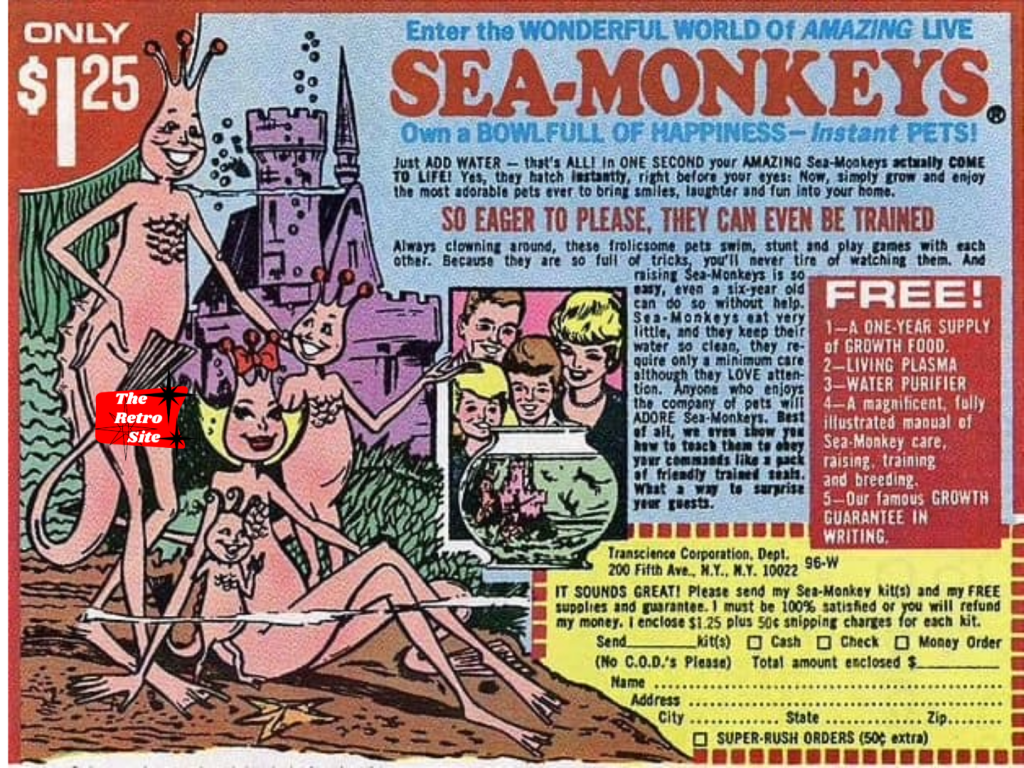
In the golden age of comic books, nestled between superhero adventures and bubble-gum ads, one of the most enduring novelty pitches leapt off the pages: Sea-Monkeys. For just $1.25, kids were promised “a bowlful of happiness” filled with instant, trainable pets who could even clown around and perform tricks.

The brightly colored advertisements showed a smiling family of humanoid creatures with crowns, tails, and castles under the sea. They promised companionship, joy, and the thrill of bringing a magical world to life. Parents mailed away money orders, and weeks later, children eagerly tore into the package, ready to meet their new friends.

What they actually got was far different from the fantasy. Sea-Monkeys are, in reality, a species of brine shrimp (Artemia salina). The marvel wasn’t in their human-like personalities but in their biology: their eggs can survive for years in a dormant state, then hatch within hours once dropped into water. With the provided food packets and conditioners, the tiny shrimp could live for weeks or even months. While they didn’t juggle, smile, or build castles, they did dart around their little aquariums with enough vigor to captivate a generation of children.

The genius behind the Sea-Monkeys phenomenon was Harold von Braunhut, who first marketed them in 1957. By the 1960s and ’70s, the ads had become iconic fixtures of comic book culture, exemplifying the blend of wonder and exaggeration that defined mail-order novelties of the era. For many, Sea-Monkeys became a first pet, a first science experiment, or at the very least, a first lesson in advertising hype.

Today, Sea-Monkeys are still available, sold as novelty kits in toy and science shops. They remain a quirky piece of Americana—equal parts biology, marketing magic, and nostalgia. While they may never have lived up to the fantasy kingdom drawn in comic books, the joy of watching “instant life” unfold in a fishbowl still makes them a cultural curiosity that refuses to fade away.

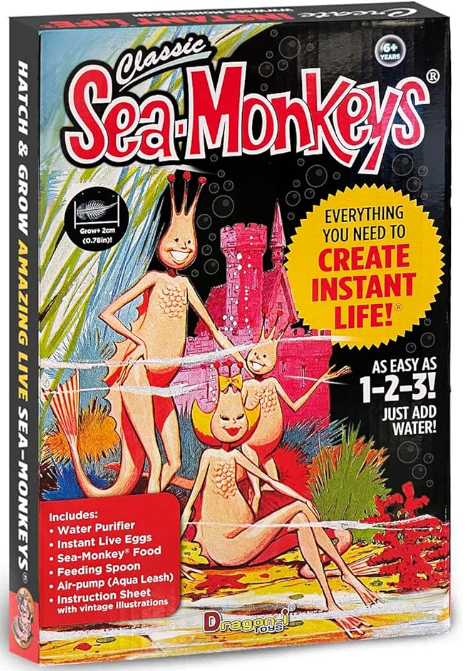
Glad to see we can still purchase this through Amazon! Your purchase helps fund Retrosite.com to produce more memories for you through the Amazon Affiliate Program.

Safe in PF: The B.F. Goodrich Sneaker Campaign That Made History

In the late 1940s and into the 1950s, American playgrounds and ballfields were filled with kids sporting canvas sneakers that promised something more than style. Ads like the one proclaiming “Safe in PF Canvas Shoes by B.F. Goodrich” pushed a new kind of athletic footwear — PF Flyers — complete with a patented Posture Foundation insole and innovative suction-cup soles.

First introduced in 1937, PF Flyers were designed to give wearers “more speed, greater endurance, and better athletic performance.” By the postwar era, B.F. Goodrich had perfected its marketing, targeting children, teens, and parents with bold claims that sneakers could improve safety and sports performance. The campaign worked. PF Flyers quickly became one of America’s top-selling athletic shoes, rivaling Converse Chuck Taylors and cementing themselves as a cultural icon of mid-century sportswear.

The display pictured here, highlighting “The Tip-Off” sole with its suction-cup grip, is a classic example of B.F. Goodrich’s efforts to link science with play. It dates to around 1948–1955, a period when PF Flyers dominated basketball courts, baseball diamonds, and school gymnasiums across the country.

B.F. Goodrich, of course, no longer makes sneakers. In 1972, the company exited the footwear business to focus solely on tires, selling off the PF Flyers brand. Over the years, PF Flyers changed hands several times, even landing under New Balance in 2001. In 2021, entrepreneur Kassia Davis — founder of KADA — acquired the label, giving the heritage sneaker line new life.

Today, PF Flyers remain available as a standalone brand, with modern reissues of their vintage classics keeping the spirit of those mid-century ads alive. While the exact suction-cup sole model may not always be in production, the legend of “Safe in PF” continues to resonate with sneaker enthusiasts and nostalgia lovers alike.


Your purchase helps fund Retrosite.com to produce more memories for you through the Amazon Affiliate Program.

Buckle Up for Safety

https://www.theretrosite.com/wp-content/uploads/2025/09/Buckle-Up-For-Safety.mp4

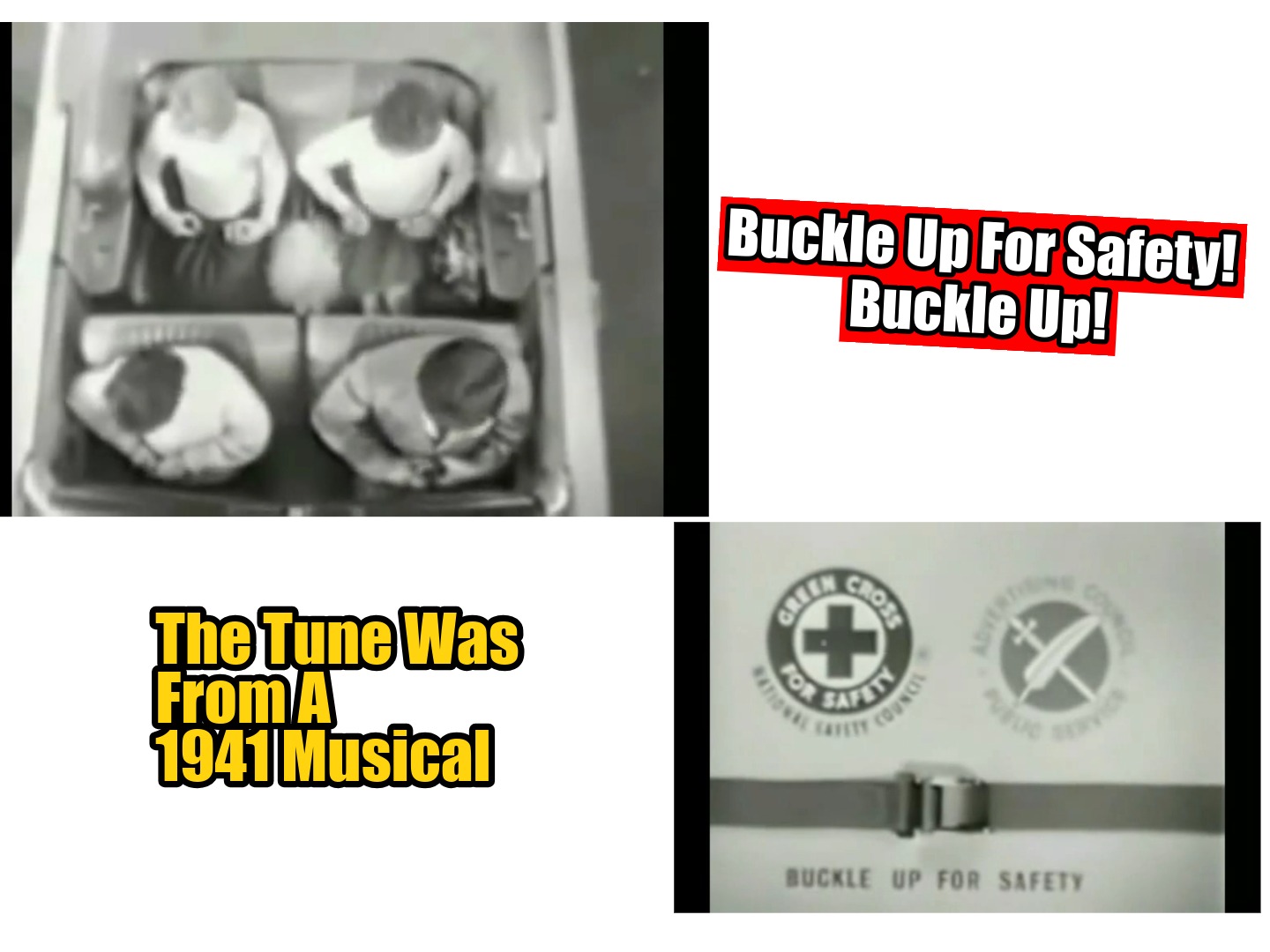
In the mid-1960s, Americans began hearing a catchy jingle on their radios and televisions: “Buckle Up for Safety.” The public service campaign, launched around 1964, urged drivers and passengers to use seat belts—still a novelty in many cars of the era. Back then, seat belts were often optional or aftermarket add-ons, and most drivers weren’t in the habit of using them.

The campaign’s timing was significant. Car safety was only just entering the national conversation, and in 1966, Congress passed the National Traffic and Motor Vehicle Safety Act, giving federal regulators authority to set vehicle safety standards. As automakers phased in seat belts, PSAs like Buckle Up for Safety sought to shift public attitudes toward using them.

Despite the catchy tune and broad distribution, the campaign faced steep challenges. There were no universal laws requiring seat belt use, many vehicles still lacked belts, and cultural resistance to restraints remained strong. Usage rates stayed low through the 1960s, but the message planted seeds for future progress.

Later efforts—including more advanced belt designs, enforcement campaigns like Click It or Ticket, and mandatory seat belt laws—built on this early groundwork. Today, “Buckle Up for Safety” is remembered not only as a nostalgic jingle but also as one of the first nationwide pushes to make seat belts part of everyday life.

Your purchases help us provide more quality content for you!

The Flash Games that Ruled our Internet Childhood

https://www.theretrosite.com/wp-content/uploads/2025/07/Flash-Games.mp4

Picture this: it’s 2006, the family computer is still 1), a thing that exists, and 2), is the cornerstone of your family room and your after school leisure time.

In this video, follow me as we go back nearly 20 years (what?!) to relive the memories behind the online world that shaped us, like Girlsgogames, Cool Math Games (a computer lab staple!), and the beloved characters that all lived on EverythingGirl.com!

Despite the death of Adobe Flash in 2020, which was required to run these games, there are still many ways to play these games and explore once-forgotten memories! From websites such as Numuki, and projects such as the Internet Archive and Ruffle Flash emulator, these games are all but gone. Tune in to learn more about these projects and the games you used to love!


The RetroSite is a participant in the Amazon Services LLC Associates Program, an affiliate advertising program designed to provide a means for sites to earn advertising fees by advertising and linking to Amazon.com. As an Amazon Associate, we earn from qualifying purchases.

Ghosts, Demons… and David Letterman? Lorraine Warren’s Most Unexpected Encounter

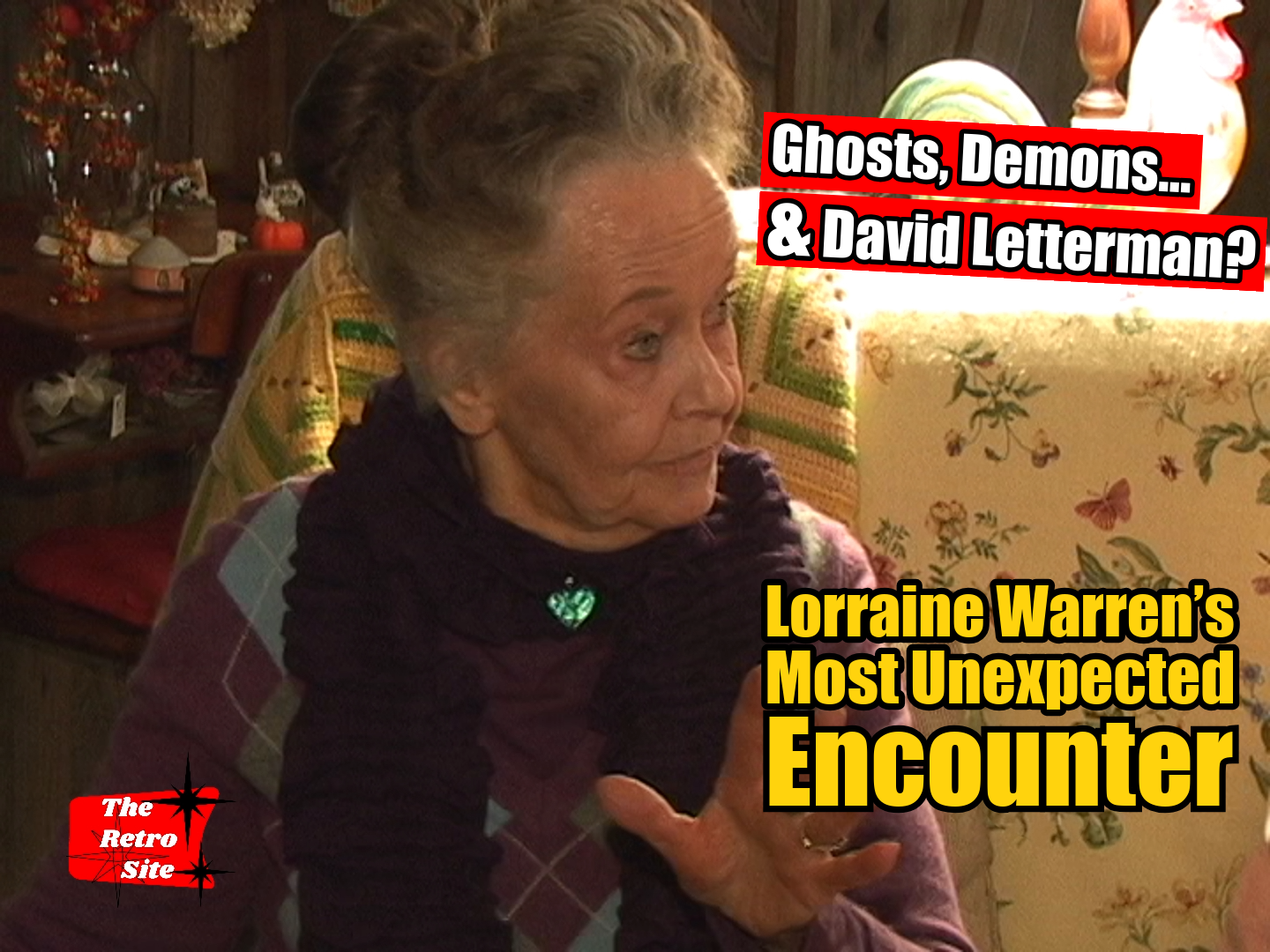
Lorraine Warren, the famed paranormal investigator whose adventures with her husband Ed made headlines worldwide, often told stories of haunted houses, cursed objects, and unexplainable encounters. But one of her more unusual tales didn’t involve ghosts at all—it involved late-night television’s master of mischief, David Letterman.

https://www.theretrosite.com/wp-content/uploads/2025/09/Lorriane-and-David.mp4

As Lorraine recalled, she was backstage for a TV appearance in California. Ed had been whisked away to makeup in another room, leaving Lorraine momentarily on her own. Out of nowhere, Letterman himself appeared—and without so much as a formal introduction, planted a kiss right on her lips!

Before she could even process what had happened, Ed walked back in. With the quick wit of a man who had seen it all, Ed simply remarked, “You know, sir, a guy usually needs permission to do that.” Lorraine laughed as she recounted the story, jokingly calling Letterman “that incurable romantic,” and making sure to add with a chuckle, “God, I’d never want to be one of his women!”

The timeline is a little fuzzy—back when Letterman was still working on NBC out West, before his move to CBS and the famed Ed Sullivan Theater in New York—but Lorraine never forgot the moment. After all, it wasn’t every day that a ghost hunter found herself haunted by a late-night host with puckish charm.

For someone who faced down demons and possessed dolls, perhaps the most surprising thing of all was that a kiss from David Letterman made it into her long, storied career of unusual encounters.

See the full interview with Lorraine Warren here: and here: https://www.theretrosite.com/lorraine-warren-interview-part-1/ and here: https://www.theretrosite.com/lorrain-interview-part-2/

Your purchase helps fund TheRetroSite.com help produce more memories through the Amazon Affiliate Program.

Exit mobile version