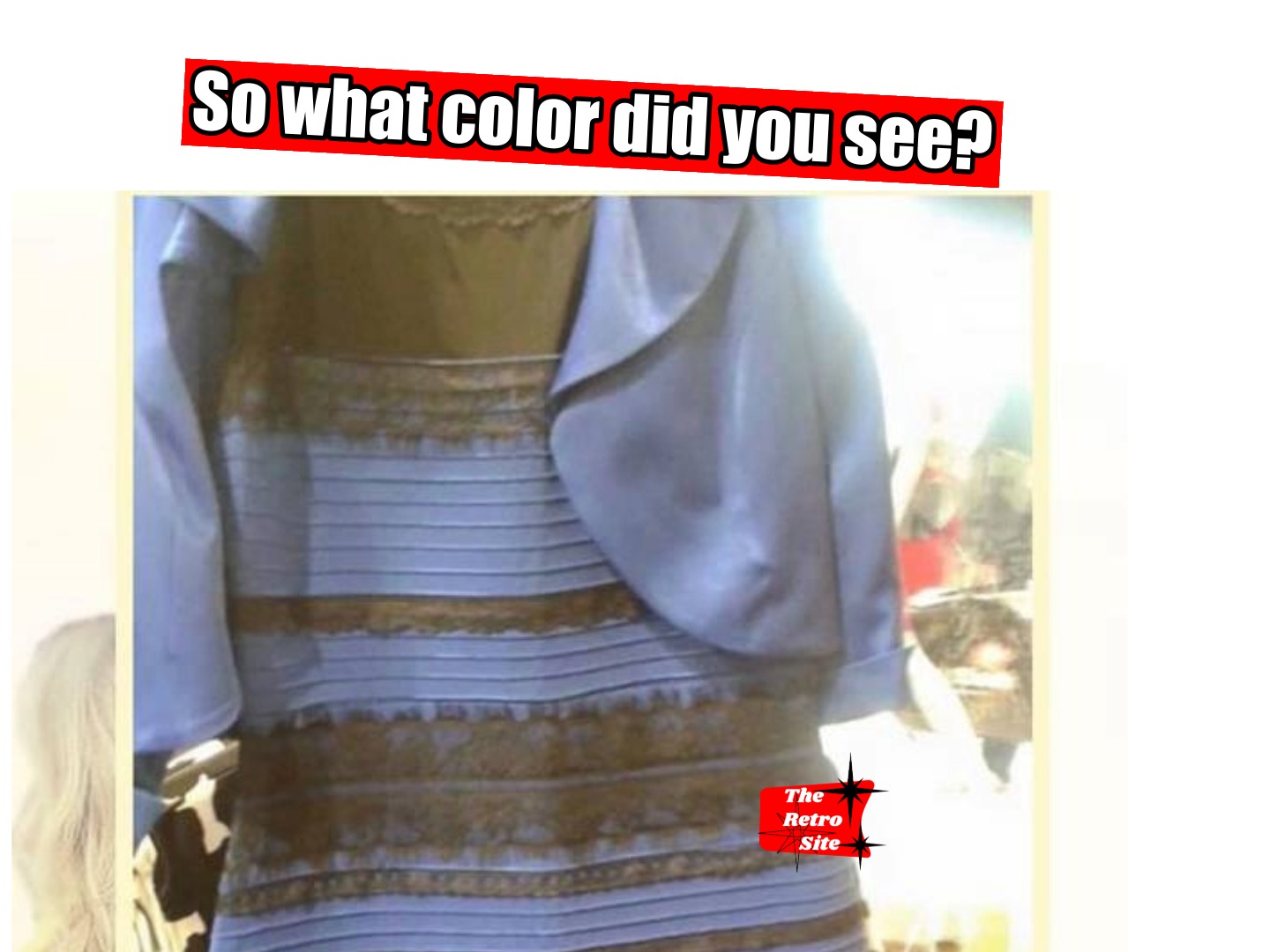
In February 2015, a single photo of a striped dress ignited one of the biggest internet debates of the decade. Posted to social media, the image quickly went viral as people around the world argued over a simple question: Was the dress blue and black, or white and gold?
What made the moment extraordinary wasn’t just the disagreement — it was how strongly people stood by what they saw. Families argued. Friends debated. Newsrooms covered it like breaking news. Within hours, scientists, celebrities, and even major brands were weighing in.
What Color Is It Really?
The actual dress — a lace design sold by the British retailer Roman Originals — is blue and black. The company confirmed it after the viral frenzy erupted. Yet millions of people were absolutely convinced they were seeing white and gold.
So how could so many people look at the exact same image and see completely different colors?
The Science Behind the Illusion
The explanation lies in how our brains interpret light.
Human vision relies on a process called color constancy, which helps us perceive colors consistently under different lighting conditions. Our brains constantly adjust for shadows, brightness, and color temperature without us even realizing it.
In this case, the photo’s lighting was ambiguous. The image appears overexposed, and there’s no clear visual cue telling the brain whether the dress is in shadow or under bright light.
- If your brain assumes the dress is in shadow, it subtracts bluish tones — making the fabric appear white and gold.
- If your brain assumes the dress is in bright light, it subtracts warmer tones — revealing the true blue and black.
Essentially, your brain “corrects” the image differently depending on how it interprets the lighting. And once your brain settles on an interpretation, it’s very difficult to see it another way.
Why It Captivated the World
The dress became more than just a viral image — it was a cultural moment. It highlighted something fascinating: two people can look at the same thing and genuinely see it differently. It sparked conversations about perception, neuroscience, and even how we experience reality itself.
Scientists used it as a real-world demonstration of visual processing. Researchers studied why some people were more likely to see one color combination over the other, looking at factors like age, sleep patterns, and even exposure to natural daylight.
For many, the dress was their first time realizing just how much the brain influences what we believe we’re seeing.
A Reminder About Perception
The viral dress debate became a powerful reminder that perception isn’t always objective. Our brains are constantly interpreting, adjusting, and filling in gaps. What feels undeniably “real” to one person may genuinely look different to someone else.
Years later, people still revisit the image — and the debate still resurfaces. And even though we now know the dress is blue and black, the question remains one of the most fascinating examples of how human vision works.
So… what colors do you see?