
Did Tiny Tim Tiptoe Into Your Living Room?

https://www.theretrosite.com/wp-content/uploads/2026/05/0tiny.mp4

Tiny Tim took “Tiptoe Through the Tulips” and turned it into one of the most unforgettable TV moments of the late 1960s.

With his ukulele, long hair, nervous smile, and high falsetto voice, he came across like someone from another planet. His big break came on Rowan & Martin’s Laugh-In, and before long he was showing up on shows like The Tonight Show with Johnny Carson.

The public didn’t quite know what to do with him. Some people laughed, some were fascinated, and some thought he was just plain strange. But Tiny Tim was completely sincere. He loved old songs and performed them in a way nobody else could.

And whether you loved him or thought he was weird, once you heard “Tiptoe Through the Tulips,” you never forgot it.

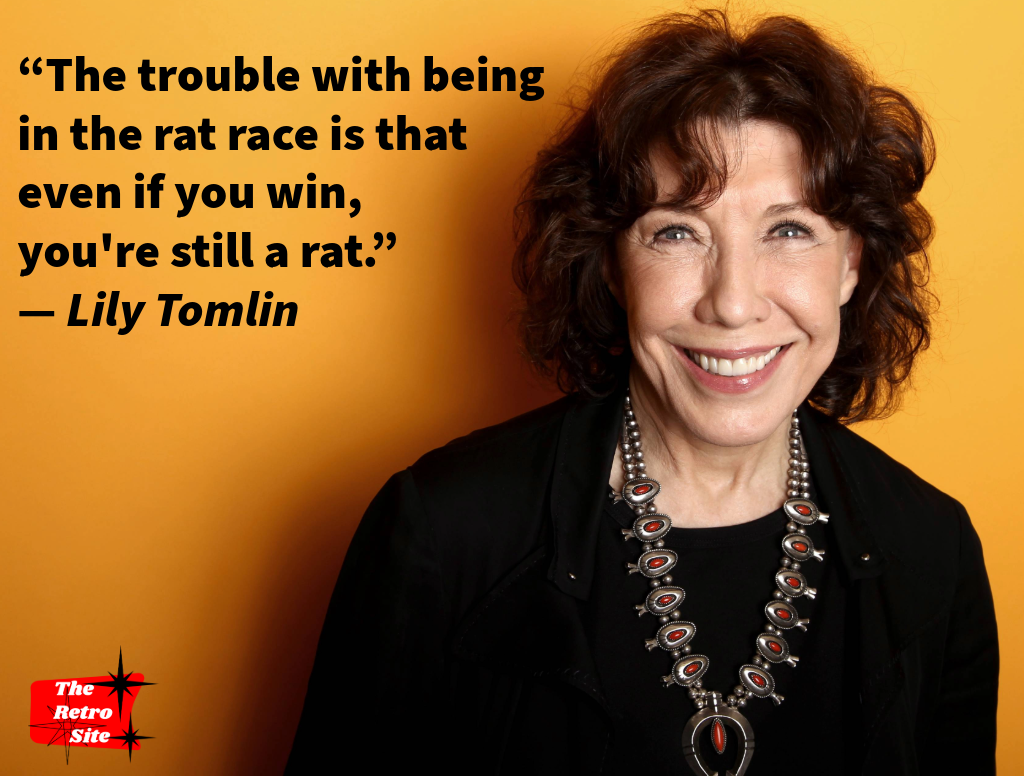
Lily Tomlin, the Rat Race, and the Comedy That Questioned It All

Lily Tomlin rose to national fame on Rowan & Martin’s Laugh-In, where her unforgettable characters—especially Ernestine, the sharp-tongued telephone operator—took aim at corporate culture and the absurdities of everyday life. With biting wit and a playful delivery, Tomlin made audiences laugh while quietly exposing the frustrations of modern systems and institutions.

Her famous quote, “The trouble with being in the rat race is that even if you win, you’re still a rat,” perfectly reflects the cultural mood of that era. During the late 1960s and early 1970s, comedians were increasingly challenging traditional ideas about success, conformity, and the so-called American Dream. Tomlin stood out by blending humor with insight, offering commentary that was both relatable and thought-provoking.

While there is no widely confirmed record of exactly when or where she first delivered the line, it is believed to have circulated during her early stand-up routines and television appearances in that period. Like much of her work, the quote captures a broader truth rather than a single moment—one that continues to resonate in conversations about ambition, identity, and what it really means to “win.”

Exit mobile version