The Moment TV Jumped The Shark

https://www.theretrosite.com/wp-content/uploads/2026/04/0-fonzie.mp4

f you’ve ever heard someone say a show “jumped the shark,” this is the clip they’re talking about.

I mean… here’s Fonzie, cool as ever, leather jacket and all… out on water skis… and yeah… literally jumping over a shark on Happy Days.

And somewhere along the way, that moment turned into a phrase we still use today.

So here’s how that even happened.

Back in the late ’90s, a guy named Jon Hein created a website called Jump the Shark. The whole idea was to track the exact moment when a TV show starts to go downhill. Not slowly… not over time… but that one moment where you sit there and go, “Alright… what are we doing here?”

And the moment he pointed to?

This one. Fonzie. The shark. 1977. Episode “Hollywood: Part 3.”

From there, it just stuck. The phrase took off, and now people use it for everything. Not just TV… anything that goes too far trying to stay relevant. A show, a company, even people. When it stops feeling real and starts feeling forced… that’s when you hear it… “they jumped the shark.”

Now here’s the part a lot of people don’t realize… the people involved didn’t think it was some disaster at the time.

Henry Winkler has talked about it in interviews and basically said… look, the show had already done physical comedy, and to him, it was just another fun stunt. He’s even pointed out that ratings didn’t suddenly crash after that episode, so in his mind, it didn’t ruin anything.

Writer Fred Fox Jr. said something similar. They were trying to make those Hollywood episodes bigger… more exciting… something different. At the time, it wasn’t, “we’re out of ideas”… it was, “let’s top what we’ve already done.”

And even creator Garry Marshall defended it. He always said people forget just how big Fonzie was back then. The idea was to give him a larger-than-life moment. Something memorable.

Well… mission accomplished.

Because here we are, decades later, still talking about it.

And that’s the funny part. The phrase “jump the shark” is usually meant as a knock… like something went downhill. But this scene? It’s one of the most remembered moments in TV history.

So yeah… maybe it did jump the shark.

But it also made sure none of us would ever forget it.

🚂 Why the Choo Choo Charlie Jingle Still Lives Rent-Free in Your Head

https://www.theretrosite.com/wp-content/uploads/2026/04/000good-n-plnty.mp4

How many of you can still hear it without even trying?

“Choo Choo Charlie was an engineer…”

And just like that, you’re off. The whole song starts playing in your head like it never left.

The jingle for Good & Plenty is one of those rare pieces of advertising that didn’t just sell a product—it burned itself into generations of memories. And there’s actually a reason it worked so well.

First, it’s built like a nursery rhyme. The rhythm is simple, repetitive, and easy to follow, just like the songs you learn as a kid. That kind of structure makes it incredibly easy for your brain to store and recall, even decades later.

Then there’s the melody. It moves in a steady, almost train-like cadence—chugging along just like Charlie’s engine. That wasn’t an accident. The beat mimics motion, so your brain connects the sound with the visual of a train, reinforcing it every time you hear it.

Repetition played a huge role too. The commercials didn’t just play the jingle once—they leaned into it. Same tune, same structure, over and over again. Instead of getting annoying, it became familiar, and familiarity is exactly what makes something stick.

And maybe the biggest reason? It tells a story. In just a few lines, you get a character, a setting, and a payoff. Choo Choo Charlie isn’t just singing—he’s winning. His candy-powered train beats the competition, and that little narrative gives your brain something to latch onto beyond just the music.

Put it all together—simple rhythm, memorable melody, repetition, and a tiny story—and you’ve got the perfect formula for something that sticks with you for life.

That’s why, even today, people who haven’t seen those commercials in 40 or 50 years can still sing it like they just heard it yesterday.

Proof! Ward Hit The Beaver!

https://www.theretrosite.com/wp-content/uploads/2026/03/Proof-Ward-Hit-The-Beaver.mp4

There’s a well-known scene from Leave It to Beaver where Ward Cleaver (Hugh Beaumont) is clearly frustrated with Beaver and starts to say something along the lines of disciplining him—what people later joke about as “hitting the Beaver.”

But what makes the moment memorable isn’t actual violence—it’s the awkward interruption and phrasing.

As Ward begins to sternly address Beaver, the situation shifts when others are present (or nearby), and the tone changes. Instead of following through with a harsh statement, Ward softens and redirects, choosing words more carefully. The writing leans into that classic 1950s TV dynamic: discipline is implied, but handled verbally and with restraint.

Over time, fans have latched onto these moments because of how they sound out of context. Lines like “Ward, don’t be too hard on the Beaver” became unintentionally funny decades later, especially when pulled away from the show’s wholesome tone.

The Reality

  • Ward never actually hits Beaver on the show
  • Discipline is almost always talk-based and lesson-driven
  • The humor comes from phrasing + timing, not action

Why it stuck in pop culture

The combination of innocent writing and changing language meanings turned these scenes into internet-era jokes. What was once a straightforward family moment now gets remembered for its accidental double meanings.

If you want, I can track down the exact episode that line gets closest to what you’re remembering—there are a couple of similar scenes fans mix together.

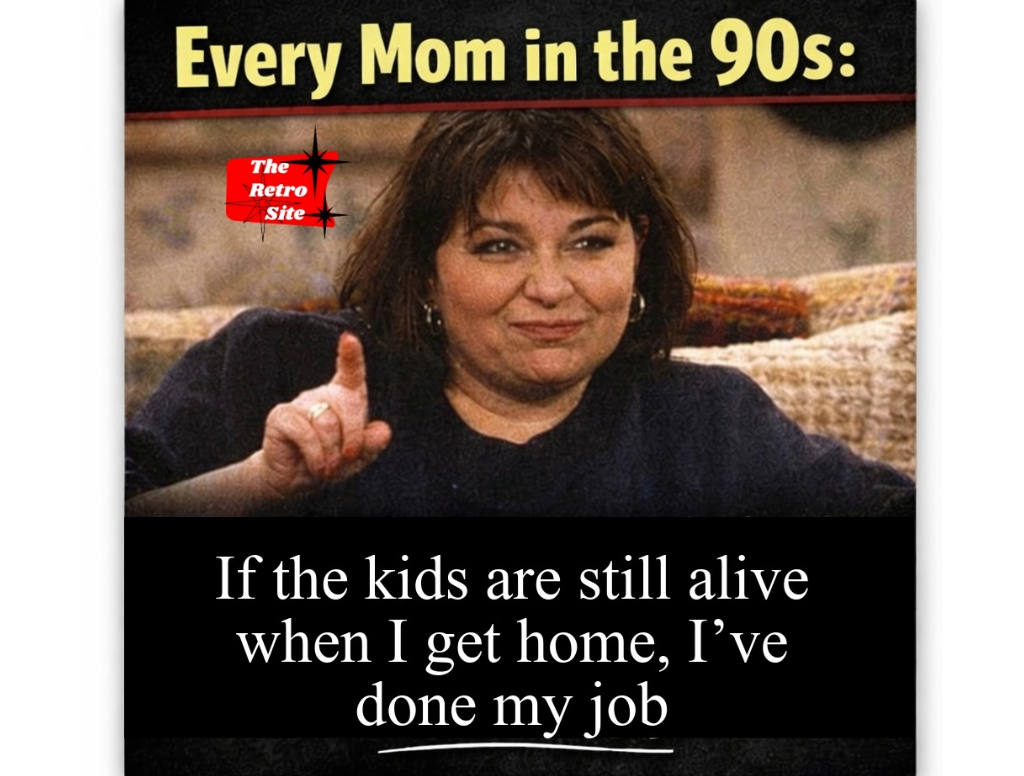
If the kids are still alive when I get home, I’ve done my job

Did your mom have a favorite saying? Share them in the comments!

The line often shared online — “If the kids are still alive when I get home, I’ve done my job” — is widely associated with Roseanne Barr and her iconic working-class mom persona. While it perfectly captures the tone of her humor, there is no confirmed record of this exact quote appearing in a specific episode of Roseanne or a documented stand-up routine.

Still, the reason the quote sticks is simple: it sounds exactly like her. In the 1980s, Barr’s stand-up comedy pushed back against the unrealistic “perfect mother” image that dominated television. Instead of spotless homes and flawless parenting, she delivered something different — sarcasm, exhaustion, and honesty. Her comedy gave voice to parents who were simply trying to get through the day, not win awards for perfection.

That same mindset carried into Roseanne, where the Conner family became one of television’s most relatable households. The show didn’t shy away from financial stress, messy homes, or parenting struggles. It reflected real life, and audiences responded because they saw themselves in it.

So while the quote itself may not be officially documented, its meaning is authentic to the era and to Barr’s impact. It represents a shift in how parenting was portrayed — less about perfection, and more about survival, humor, and keeping things together one day at a time.

#Roseanne #RetroTV #90sSitcom #ParentingHumor #RealLifeMom #ThrowbackTV #WorkingClass #TVHistory #Nostalgia #TheRetroSite

Exit mobile version