
🚂 Why the Choo Choo Charlie Jingle Still Lives Rent-Free in Your Head

https://www.theretrosite.com/wp-content/uploads/2026/04/000good-n-plnty.mp4

How many of you can still hear it without even trying?

“Choo Choo Charlie was an engineer…”

And just like that, you’re off. The whole song starts playing in your head like it never left.

The jingle for Good & Plenty is one of those rare pieces of advertising that didn’t just sell a product—it burned itself into generations of memories. And there’s actually a reason it worked so well.

First, it’s built like a nursery rhyme. The rhythm is simple, repetitive, and easy to follow, just like the songs you learn as a kid. That kind of structure makes it incredibly easy for your brain to store and recall, even decades later.

Then there’s the melody. It moves in a steady, almost train-like cadence—chugging along just like Charlie’s engine. That wasn’t an accident. The beat mimics motion, so your brain connects the sound with the visual of a train, reinforcing it every time you hear it.

Repetition played a huge role too. The commercials didn’t just play the jingle once—they leaned into it. Same tune, same structure, over and over again. Instead of getting annoying, it became familiar, and familiarity is exactly what makes something stick.

And maybe the biggest reason? It tells a story. In just a few lines, you get a character, a setting, and a payoff. Choo Choo Charlie isn’t just singing—he’s winning. His candy-powered train beats the competition, and that little narrative gives your brain something to latch onto beyond just the music.

Put it all together—simple rhythm, memorable melody, repetition, and a tiny story—and you’ve got the perfect formula for something that sticks with you for life.

That’s why, even today, people who haven’t seen those commercials in 40 or 50 years can still sing it like they just heard it yesterday.

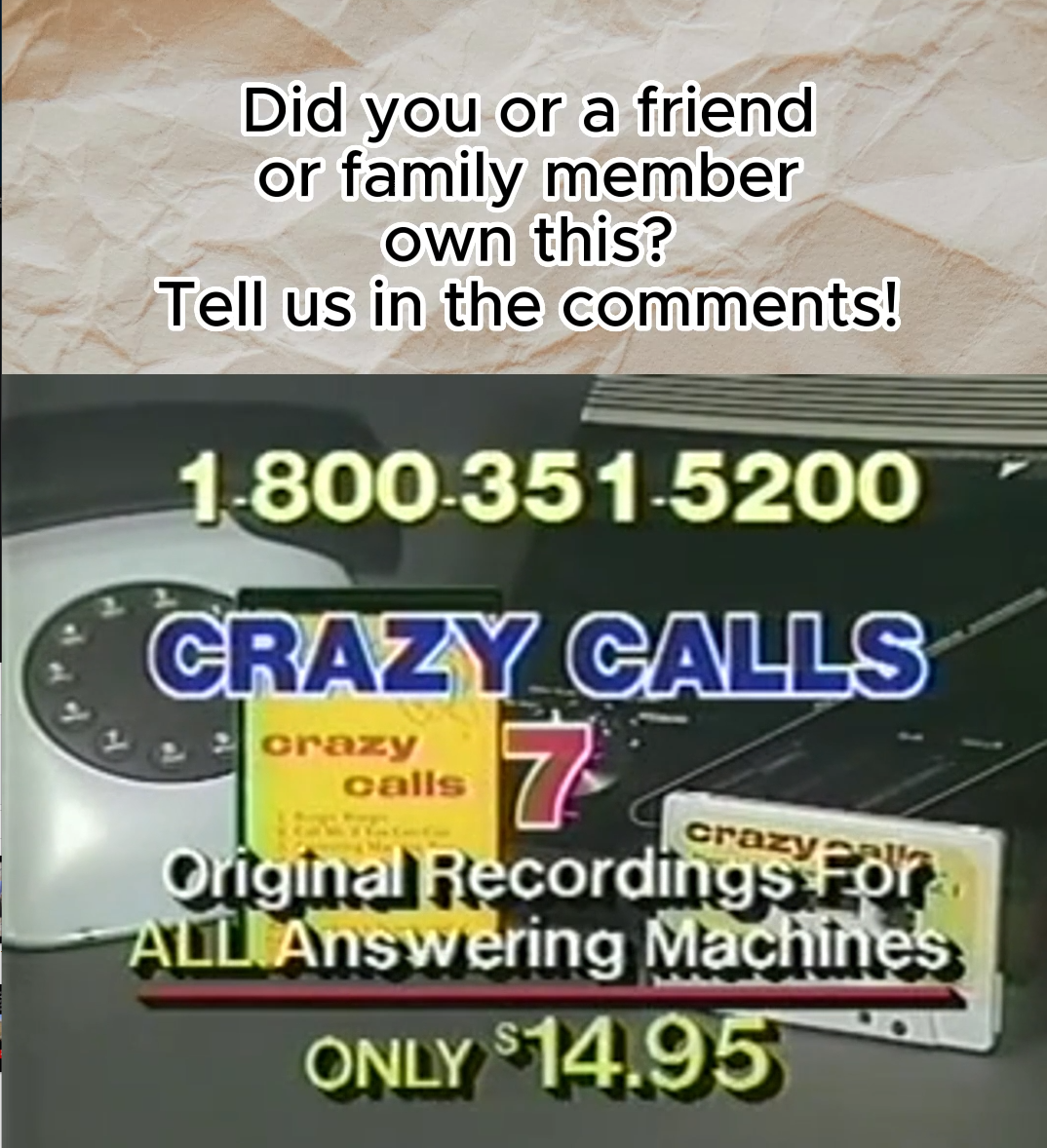
Crazy Calls Answering Machine Tape…Did You Have One?

As answering machines became increasingly integrated into everyday life, some individuals sought to go beyond the standard outgoing message of “Hi, I’m not home, but leave a message and I’ll call you back.” These nonconformist answering machine users desired outgoing messages that better reflected their personalities. For those aiming for a detached coolness, a deadpan “You know what to do” was often sufficient. Those with a mischievous sense of humor commonly employed the timeless trick of answering with a simple “Hello?” followed by a deliberate pause, tricking incoming callers into thinking they were speaking to a live person before the “I’m not here” message resumed. Zing! Many others took it a step further by creating their own humorous skits or songs, much like George Costanza from Seinfeld.

But what about those who wanted to elevate their outgoing message game without putting in the creative effort themselves? In the mid-1980s, a range of pre-recorded cassettes featuring mildly funny bits, including songs in various music styles, became readily available to fill this market gap.

Among the selection, one cassette tape stood out from the rest: Crazy Calls. If you were an avid TV viewer in the mid to late ’80s, you probably recall the commercials for Crazy Calls—a 7-track cassette tape that sold for $14.95, plus $3 for postage and handling. To make a purchase, you could either call an 800 number with a credit card or, with a bit more patience, send a check or money order to a P.O. box in New York City.

The commercials seemed to air incessantly, resulting in snippets of the songs and gags on the tape etching themselves permanently into the memories of numerous TV enthusiasts of that era. Consequently, Crazy Calls has become a frequent reference in ’80s nostalgia within popular culture. It has been mentioned on shows like The Simpsons and Family Guy, and even the 1980s-themed sitcom The Goldbergs dedicated an entire episode titled “Crazy Calls” in 2016, paying homage to the cassette.

The creators of Crazy Calls, Mitch and Ira Yuspeh, are still active in the music industry. They offer recording services and more through their recording studio and production company based in New York City. They also maintain a website dedicated to Crazy Calls, proudly noting that the cassette sold over a million copies through its television campaign.

https://www.theretrosite.com/wp-content/uploads/2023/05/Crazy-mad.mp4
Exit mobile version