
Columbia House: 11 Albums For A Dollar

https://www.theretrosite.com/wp-content/uploads/2026/06/Columbia-House.mp4

Columbia House was how I started my record collection. 11 albums for just one dollar! What a bargain, until you forgot to send in the postcard saying you didn’t want the automatic shipment and wound up with an Engelbert Humperdinck album the next month. Not that there’s anything wrong with him, just not exactly a 17-year-old’s style.

That was the Columbia House magic and the Columbia House trap. The club pulled you in with a ridiculous opening deal, then made its money when you bought more albums at regular club prices, or when you forgot to decline the monthly selection.

Columbia House started as the Columbia Record Club in 1955 and became huge through mail-order records, tapes, and later CDs. The music club side shut down in 2009, after BMG bought and folded it into its own operation. The company kept going for a while as a DVD/Blu-ray club, but its parent filed for Chapter 11 bankruptcy in 2015, after years of declining revenue and a music world that had moved to downloads and streaming.

Looking back, Columbia House was part bargain, part lesson in fine print, and part rite of passage. For a lot of us, it was the first time the mailman delivered music we actually wanted — and sometimes music we absolutely did not.

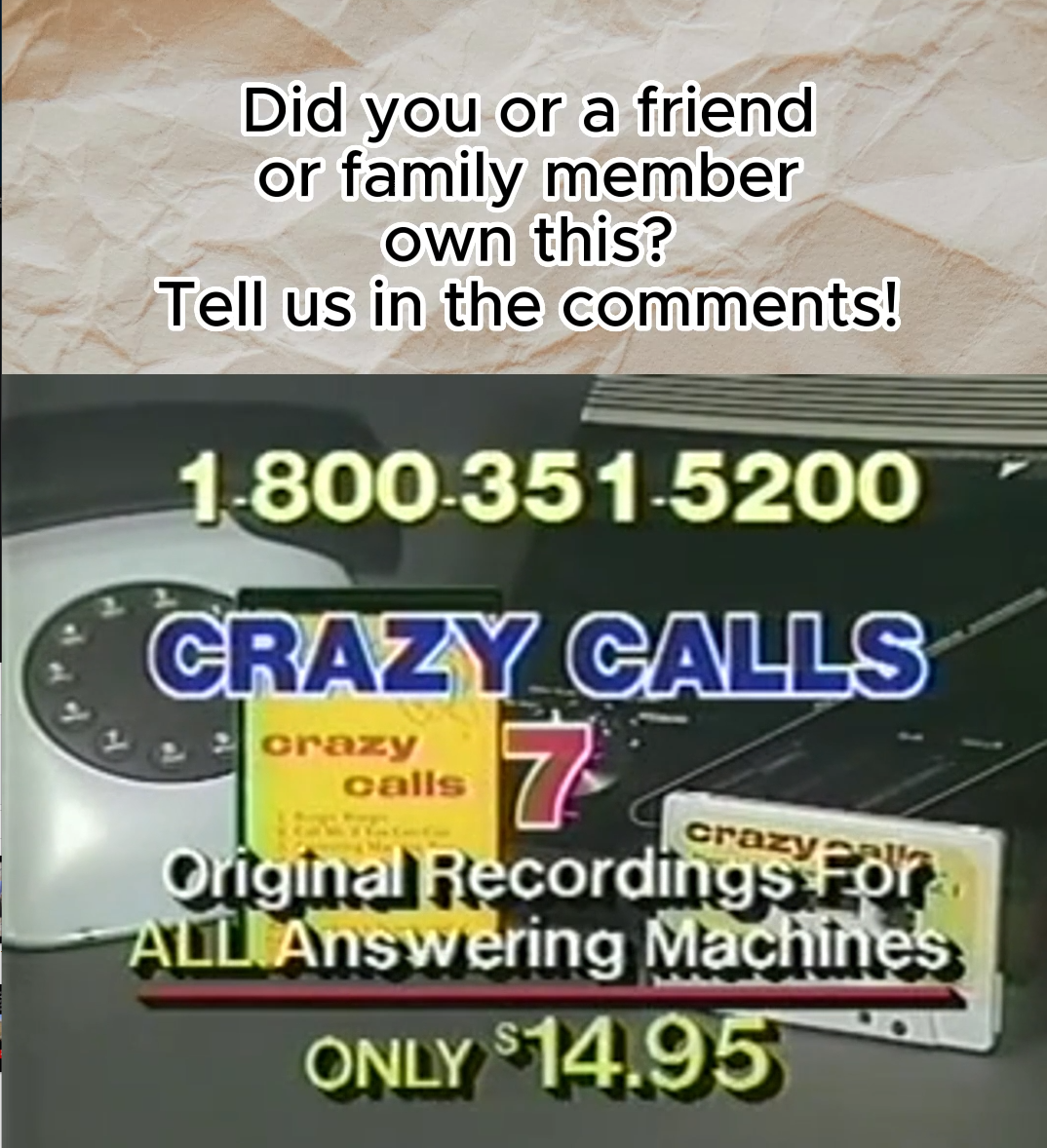
Crazy Calls Answering Machine Tape…Did You Have One?

As answering machines became increasingly integrated into everyday life, some individuals sought to go beyond the standard outgoing message of “Hi, I’m not home, but leave a message and I’ll call you back.” These nonconformist answering machine users desired outgoing messages that better reflected their personalities. For those aiming for a detached coolness, a deadpan “You know what to do” was often sufficient. Those with a mischievous sense of humor commonly employed the timeless trick of answering with a simple “Hello?” followed by a deliberate pause, tricking incoming callers into thinking they were speaking to a live person before the “I’m not here” message resumed. Zing! Many others took it a step further by creating their own humorous skits or songs, much like George Costanza from Seinfeld.

But what about those who wanted to elevate their outgoing message game without putting in the creative effort themselves? In the mid-1980s, a range of pre-recorded cassettes featuring mildly funny bits, including songs in various music styles, became readily available to fill this market gap.

Among the selection, one cassette tape stood out from the rest: Crazy Calls. If you were an avid TV viewer in the mid to late ’80s, you probably recall the commercials for Crazy Calls—a 7-track cassette tape that sold for $14.95, plus $3 for postage and handling. To make a purchase, you could either call an 800 number with a credit card or, with a bit more patience, send a check or money order to a P.O. box in New York City.

The commercials seemed to air incessantly, resulting in snippets of the songs and gags on the tape etching themselves permanently into the memories of numerous TV enthusiasts of that era. Consequently, Crazy Calls has become a frequent reference in ’80s nostalgia within popular culture. It has been mentioned on shows like The Simpsons and Family Guy, and even the 1980s-themed sitcom The Goldbergs dedicated an entire episode titled “Crazy Calls” in 2016, paying homage to the cassette.

The creators of Crazy Calls, Mitch and Ira Yuspeh, are still active in the music industry. They offer recording services and more through their recording studio and production company based in New York City. They also maintain a website dedicated to Crazy Calls, proudly noting that the cassette sold over a million copies through its television campaign.

https://www.theretrosite.com/wp-content/uploads/2023/05/Crazy-mad.mp4
Exit mobile version