



K-Tel records filled in the gap of the 45 single hits not on our Columbia House Records!
Tag: Gen X Memories

The Rifleman
If you grew up on TV westerns, The Rifleman was one of the shows that stood out right from the opening.
The series premiered on ABC on Tuesday, September 30, 1958, and ran until April 8, 1963. It aired for five seasons, with 168 black-and-white episodes, starring Chuck Connors as Lucas McCain and Johnny Crawford as his son, Mark.
The story was set in the fictional town of North Fork, New Mexico Territory, where Lucas McCain was a widowed rancher raising his son while also helping keep order when trouble came to town. He was not the sheriff, but with that specially modified Winchester rifle, he was usually the man everyone looked to when things got dangerous.
What made the show different was the father-and-son relationship. Yes, there were outlaws, gunfights, cattlemen, drifters, and plenty of western action, but at the center of it was Lucas trying to raise Mark with a strong sense of right and wrong. For a half-hour western, it often had a lot of heart.
And then there was that opening. Lucas McCain walking into the street and firing that rifle so fast it almost became the show’s signature before the story even began. If you watched it as a kid, that image stayed with you.
The Rifleman had the action kids wanted, but it also had a moral lesson built into many episodes. Lucas was tough, but he was also a father first. That gave the show something a little different from the usual shoot-’em-up western.
Did you watch The Rifleman when it first aired, or did you catch it later in reruns? And were you more interested in the fast rifle, or the way Lucas and Mark stuck together?

The Cisco Kid: One of TV’s First Color Westerns
Before television westerns filled the schedule in the 1950s, The Cisco Kid was already riding into living rooms.
The TV series began in 1950 and ran until 1956, starring Duncan Renaldo as Cisco and Leo Carrillo as his cheerful sidekick, Pancho. It was a syndicated show, so unlike a regular network series, the exact day and time could vary depending on the local station. The commonly listed television debut is Tuesday, September 5, 1950. The series ran for 156 half-hour episodes.
Cisco and Pancho were not the usual stiff western heroes. They had charm, humor, and a Robin Hood quality. They often helped people who were being cheated, bullied, or ignored by corrupt officials. The show was especially popular with children, who loved the horses, the action, the jokes between Cisco and Pancho, and the feeling that the good guys would always ride away smiling.
One thing that made The Cisco Kid stand out is that it was filmed in color, even though most families watching in the early 1950s were still seeing it on black-and-white television sets. That helped the show live on in reruns for years, especially once color TV became more common.
And of course, many people remember the playful ending: “Oh, Cisco!” “Oh, Pancho!” followed by the two riding off together. It was light, fun, and easy for kids to imitate.
Looking back, The Cisco Kid had the feel of an early TV western made for young viewers: simple stories, clear villains, loyal friends, fast horses, and a hero who could outsmart the bad guys without losing his smile.
Did you watch The Cisco Kid when it first aired, or did you catch it later in reruns? And did you ever find yourself saying, “Oh, Cisco!” or “Oh, Pancho!”?

The Lone Ranger: “Hi-Yo, Silver!” and the TV Western That Started Early
Before TV westerns took over the 1950s, The Lone Ranger was already riding across the small screen.
The series premiered on ABC on Thursday, September 15, 1949, making it one of the early major television westerns. It ran until 1957, with 221 episodes over five seasons. Clayton Moore played the Lone Ranger for most of the series, with Jay Silverheels as Tonto. John Hart briefly took over the role of the Lone Ranger during part of the run.
The character had already been famous from radio, but television gave kids the mask, the white horse, the silver bullets, and that famous call: “Hi-Yo, Silver!” The setup was simple and memorable. A Texas Ranger survives an ambush, puts on a mask, and rides with Tonto to fight outlaws and help people in trouble.
Looking back, The Lone Ranger had everything a kid could want in a western: a hero with a secret identity, a loyal horse, a trusted partner, clear-cut villains, and a story where good usually won before the half hour was over. It wasn’t complicated, and that was part of the appeal.
For many viewers, Clayton Moore became the Lone Ranger. He carried the role so strongly that even decades later, people still pictured him when they heard the William Tell Overture or the words, “Who was that masked man?”
Did you watch The Lone Ranger when it first aired, or did you catch it later in reruns? And when you heard “Hi-Yo, Silver, away!” did you want a mask and a horse of your own?


Did you have Shark Pack?

I felt that changing the discs to make it do different maneuvers meant you might as well have pushed it by hand. Was I wrong?
Shark Pack was a 1970s toy boat line from Ideal, and the big feature was its interchangeable program discs. Instead of radio control, you put in a disc, set the boat loose, and it would follow a preset pattern, turning or circling depending on which disc you used.
For the time, that was a pretty clever idea. It gave kids a way to “program” the boat before home computers and remote-control toys became common. The commercial made it look exciting, with the boats cutting through the water and changing direction on command.
Like a lot of toys from that era, the real fun probably depended on where you used it and what you expected from it. If you had a pool, pond, or enough room to let it run, Shark Pack may have been a lot of fun. If you were expecting total control, the disc-changing part may have felt a little less magical.
That’s why I’m curious. Did Shark Pack really live up to the ad, or was it one of those toys that looked better on TV?

Speedline Race Cars: The Hot Wheels Rival

Many of you asked about these when I posted the Hot Wheels advertisement. So now I have to ask: which did you have? Hot Wheels, Matchbox, Speedline, or all of them?
Speedline race cars were part of that late-19660s toy-car boom, when every company wanted a piece of the racing action. Hot Wheels had the orange track and wild colors, Matchbox had the more realistic little cars, and Speedline tried to get into the race with its own fast-looking cars and track sets.
They never became as famous as Hot Wheels, but that’s what makes them fun to remember. Some kids had the big names. Some had the off-brand or lesser-known racers. And honestly, when you were on the floor setting up races, it didn’t always matter what brand was stamped underneath. If the car was fast, it made the lineup.
For a lot of us, these little cars were more than toys. They were races across the living room, arguments over whose car won, and the beginning of a car collection before we even knew we were collecting.
So which ones were in your house?

Here’s Lucy
Here’s Lucy kept Lucille Ball on Monday night TV with the same kind of physical comedy, celebrity guest stars, and family-style chaos that made her a television legend. This time, Lucy Carter was a widow working for her brother-in-law Harry, played by Gale Gordon, while her real-life children Lucie Arnaz and Desi Arnaz Jr. played her kids.
The show had that familiar Lucy formula: a simple situation gets out of control, Lucy gets into trouble, Harry gets frustrated, and somehow the whole thing turns into comedy. It also became known for big guest stars, including classic Hollywood and TV names, which made each episode feel like a little variety-show surprise.
For fans, Here’s Lucy was not just another sitcom. It was Lucille Ball proving she could still carry a hit show after I Love Lucy and The Lucy Show, while bringing her own family into the act.

Cheerios: Get Yourself Go!
Before cereal commercials got too complicated, Cheerios gave us the Cheerios Kid, Sue, and the promise of “go-power.”
The idea was simple: eat Cheerios and suddenly you had the energy to take on whatever trouble showed up next. The late-1960s ads had that catchy “Get Yourself Go” jingle, the kind of line that stuck in your head long after Saturday morning cartoons were over.
A fun bit of trivia: the jingle is credited to Neil Diamond, before most of us knew him as the Neil Diamond.
Looking back, it was pure cereal-commercial magic: a bowl of oats, a quick cartoon adventure, and one more earworm we never quite forgot.
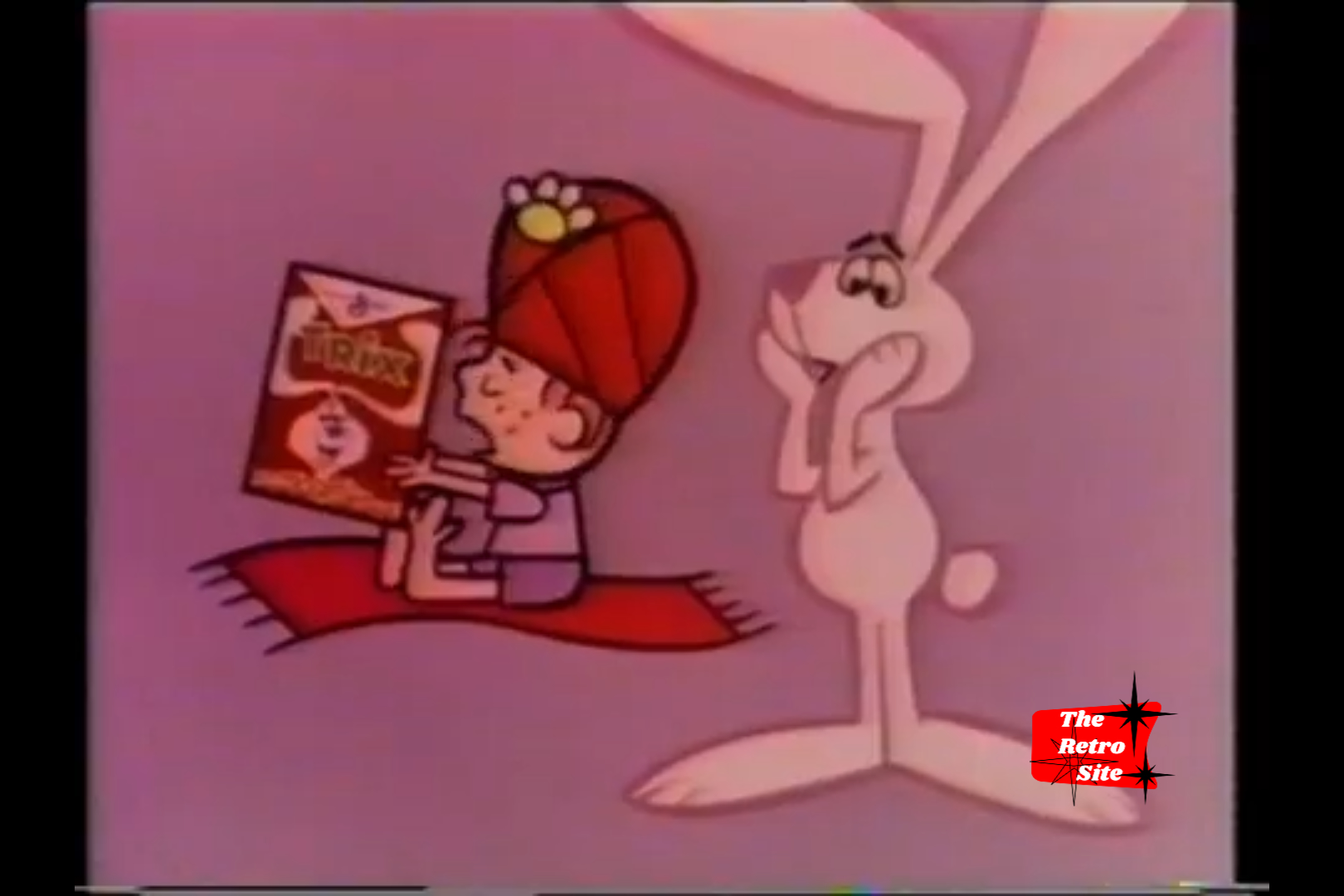
Silly Rabbit, Trix Are For Kids!
The Trix Rabbit is one of those cereal mascots who spent decades chasing the same bowl of cereal and almost never getting it.
Trix cereal was introduced by General Mills in 1954, but the famous slogan came a little later. General Mills says “Trix are for kids!” first appeared on the box in 1959, before the now-famous rabbit fully took over the campaign.
The setup was simple and perfect for kids: the rabbit wanted Trix, the kids caught him trying to get some, and then came the line everybody remembers:
“Silly rabbit, Trix are for kids!”
It worked because it was funny, colorful, and a little unfair. As kids, some of us probably felt bad for the rabbit. He tried costumes, schemes, disguises, and tricks, but those kids almost always shut him down.
Looking back, that was the magic of the campaign. One rabbit, one cereal, one catchphrase, and a generation that can still hear it in their head.

Two-Year-Old Tiger Woods On TV

Before he became one of the greatest golfers of all time, Tiger Woods was a 2-year-old kid on The Mike Douglas Show, standing beside his father Earl and putting while Bob Hope watched.
The clip is incredible because it is not just cute. You can already see the swing, the confidence, and the beginning of something unusual. Tiger’s father, Earl Woods, had introduced him to golf almost as soon as he could walk, and he became his first coach, teacher, and biggest influence.
Earl did more than teach him how to hit a ball. He taught Tiger discipline, focus, and how to handle pressure. That early father-son bond helped shape the child prodigy who would grow into a golf legend.
Looking back, that little TV appearance feels like the first public glimpse of history. A toddler with a golf club, a proud father nearby, and the start of a career nobody could have fully imagined yet.