



I was too young to drink beer when I first remember these commercials, and Don Adams wasn’t going to convince my dad to give up his Rheingold or Falstaff! But those Skittle Bowl-type commercials? We did buy those games and enjoyed them in our home.
⠀
That’s what I remember most about Don Adams as a pitchman. The commercials felt like little comedy sketches, with that unmistakable voice and the same confidence that usually got Maxwell Smart into trouble.
⠀
This Schlitz Malt Liquor commercial is dated 1980. Don plays a captured secret agent, and his captor is Leon Askin—General Burkhalter from Hogan’s Heroes. Naturally, the rescue involves the Schlitz bull and a familiar “Would you believe…” punch line.
⠀
But Don’s advertising career went well beyond beer. Aurora used him to promote a whole family of Skittle games, including pool, tennis, baseball, and bingo. Sometimes he was a spy; sometimes the commercials played like little gangster movies. He even appeared on Skittle Pool boxes.
⠀
Here’s something I didn’t know: Don also directed commercials. His Skittle Pool spot reportedly earned him a Clio for commercial direction in 1971. He was helping create the laughs as well as delivering them.
⠀
He also appeared in Hertz commercials with Penny Marshall before Laverne & Shirley made her a household name, and later advertised Ideal’s Electronic Detective with Joey Forman. Advertisers certainly knew how to put that secret-agent reputation to work!
⠀
Don didn’t change Dad’s beer order, but those game commercials got results at our house. Did you have Skittle Bowl or any of the other Skittle games?
⠀
#DonAdams #GetSmart #SkittleBowl #VintageCommercials #TheRetroSite
Tag: Ideal Toys


Did You Have A Thumbelina?
Thumbelina was introduced by Ideal in 1961 and quickly became one of those baby dolls that stood out because she actually moved. The original was a wind-up doll, and once wound, she would wiggle and squirm like a real baby, making her feel more lifelike than many dolls of the time.
Thumbelina stayed popular through the 1960s and into the 1970s, with different sizes and versions along the way. Then in 1992, the name was brought back with Tyco’s Twinkling Thumbelina, but that version was updated for its time as a battery-operated doll rather than the original wind-up style.
For many, though, the classic 1960s Thumbelina is the one they remember best — the baby doll that moved just enough to make a child believe she was almost real.


Did you have Shark Pack?

I felt that changing the discs to make it do different maneuvers meant you might as well have pushed it by hand. Was I wrong?
Shark Pack was a 1970s toy boat line from Ideal, and the big feature was its interchangeable program discs. Instead of radio control, you put in a disc, set the boat loose, and it would follow a preset pattern, turning or circling depending on which disc you used.
For the time, that was a pretty clever idea. It gave kids a way to “program” the boat before home computers and remote-control toys became common. The commercial made it look exciting, with the boats cutting through the water and changing direction on command.
Like a lot of toys from that era, the real fun probably depended on where you used it and what you expected from it. If you had a pool, pond, or enough room to let it run, Shark Pack may have been a lot of fun. If you were expecting total control, the disc-changing part may have felt a little less magical.
That’s why I’m curious. Did Shark Pack really live up to the ad, or was it one of those toys that looked better on TV?
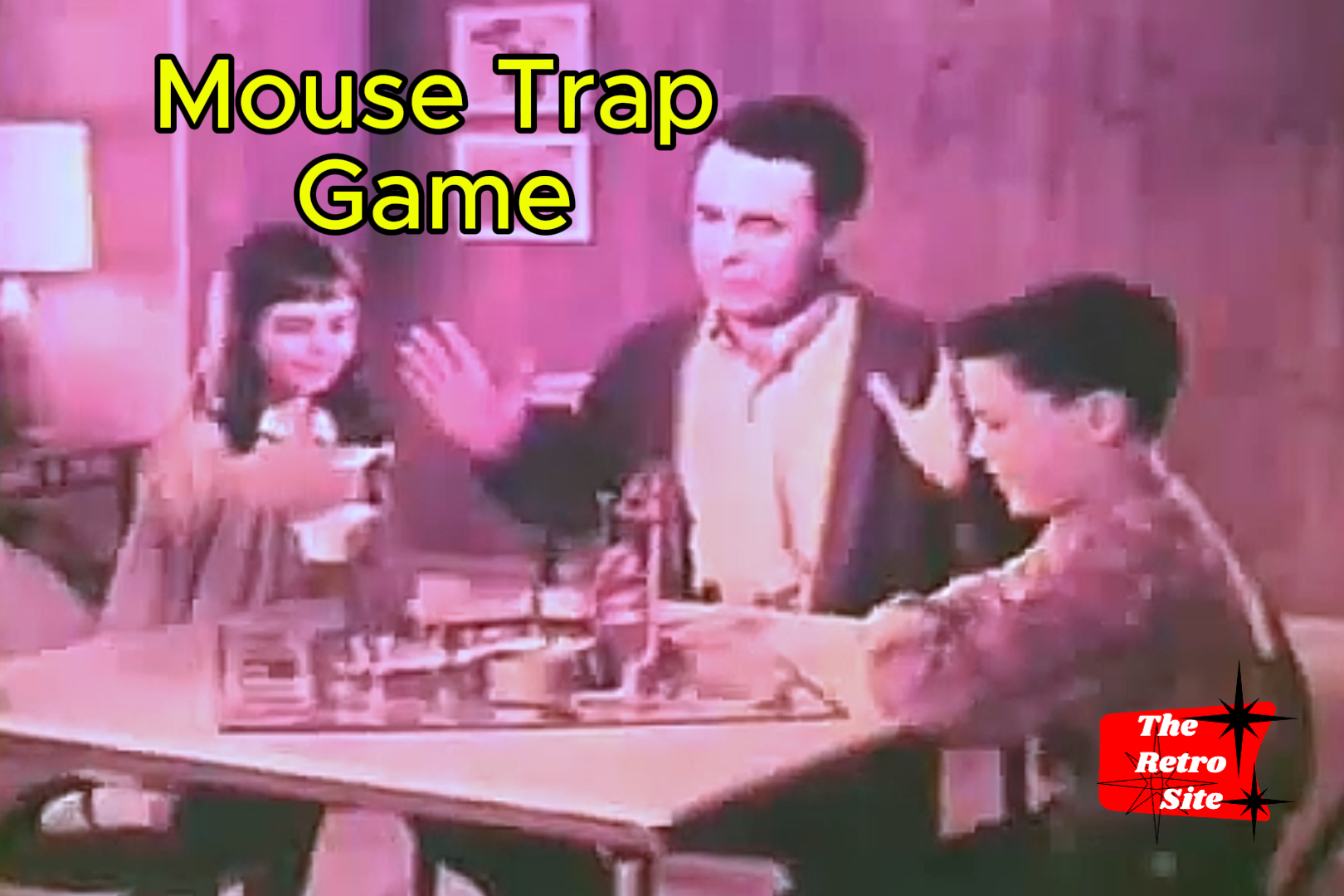
Mouse Trap Game
I remember wanting Mouse Trap so bad because it looked so cool in the commercial. What kid wouldn’t want their very own Rube Goldberg machine right there on the kitchen table?
Mouse Trap came out in 1963, and the whole attraction wasn’t just the board game itself. It was that crazy contraption you built while playing. The crank, the gears, the marble, the bathtub, the diving man, the cage, and all those little plastic pieces that had to line up just right. On TV, it looked like the greatest thing ever invented.
The neighbor kid had one, we played it, and I was excited to try it for real. It was fun, but I’ll be honest, it wasn’t quite as exciting as I had built it up to be in my head. Maybe it needed that wacky music from the commercial playing in the background! Without the TV magic, it was still a neat game, but the commercial may have sold it better than the actual game.
Still, you have to give Mouse Trap credit. Every kid who saw that commercial wanted to see that trap go off. Whether it worked perfectly or needed a little help, it was one of those games that made you say, “I want that!”