online community focused on sharing and reminiscing about video, audio, and images that stir our memories of the past – old television, theme songs, commercials, print advertisements, the sights and sounds you remember
Before cereal commercials got too complicated, Cheerios gave us the Cheerios Kid, Sue, and the promise of “go-power.”
The idea was simple: eat Cheerios and suddenly you had the energy to take on whatever trouble showed up next. The late-1960s ads had that catchy “Get Yourself Go” jingle, the kind of line that stuck in your head long after Saturday morning cartoons were over.
A fun bit of trivia: the jingle is credited to Neil Diamond, before most of us knew him as the Neil Diamond.
Looking back, it was pure cereal-commercial magic: a bowl of oats, a quick cartoon adventure, and one more earworm we never quite forgot.
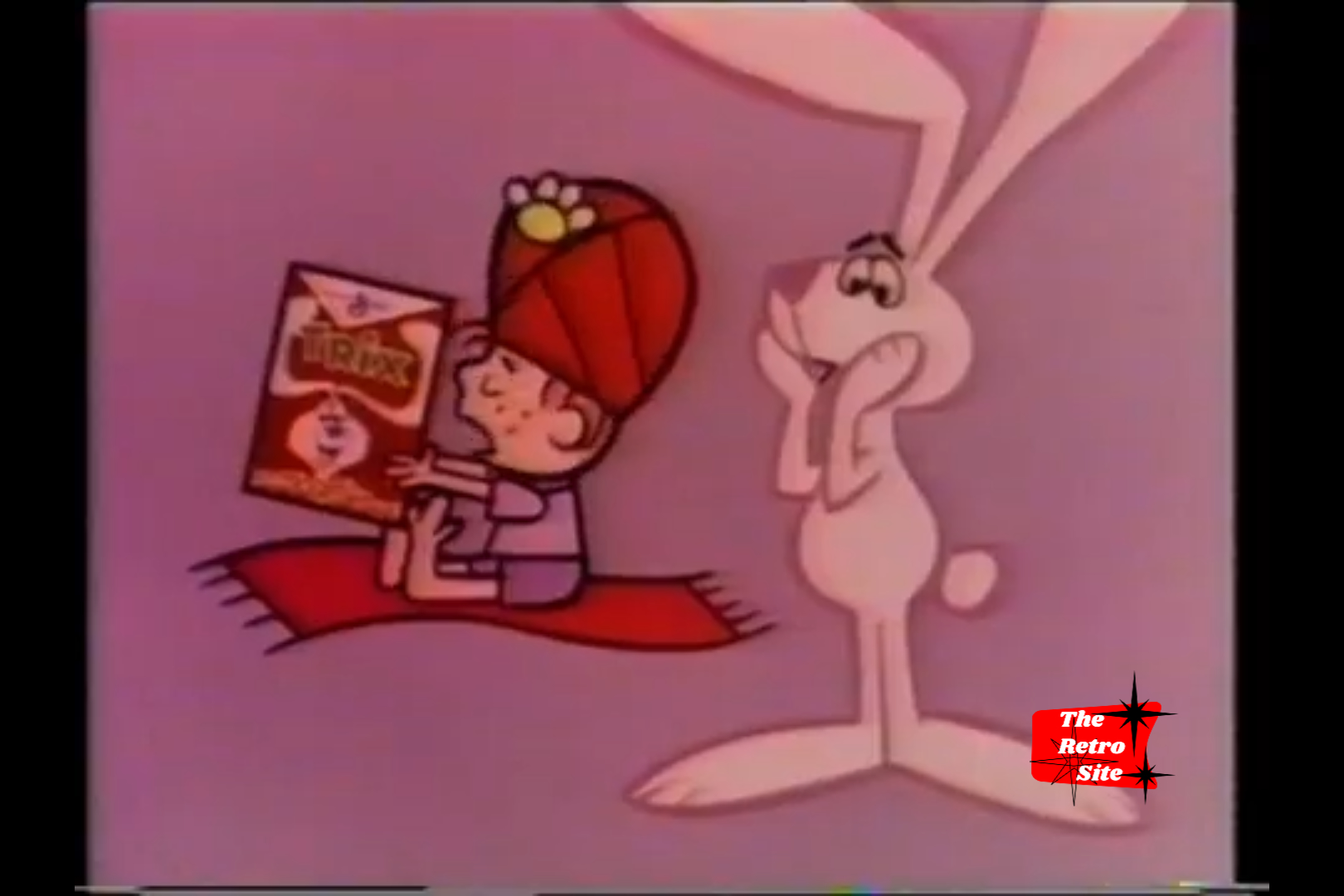
The Trix Rabbit is one of those cereal mascots who spent decades chasing the same bowl of cereal and almost never getting it.
Trix cereal was introduced by General Mills in 1954, but the famous slogan came a little later. General Mills says “Trix are for kids!” first appeared on the box in 1959, before the now-famous rabbit fully took over the campaign.
The setup was simple and perfect for kids: the rabbit wanted Trix, the kids caught him trying to get some, and then came the line everybody remembers:
“Silly rabbit, Trix are for kids!”
It worked because it was funny, colorful, and a little unfair. As kids, some of us probably felt bad for the rabbit. He tried costumes, schemes, disguises, and tricks, but those kids almost always shut him down.
Looking back, that was the magic of the campaign. One rabbit, one cereal, one catchphrase, and a generation that can still hear it in their head.
Post Rice Krinkles is one of those cereals that makes you wonder what exactly was going on in the advertising room.
It started as Sugar Rice Krinkles, a sweet puffed rice cereal, and Post first sold it with circus-style ads and Krinkles the Clown. Back then, clowns were still considered fun, friendly, and perfect for kids. Looking at him now, though, he has that unsettling “why is this staring at me during breakfast?” energy.
Then around 1960, Post replaced the clown with So-Hi, a small Asian boy character used to sell a rice cereal. The name was a play on “so high,” because he was short, but the character leaned hard into Asian stereotypes that would never fly today. It was the kind of lazy advertising shortcut that was common at the time: rice cereal, so they reached for an Asian caricature.
And no, this did not evolve into Snap, Crackle, and Pop. That was Kellogg’s Rice Krispies, a different cereal from a different company. Post Rice Krinkles was more connected to Post’s later rice cereal ideas, especially the road that eventually led toward Pebbles.
So it basically went from creepy clown to racial stereotype, all in the name of making cereal memorable to kids. And that’s the part that sticks out today. These mascots were meant to be cute and catchy, but looking back, they show how different, and often tone-deaf, advertising could be.
Rice Krinkles eventually faded away by the end of the 1960s, but the mascots are still remembered because they’re so bizarre. One scared kids by accident. The other should have made adults know better.