Probably no toy gave me more joy than Hot Wheels.

https://www.theretrosite.com/wp-content/uploads/2026/05/0hot-wheels.mp4

It was great the first day you got the track, but the fun didn’t stop there. A new car didn’t cost all that much, even for a kid, and suddenly the whole race changed. One new car meant new matchups, new winners, new arguments, and another reason to reset the track and try again.

Hot Wheels were introduced by Mattel in 1968, created to compete with Matchbox, but they had a completely different attitude. Matchbox cars looked more like regular cars you’d see on the road. Hot Wheels looked like something a kid dreamed up: wild colors, big wheels, racing stripes, spoilers, flames, and hot rod styling. The first line is remembered as the “Original 16” or “Sweet 16.”

And they were fast. That was the magic. Mattel built them with low-friction wheels and axles, wider hard-plastic tires, and a suspension design that helped them fly down those orange plastic tracks smoother than other little cars of the time. The Strong National Museum of Play notes that Mattel engineers wanted them to “zoom,” using thick plastic mag wheels, minimal-friction axles, and torsion-bar suspension.

Then came the tracks. If you got a new setup, like the one with the Super Charger, it worked with the track you already had. That was the genius of it. You didn’t have to start over. You just added on. A curve here, a loop there, a launcher, a jump, and suddenly your living room floor became Daytona, Indy, and a demolition derby all at once.

Looking back, Hot Wheels were a great value because every piece made the whole thing better. One car could change the race. One track set could change the whole afternoon. And for a kid, that little orange track and one fast car were enough to make the whole room feel like a speedway.

The Rat Patrol

The Rat Patrol was another one of those shows Dad loved to watch, and to a kid, it sure looked promising. Jeeps tearing across the desert, guns mounted in the back, bombs going off, aircraft overhead — it had all the ingredients that should have grabbed a young viewer right away.

But at that age, the dialogue went right over my head. I was there for the action, not the strategy. The show followed a small Allied commando unit during World War II, racing through the North African desert and taking on German forces in fast-moving missions. It was part war show, part adventure series, and part Saturday afternoon action movie squeezed into a half-hour.

The Rat Patrol aired from 1966 to 1968 and starred Christopher George as Sgt. Sam Troy. One of the more interesting cast members was Hans Gudegast, who played German Capt. Dietrich. Soap fans would later know him much better as Eric Braeden from The Young and the Restless.

The show was loosely inspired by real desert raiding units like the British SAS and the Long Range Desert Group, but Hollywood gave it a very American spin. That bothered some viewers overseas because the real North African desert raids were largely a British and Commonwealth story, while the TV version put American characters front and center. The BBC reportedly pulled the show after only a few episodes because of complaints about that Americanized version of the war.

Looking back, I can see why Dad liked it. It had action, military drama, and just enough grit to feel grown-up. For us kids, it was the jeeps and explosions that pulled us in, even if we didn’t always understand what they were talking about once the shooting stopped.

From Scary To Racist

https://www.theretrosite.com/wp-content/uploads/2026/05/0rice.mp4

Post Rice Krinkles is one of those cereals that makes you wonder what exactly was going on in the advertising room.

It started as Sugar Rice Krinkles, a sweet puffed rice cereal, and Post first sold it with circus-style ads and Krinkles the Clown. Back then, clowns were still considered fun, friendly, and perfect for kids. Looking at him now, though, he has that unsettling “why is this staring at me during breakfast?” energy.

Then around 1960, Post replaced the clown with So-Hi, a small Asian boy character used to sell a rice cereal. The name was a play on “so high,” because he was short, but the character leaned hard into Asian stereotypes that would never fly today. It was the kind of lazy advertising shortcut that was common at the time: rice cereal, so they reached for an Asian caricature.

And no, this did not evolve into Snap, Crackle, and Pop. That was Kellogg’s Rice Krispies, a different cereal from a different company. Post Rice Krinkles was more connected to Post’s later rice cereal ideas, especially the road that eventually led toward Pebbles.

So it basically went from creepy clown to racial stereotype, all in the name of making cereal memorable to kids. And that’s the part that sticks out today. These mascots were meant to be cute and catchy, but looking back, they show how different, and often tone-deaf, advertising could be.

Rice Krinkles eventually faded away by the end of the 1960s, but the mascots are still remembered because they’re so bizarre. One scared kids by accident. The other should have made adults know better.

You Can Take Salem Out of the Country But….

https://www.theretrosite.com/wp-content/uploads/2026/05/0-salem.mp4

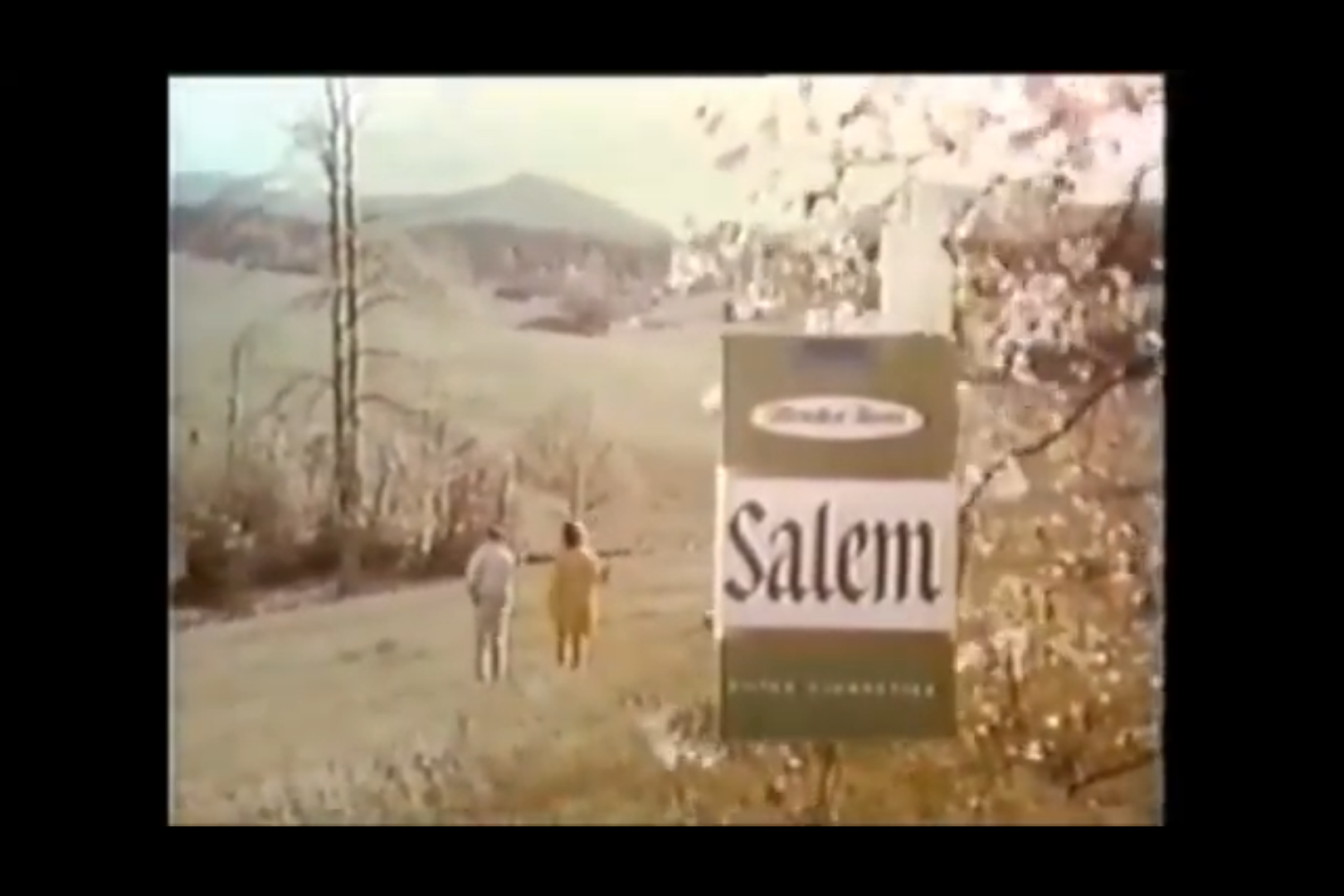
Here’s another forgotten jingle to get stuck in your head: “You can take Salem out of the country, but you can’t take the country out of Salem.”

Salem cigarettes leaned heavily on that fresh, outdoorsy image, using country scenery, easygoing music, and a catchy slogan to make menthol smoking feel cool, clean, and almost wholesome. That was the magic of old cigarette advertising. They weren’t just selling cigarettes, they were selling a mood.

And like so many jingles from back then, once you remember it, it sticks. These commercials were polished little earworms, made to stay with you long after the TV was turned off.

That all changed when cigarette commercials were banned from radio and television starting January 2, 1971, after President Richard Nixon signed the Public Health Cigarette Smoking Act. The ads disappeared, but some of those jingles never really left our heads.Here’s another forgotten jingle to get stuck in your head: “You can take Salem out of the country, but you can’t take the country out of Salem.”

Salem cigarettes leaned heavily on that fresh, outdoorsy image, using country scenery, easygoing music, and a catchy slogan to make menthol smoking feel cool, clean, and almost wholesome. That was the magic of old cigarette advertising. They weren’t just selling cigarettes, they were selling a mood.

And like so many jingles from back then, once you remember it, it sticks. These commercials were polished little earworms, made to stay with you long after the TV was turned off.

That all changed when cigarette commercials were banned from radio and television starting January 2, 1971, after President Richard Nixon signed the Public Health Cigarette Smoking Act. The ads disappeared, but some of those jingles never really left our heads.

What Would the Clampetts Be Selling Today?

https://www.theretrosite.com/wp-content/uploads/2026/05/winston.mp4

I remember watching this commercial as a kid, surprised that Jed smoked. I think we all knew Granny smoked, along with her moonshine.

What would Granny, Jed, Jethro, Ellie May, and Miss Jane be promoting today?

How We Got Cat Videos Before The Internet

https://www.theretrosite.com/wp-content/uploads/2026/05/0cat.mp4

Before the internet gave us endless cat videos, we had to take them wherever we could get them, and sometimes that meant a Purina Cat Chow commercial. This old ad feels almost like the Joe Weider offers in the back of comic books, where you were always being promised something special if you paid attention, mailed away, or bought the product.

When Tippee-Toes Tiptoed Into Trouble

https://www.theretrosite.com/wp-content/uploads/2026/05/0507.mp4

Leave it to the early 1980s to give us a controversy over a baby doll’s bare bottom.

Mattel’s Tippee-Toes was one of those dolls that was supposed to look cute, innocent, and lifelike. She could crawl, and like a lot of toy commercials from back then, the ad was aimed right at kids sitting in front of the TV, probably during cartoons or family programming. But then came the part that got people talking: the commercial showed the doll’s little bare backside.

That may sound pretty tame today, but back then one viewer found it offensive enough to complain to David Horowitz, the consumer advocate best known for Fight Back! with David Horowitz. Horowitz was the guy people turned to when they felt a product, commercial, or company needed to be called out. He built a career on standing up for consumers, testing products, and bringing viewer complaints into the spotlight.

The issue even made its way to The Tonight Show Starring Johnny Carson in 1982. Horowitz appeared on Carson and discussed the Tippee-Toes commercial, reportedly showing both the original ad and the changed version after complaints were made. It was one of those perfect Johnny Carson moments where something small, silly, and strangely serious all came together on national television.

Looking back, it feels almost impossible to believe this was a controversy. We grew up with talking dolls, creepy ventriloquist dummies selling chocolate milk, clowns selling cereal, and commercials that would probably send today’s internet into a panic. But a baby doll’s bare bottom? That was enough to get a consumer advocate involved and Mattel’s attention.

It’s a funny little reminder of how much TV, advertising, and what people considered “offensive” has changed over the years. Tippee-Toes was just trying to crawl across the screen, but somehow she crawled right into consumer TV history.

Did Miss Nancy Ever Call Your Name?

https://www.theretrosite.com/wp-content/uploads/2026/05/00000000.mp4

Did she ever call your name? Oh, the simple joys of Romper Room. That Magic Mirror had every kid sitting at home waiting, hoping Miss Nancy would say their name before the show ended. And if she did, you felt like you had just made national television from the living room floor.

I told you my father was a Marine, so we grew up in Virginia or North Carolina so we watched Miss Nancy on WBAL. But I never realized back then that there wasn’t just one “Miss Nancy.” Romper Room was franchised and syndicated, meaning different cities often had their own local hostesses using the same basic format.

The original Romper Room began in Baltimore in the early 1950s and was created by Bert and Nancy Claster, with Nancy Claster becoming the first well-known “Miss Nancy.” It was aimed at preschool children and felt like a TV nursery school, with songs, games, stories, manners, and those famous lessons about being a “Do Bee” instead of a “Don’t Bee.”

And then came the part we all remember: “Romper, bomper, stomper boo…” Miss Nancy would look through the Magic Mirror and start naming children she supposedly saw watching at home. We knew she probably couldn’t really see us, but at that age you weren’t taking chances. You sat there quietly, behaved like a Do Bee, and waited for your name.

That is what made the show work. She treated the camera like another child in the room, so the kids watching at home felt included too. It was simple television: a teacher, a few children, a Jack-in-the-box, a magic mirror, and lessons about being polite.

No explosions, no superheroes, no fast cuts (ok, maybe a clown in the Jack-in-the-box). Just Miss Nancy asking if we had fun at play.

And yes, I still remember waiting for my name. Did she ever call yours?

Exit mobile version