I Want My Maypo!

https://www.theretrosite.com/wp-content/uploads/2026/07/0maypo.mp4

This wonderfully simple 1956 commercial begins with Marky refusing to eat his breakfast while wearing his cowboy hat. Uncle Ralph tries the old airplane-and-hangar trick, accidentally puts the spoon into his own mouth and discovers that he likes Maypo. When Uncle Ralph begins eating the entire bowl, Marky finally delivers the line remembered by generations: “I want my Maypo!”

Animation pioneer John Hubley created the commercial around recordings of his four-year-old son, Mark. Rather than giving the boy a polished script, Hubley followed him with a microphone and built the cartoon around his natural words, reactions and mispronunciations. The result felt more like a funny family moment than a commercial.

The campaign transformed a poorly selling maple-flavored oatmeal into a national favorite. Sales rose an average of 78 percent and climbed as high as 186 percent in some markets. Marky became so popular that he appeared on packaging and inspired a vinyl bank, although Hubley initially fought attempts to merchandise a character based upon his own child.

Later commercials featured major athletes including Mickey Mantle, Wilt Chamberlain, Johnny Unitas, Don Meredith and Oscar Robertson declaring that they wanted their Maypo. Marky received a modern makeover in 2001, but kept his familiar cowboy hat and kerchief.

Maypo remains available today, proving that Marky’s demand lasted much longer than anyone probably expected.

Did you eat Maypo, or did you simply run around the house shouting, “I want my Maypo!”

Quisp Cereal

https://www.theretrosite.com/wp-content/uploads/2026/07/quisp.mp4

What other cereal commercial could turn a giant ball of space yarn into an 87-mile-long necktie? This Quisp ad feels more like a miniature Saturday morning cartoon than a commercial, with Quisp flying through space to deliver cereal before encountering a very “knotty” problem.

Quisp was not just a cereal mascot. He was the Crown Prince of Planet Q, and the propeller on his head allowed him to fly through space. He occasionally traveled with a furry sidekick named Quunchy and competed against Quake, a musclebound miner voiced by Cannon star William Conrad.

Quaker Oats introduced Quisp in 1965, with crunchy corn pieces shaped like flying saucers. The commercials were produced by Jay Ward, creator of Rocky and Bullwinkle, which explains their fast jokes, wild characters and cartoon-style adventures. Daws Butler, also famous as the voice of Yogi Bear, provided Quisp’s voice.

Quisp never starred in a regular cartoon series, but its animated commercials often appeared during children’s programming and became almost as memorable as the shows they sponsored. The cereal disappeared and returned several times over the decades before Quaker discontinued it again around 2024.

Do you remember eating Quisp, or were the crazy commercials more memorable than the cereal?

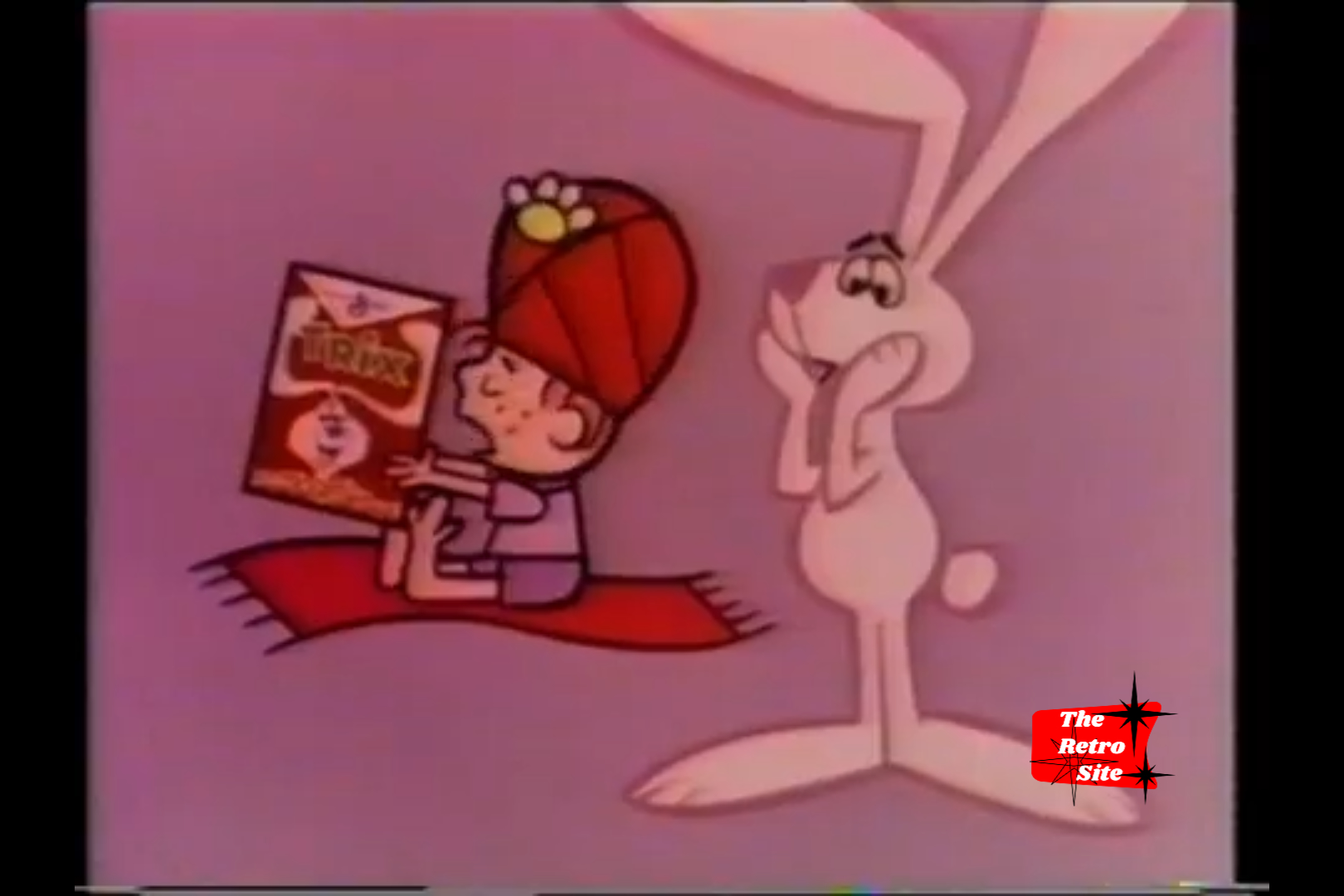
Silly Rabbit, Trix Are For Kids!

https://www.theretrosite.com/wp-content/uploads/2026/06/Trix.mp4

The Trix Rabbit is one of those cereal mascots who spent decades chasing the same bowl of cereal and almost never getting it.

Trix cereal was introduced by General Mills in 1954, but the famous slogan came a little later. General Mills says “Trix are for kids!” first appeared on the box in 1959, before the now-famous rabbit fully took over the campaign.

The setup was simple and perfect for kids: the rabbit wanted Trix, the kids caught him trying to get some, and then came the line everybody remembers:

“Silly rabbit, Trix are for kids!”

It worked because it was funny, colorful, and a little unfair. As kids, some of us probably felt bad for the rabbit. He tried costumes, schemes, disguises, and tricks, but those kids almost always shut him down.

Looking back, that was the magic of the campaign. One rabbit, one cereal, one catchphrase, and a generation that can still hear it in their head.

From Scary To Racist

https://www.theretrosite.com/wp-content/uploads/2026/05/0rice.mp4

Post Rice Krinkles is one of those cereals that makes you wonder what exactly was going on in the advertising room.

It started as Sugar Rice Krinkles, a sweet puffed rice cereal, and Post first sold it with circus-style ads and Krinkles the Clown. Back then, clowns were still considered fun, friendly, and perfect for kids. Looking at him now, though, he has that unsettling “why is this staring at me during breakfast?” energy.

Then around 1960, Post replaced the clown with So-Hi, a small Asian boy character used to sell a rice cereal. The name was a play on “so high,” because he was short, but the character leaned hard into Asian stereotypes that would never fly today. It was the kind of lazy advertising shortcut that was common at the time: rice cereal, so they reached for an Asian caricature.

And no, this did not evolve into Snap, Crackle, and Pop. That was Kellogg’s Rice Krispies, a different cereal from a different company. Post Rice Krinkles was more connected to Post’s later rice cereal ideas, especially the road that eventually led toward Pebbles.

So it basically went from creepy clown to racial stereotype, all in the name of making cereal memorable to kids. And that’s the part that sticks out today. These mascots were meant to be cute and catchy, but looking back, they show how different, and often tone-deaf, advertising could be.

Rice Krinkles eventually faded away by the end of the 1960s, but the mascots are still remembered because they’re so bizarre. One scared kids by accident. The other should have made adults know better.

Breakfast With Clowns

https://www.theretrosite.com/wp-content/uploads/2026/05/0clown.mp4

Back in our day, we had breakfast with clowns, and somehow nobody thought that was strange.

Post Sugar Rice Krinkles was one of those cereals that could only come from that golden age of Saturday morning television, when cereal companies put sugar right in the name and then sent a clown on TV to tell us it was part of a good breakfast. The cereal itself was a sweetened crisp rice cereal from Post, but the real memory-jogger was Krinkles the Clown, who showed up in those early commercials with that classic 1950s “fun for kids, slightly terrifying for adults” energy.

Looking back now, it is funny how normal that all seemed. We had clowns selling cereal, puppets selling chocolate, cartoon animals selling everything else, and we just sat there in our pajamas eating it all up before the cartoons came on. Sugar Rice Krinkles may be long gone, but it sits right in that strange and wonderful cereal aisle of our memories, back when breakfast was sweet, the commercials were catchy, and apparently clowns were welcome at the table.

Exit mobile version