
Cheerios: Get Yourself Go!

https://www.theretrosite.com/wp-content/uploads/2026/06/Cheerios.mp4

Before cereal commercials got too complicated, Cheerios gave us the Cheerios Kid, Sue, and the promise of “go-power.”

The idea was simple: eat Cheerios and suddenly you had the energy to take on whatever trouble showed up next. The late-1960s ads had that catchy “Get Yourself Go” jingle, the kind of line that stuck in your head long after Saturday morning cartoons were over.

A fun bit of trivia: the jingle is credited to Neil Diamond, before most of us knew him as the Neil Diamond.

Looking back, it was pure cereal-commercial magic: a bowl of oats, a quick cartoon adventure, and one more earworm we never quite forgot.
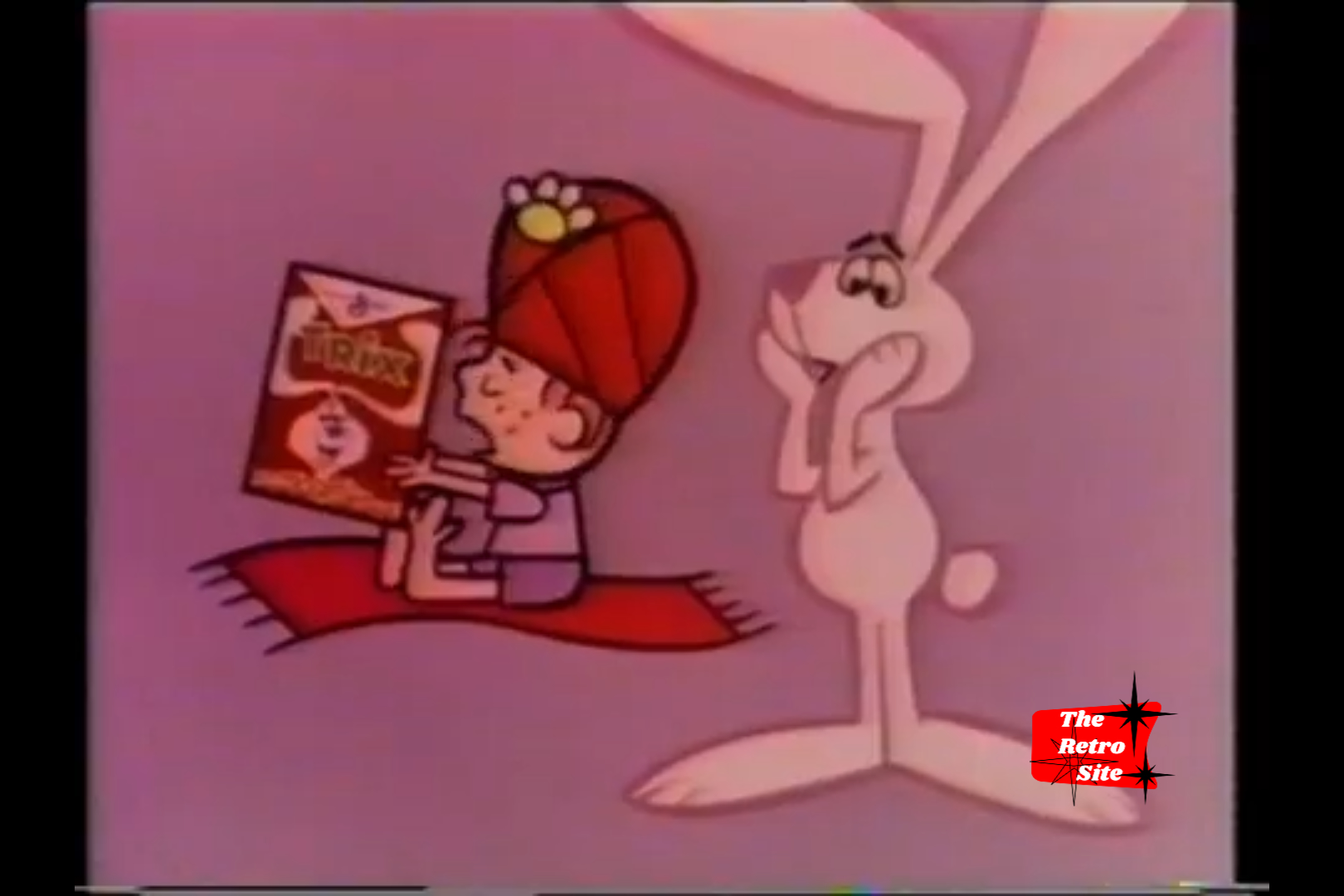
Silly Rabbit, Trix Are For Kids!

https://www.theretrosite.com/wp-content/uploads/2026/06/Trix.mp4

The Trix Rabbit is one of those cereal mascots who spent decades chasing the same bowl of cereal and almost never getting it.

Trix cereal was introduced by General Mills in 1954, but the famous slogan came a little later. General Mills says “Trix are for kids!” first appeared on the box in 1959, before the now-famous rabbit fully took over the campaign.

The setup was simple and perfect for kids: the rabbit wanted Trix, the kids caught him trying to get some, and then came the line everybody remembers:

“Silly rabbit, Trix are for kids!”

It worked because it was funny, colorful, and a little unfair. As kids, some of us probably felt bad for the rabbit. He tried costumes, schemes, disguises, and tricks, but those kids almost always shut him down.

Looking back, that was the magic of the campaign. One rabbit, one cereal, one catchphrase, and a generation that can still hear it in their head.

Sorry, Charlie!

https://www.theretrosite.com/wp-content/uploads/2026/05/Star-Kist.mp4

The StarKist “Sorry, Charlie” campaign started in 1961 and gave us one of the great advertising mascots: Charlie the Tuna. He was created by Tom Rogers of the Leo Burnett Agency as a beatnik-style tuna with a beret, thick glasses, and plenty of confidence. Charlie thought his “good taste” made him perfect for StarKist, but the joke was that StarKist did not want tuna with good taste — they wanted tuna that tastes good.

Charlie himself was originally voiced by actor Herschel Bernardi, who gave him that hip, New York, slightly theatrical sound. The famous announcer line “Sorry, Charlie” was voiced by Danny Dark, one of the biggest commercial voice-over artists of his era. StarKist’s own history page credits Dark as the narrator who delivered the line.

The commercials worked because Charlie was trying so hard to be chosen. He dressed sharp, talked cool, and acted like a sophisticated fish who deserved to end up in the can. Instead, he was rejected every time. Poor Charlie never understood that he was selling the product by not being good enough.

Looking back, it was a perfect old-school ad gag: one simple joke, a catchy phrase, and a character everyone remembered. “Sorry, Charlie” became bigger than tuna and turned into something people said whenever someone got rejected.

Exit mobile version