online community focused on sharing and reminiscing about video, audio, and images that stir our memories of the past – old television, theme songs, commercials, print advertisements, the sights and sounds you remember
Here’s another earworm from the ’70s to get stuck in your head for the rest of the day.
Ken-L Ration was one of the big names in dog food for decades, dating back to the 1920s. The brand became known for canned dog food and later dry food, but most of us remember it because of that insanely catchy commercial jingle.
The song was based on “My Dog’s Bigger Than Your Dog” by folk singer Tom Paxton, and the ad turned it into a playground-style brag between kids. The idea was simple: my dog is bigger, faster, shinier, and better because he eats Ken-L Ration.
It was the kind of jingle advertisers loved because you didn’t just hear it — you repeated it. Kids could sing it, parents remembered it, and the brand name was baked right into the hook.
Ken-L Ration was eventually owned by Quaker Oats and later sold to H.J. Heinz in the 1990s, but the product faded from store shelves. The jingle, though? That survived. For a lot of us, all it takes is one line:
“My dog’s bigger than your dog…”
…and suddenly the whole thing comes running back like a dog hearing the can opener.
The StarKist “Sorry, Charlie” campaign started in 1961 and gave us one of the great advertising mascots: Charlie the Tuna. He was created by Tom Rogers of the Leo Burnett Agency as a beatnik-style tuna with a beret, thick glasses, and plenty of confidence. Charlie thought his “good taste” made him perfect for StarKist, but the joke was that StarKist did not want tuna with good taste — they wanted tuna that tastes good.
Charlie himself was originally voiced by actor Herschel Bernardi, who gave him that hip, New York, slightly theatrical sound. The famous announcer line “Sorry, Charlie” was voiced by Danny Dark, one of the biggest commercial voice-over artists of his era. StarKist’s own history page credits Dark as the narrator who delivered the line.
The commercials worked because Charlie was trying so hard to be chosen. He dressed sharp, talked cool, and acted like a sophisticated fish who deserved to end up in the can. Instead, he was rejected every time. Poor Charlie never understood that he was selling the product by not being good enough.
Looking back, it was a perfect old-school ad gag: one simple joke, a catchy phrase, and a character everyone remembered. “Sorry, Charlie” became bigger than tuna and turned into something people said whenever someone got rejected.
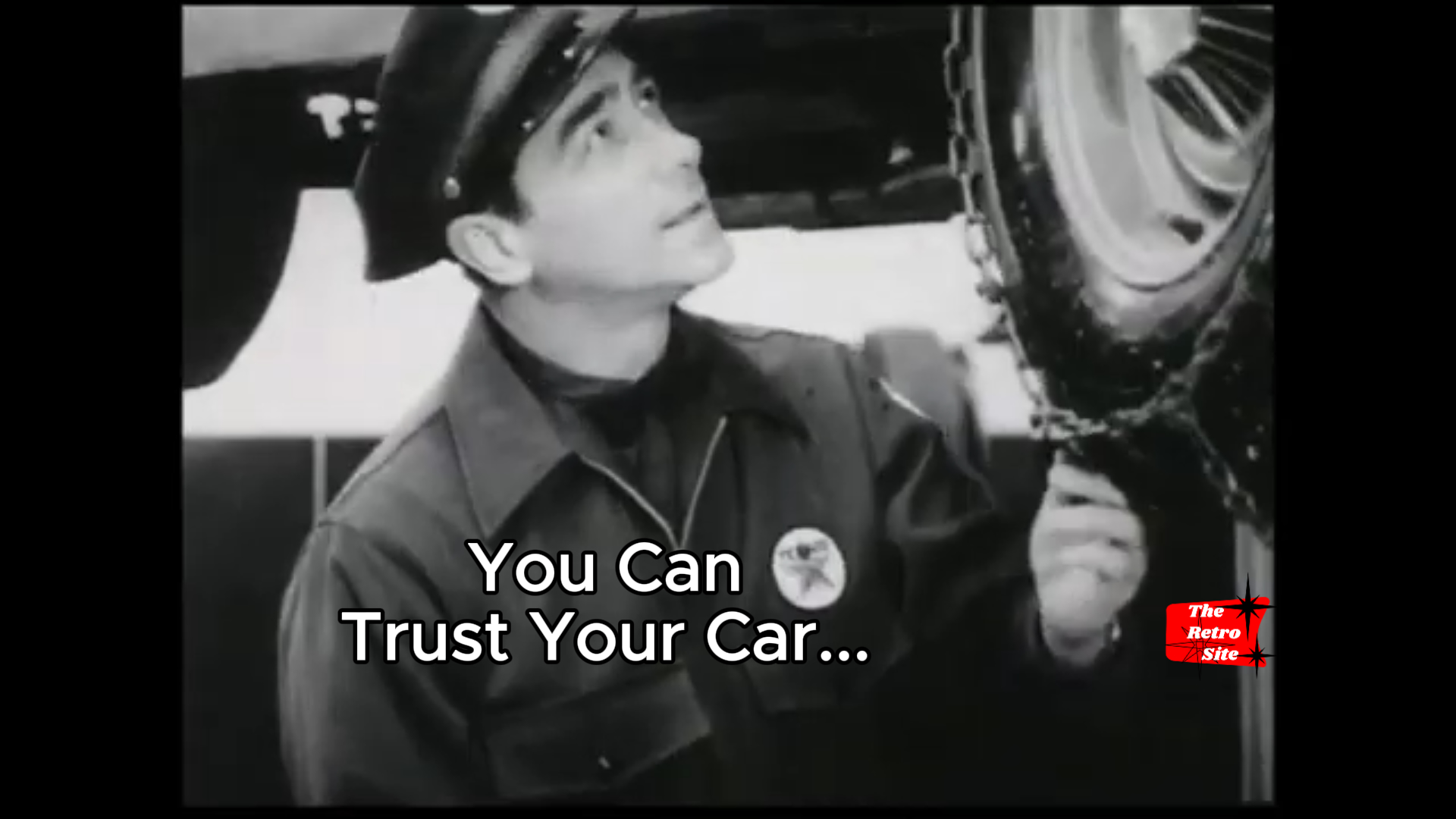
You Can Trust Your Car to the Man Who Wears the Star was one of those great old advertising lines that stuck in your head because it did exactly what a slogan was supposed to do: it made the brand feel safe, familiar, and dependable.
Texaco’s “star” was right there in the logo, and the “man who wears the star” was the service station attendant. Back then, gas stations were not just places where you pumped your own gas and left. An attendant might check your oil, clean your windshield, look at your tires, and give the car a quick once-over while you sat behind the wheel. The campaign sold Texaco as more than gasoline. It sold trust.
The slogan became closely tied to Texaco’s image during the full-service gas station era. The message was simple: pull into Texaco, look for the star, and you were in good hands. It fit perfectly with the time, when uniformed attendants and branded service stations were part of the American road trip experience.
The jingle is most commonly credited to Roy Eaton, a pioneering Black advertising composer who worked on major campaigns including Texaco and Chef Boyardee Beefaroni. One profile says Eaton created the Texaco jingle in 1962, and another notes it was recognized by Advertising Age as part of one of the top ad campaigns of the 20th century. As for who sang the original version, that part is less clear. The safest answer is that it was likely performed by commercial session singers over the years, with different versions used in different Texaco spots.
The line worked because it sounded almost like a jingle before you even heard the music. “You can trust your car to the man who wears the star” has that smooth, sing-song rhythm that made it easy to remember. Texaco also used another famous star-themed line, “Star of the American Road,” leaning heavily into the red star logo as a symbol of dependability.
Looking back, it is a reminder of when gas stations felt more personal. The “man who wears the star” was not just selling gas. He represented service, pride, and that old-school promise that somebody actually knew your car and cared whether you made it down the road.
If you grew up in the 60s, you remember it instantly: “Meet the Swinger… Polaroid Swinger…” That jingle didn’t just sell a camera, it stuck in your head for life.
Introduced in 1965, the Polaroid Swinger was designed to make photography easy and fun. It sold for $19.95 back then, which works out to about $190–$200 in 2026. With its simple “YES/NO” meter and instant photos, it made anyone feel like they knew what they were doing.
The commercials showed carefree young people at the beach and on bikes, capturing moments on the spot. A young Ali MacGraw even appeared before she was famous, helping give the campaign that youthful vibe.
And that jingle? Sung by Barry Manilow, with music by Mitch Leigh and lyrics by Phyllis Robinson, it became one of the most memorable ad tunes of the era.
Bottom line, the Swinger didn’t just sell a camera. It sold a feeling. And decades later, that tune is still stuck in our heads.
You ever look back at some of these old commercials and just shake your head?
This is one of those for me… the one where they made a big deal about a cigarette being just a little bit longer. We’re talking a millimeter… something you’d need a ruler to even notice. But back then? They sold it like it was a game changer.
Even as a kid I remember thinking, wait… that’s it? But the way they presented it, you’d think you were looking at a luxury item. Zoomed in shots, side-by-side comparisons, and that smooth voiceover selling the idea like it mattered.
Brands like Virginia Slims leaned hard into that image. It wasn’t just smoking… it was style, confidence, sophistication. And tied into that whole “You’ve come a long way, baby” vibe, it all felt bigger than it really was.
And then there’s the music.
That jingle always hit my ear like La Bamba… that same upbeat, bouncing rhythm that sticks in your head whether you want it to or not. Not the actual song… but close enough that your brain grabs onto it.
And somehow they wrapped all of that together and made cigarette size a trend.
Think about that.
There was a time when a slightly longer cigarette felt like a status move. Longer, slimmer… like you were keeping up with something. They took something barely noticeable and turned it into a whole thing.
Different times, right?
But here we are… still talking about it.
Let me ask you…
Were your parents into the trends… or once they picked a brand, that was it?