online community focused on sharing and reminiscing about video, audio, and images that stir our memories of the past – old television, theme songs, commercials, print advertisements, the sights and sounds you remember
In the 1970s, O.J. Simpson became one of the most recognizable pitchmen on television thanks to his Hertz commercials. The ads showed him sprinting through airports in a suit, briefcase in hand, while people cheered, “Go, O.J., Go!” It was a perfect use of his football image: fast, famous, smiling, and always on the move.
At the time, the campaign was a huge hit and helped turn Simpson from a football star into a mainstream TV celebrity. It is strange to watch now because the cheerful airport-running image became one of the most famous commercials of its era, long before all the later headlines changed how people looked at him.
Hey, it’s Saturday, and for a lot of us, that used to mean bath night!
Mr. Bubble made bath time feel less like a chore and more like something to look forward to. The famous line, “Mr. Bubble gets you so clean, your mother won’t know you,” worked because it sounded like it was made just for kids. It turned a regular bath into a funny little promise: you would come out so clean, you might look like a different kid.
It was also classic 1960s advertising. The line was simple, catchy, easy to repeat, and just exaggerated enough to stick in your head. Kids heard “bubbles and fun,” while mothers heard “clean child, no bathtub ring, and inexpensive.”
And for anyone who remembers Saturday night baths, there was nothing quite like a tub full of Mr. Bubble.
If you grew up in the 60s, you remember it instantly: “Meet the Swinger… Polaroid Swinger…” That jingle didn’t just sell a camera, it stuck in your head for life.
Introduced in 1965, the Polaroid Swinger was designed to make photography easy and fun. It sold for $19.95 back then, which works out to about $190–$200 in 2026. With its simple “YES/NO” meter and instant photos, it made anyone feel like they knew what they were doing.
The commercials showed carefree young people at the beach and on bikes, capturing moments on the spot. A young Ali MacGraw even appeared before she was famous, helping give the campaign that youthful vibe.
And that jingle? Sung by Barry Manilow, with music by Mitch Leigh and lyrics by Phyllis Robinson, it became one of the most memorable ad tunes of the era.
Bottom line, the Swinger didn’t just sell a camera. It sold a feeling. And decades later, that tune is still stuck in our heads.
As answering machines became increasingly integrated into everyday life, some individuals sought to go beyond the standard outgoing message of “Hi, I’m not home, but leave a message and I’ll call you back.” These nonconformist answering machine users desired outgoing messages that better reflected their personalities. For those aiming for a detached coolness, a deadpan “You know what to do” was often sufficient. Those with a mischievous sense of humor commonly employed the timeless trick of answering with a simple “Hello?” followed by a deliberate pause, tricking incoming callers into thinking they were speaking to a live person before the “I’m not here” message resumed. Zing! Many others took it a step further by creating their own humorous skits or songs, much like George Costanza from Seinfeld.
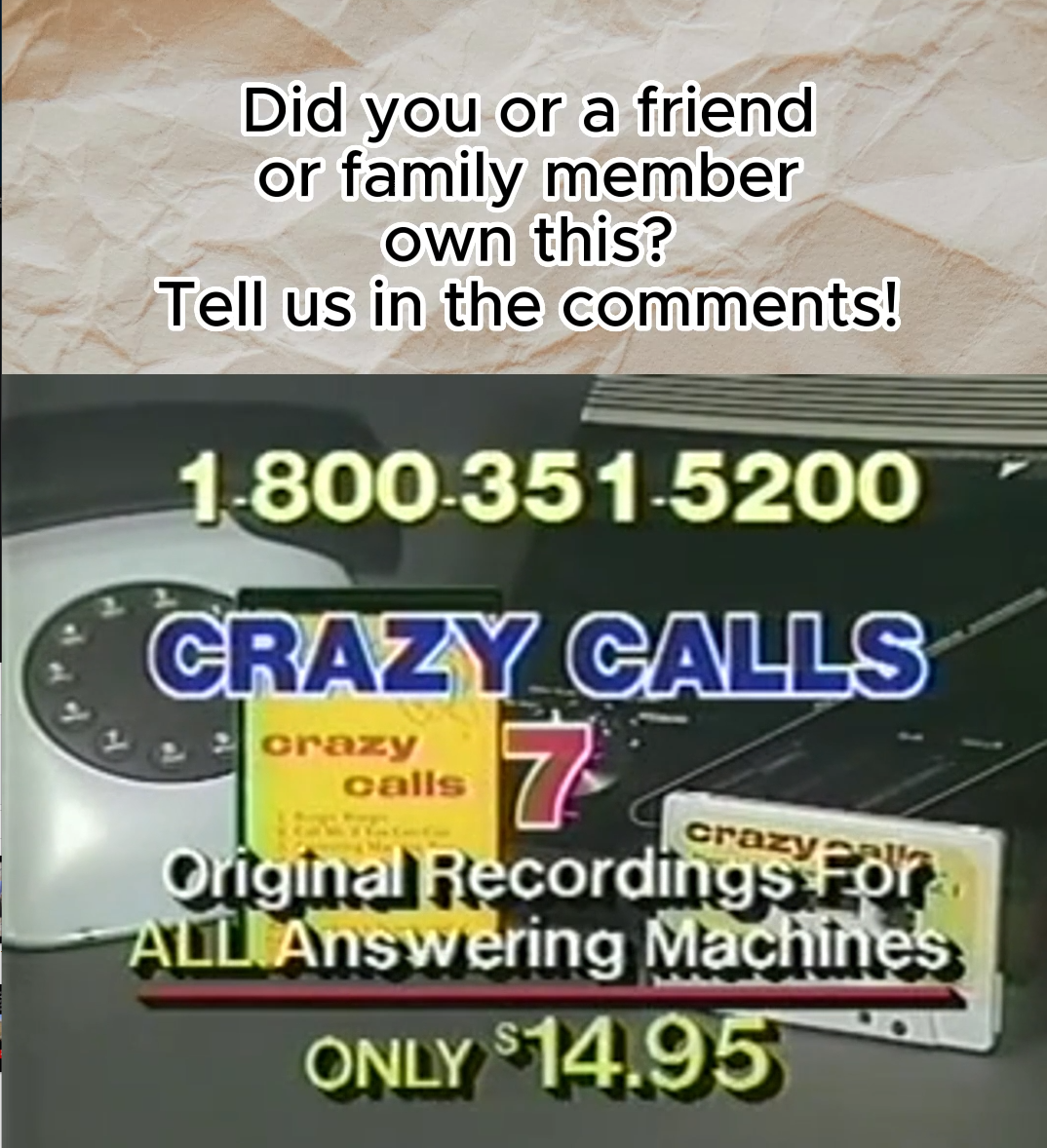
But what about those who wanted to elevate their outgoing message game without putting in the creative effort themselves? In the mid-1980s, a range of pre-recorded cassettes featuring mildly funny bits, including songs in various music styles, became readily available to fill this market gap.
Among the selection, one cassette tape stood out from the rest: Crazy Calls. If you were an avid TV viewer in the mid to late ’80s, you probably recall the commercials for Crazy Calls—a 7-track cassette tape that sold for $14.95, plus $3 for postage and handling. To make a purchase, you could either call an 800 number with a credit card or, with a bit more patience, send a check or money order to a P.O. box in New York City.
The commercials seemed to air incessantly, resulting in snippets of the songs and gags on the tape etching themselves permanently into the memories of numerous TV enthusiasts of that era. Consequently, Crazy Calls has become a frequent reference in ’80s nostalgia within popular culture. It has been mentioned on shows like The Simpsons and Family Guy, and even the 1980s-themed sitcom The Goldbergs dedicated an entire episode titled “Crazy Calls” in 2016, paying homage to the cassette.
The creators of Crazy Calls, Mitch and Ira Yuspeh, are still active in the music industry. They offer recording services and more through their recording studio and production company based in New York City. They also maintain a website dedicated to Crazy Calls, proudly noting that the cassette sold over a million copies through its television campaign.