Sammy Davis Jr. Puts His Spin on “Plop Plop, Fizz Fizz”

https://www.theretrosite.com/wp-content/uploads/2026/04/0sammy.mp4

If you grew up in the early 1970s, you didn’t just watch commercials… you experienced them. And when Sammy Davis Jr. showed up singing “Plop Plop, Fizz Fizz,” it felt less like an ad and more like a mini performance right in your living room. This wasn’t just someone reciting a jingle — this was Sammy bringing that full stage presence, the same energy he gave in Vegas, and dropping it into a few unforgettable seconds of television.

By 1973, the Alka-Seltzer jingle was already a household staple, written by Tom Dawes back in the late ’60s. But Sammy’s version gave it new life. He added swing, personality, and that unmistakable charm that made you stop what you were doing and watch. In an era when commercials leaned heavily on catchy tunes and big personalities, this one hit the sweet spot. You remembered the performance first… and somewhere right behind it, the product.

That was the magic of those days. The whole house would pause — parents, kids, whoever was in the room — because you knew something fun was coming. And decades later, it still works. Just reading the words “Plop Plop, Fizz Fizz” probably brought the whole thing rushing back.

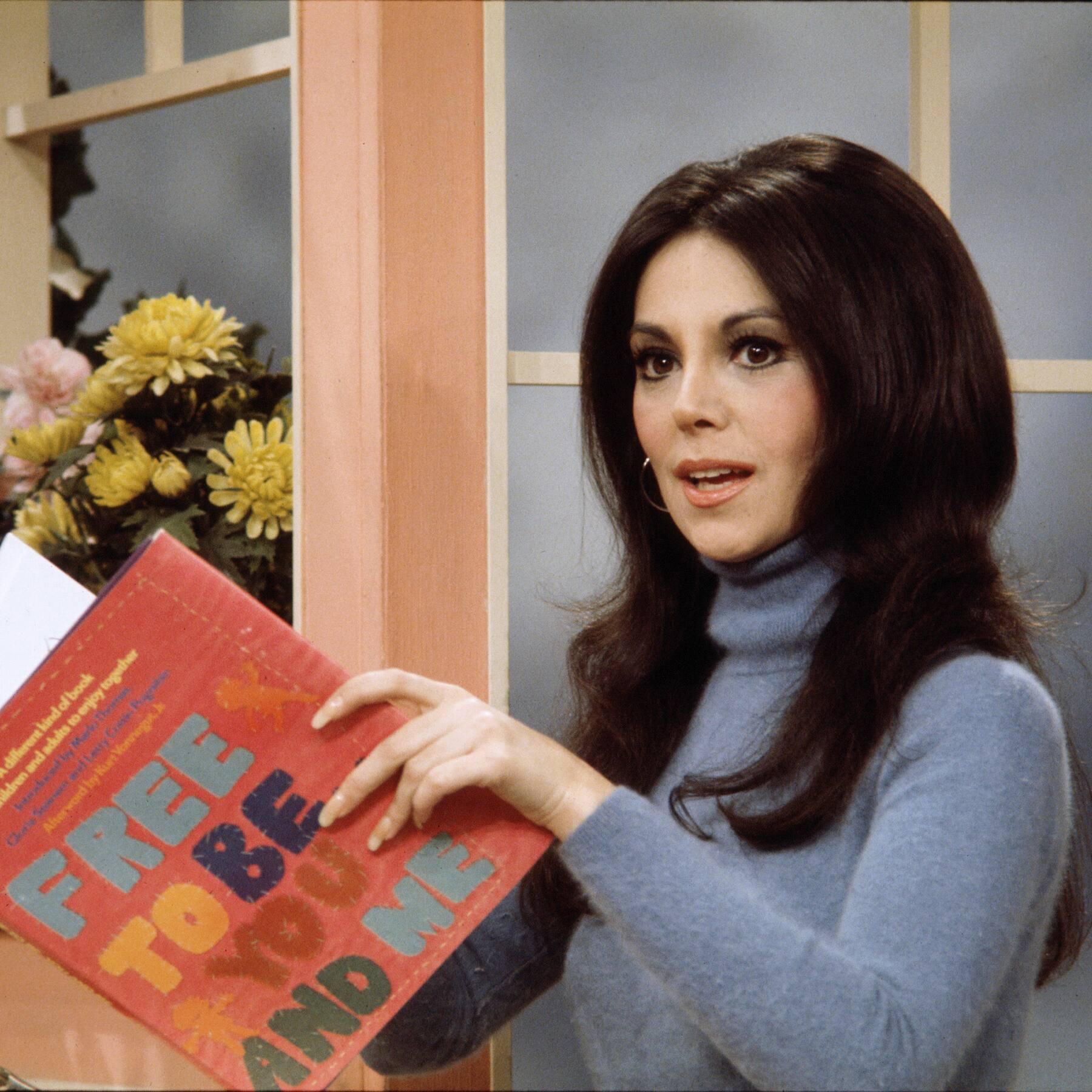
Free to Be… You and Me.

https://www.theretrosite.com/wp-content/uploads/2026/04/Free-To-Be-You-And-Me.mp4

This whole thing was put together by Marlo Thomas, and you’ve gotta give her credit—it wasn’t just entertainment, it was a message. She wanted something different for kids… something that said you didn’t have to fit into a mold.

Now I’ll be honest, I didn’t realize until later just how many big names were actually part of this. We’re talking a young Michael Jackson—before he became the global superstar—teaming up with Roberta Flack on “Be a Lion.” And then you had Cicely Tyson in the TV special, bringing that powerful, grounded presence she always had.

But what really made this stand out wasn’t just the names… it was the message.

This came out in the early 70s, a time when things were starting to change, and instead of just entertaining kids, it was actually talking to them. It was telling you it’s okay to be yourself, okay to feel what you feel, and you didn’t have to fit into some box just because that’s how things always were.

And the way they did it—with music, stories, and voices you recognized—it just stuck. You might not have even realized what it was doing at the time, but looking back, it was kind of ahead of its time.

So before we even get into it… how many of you remember this one? And did you realize back then who you were actually listening to?

The FBI- And Who The Heck Was Efrem Zimbalist Jr?

https://www.theretrosite.com/wp-content/uploads/2026/04/00fbi.mp4

If you grew up in the late 1960s, chances are you remember The F.B.I.. It wasn’t flashy—it just felt real, and that’s what made it work. It was more or less my mom’s show; she watched it, and for me, it was the only decent thing on TV.

What made it stand out was Efrem Zimbalist Jr.. He brought a quiet authority to Inspector Lewis Erskine—calm, believable, and never over the top. While other actors leaned into drama, he leaned into restraint, and that made him unforgettable. Now here’s something a lot of people don’t realize. Zimbalist didn’t come from a typical Hollywood background. His father, Efrem Zimbalist Sr., was one of the most respected classical violinists of his time. Born in Russia, he became an international music star and later served as director of the prestigious Curtis Institute of Music in Philadelphia. So while the son became a television icon, the father was already a legend in a completely different world.

The show aired on ABC from 1965 to 1974, starting on Sunday nights before moving around the schedule. Its realism was helped by cooperation with the real FBI, giving it a grounded, procedural feel.

The Moment TV Jumped The Shark

https://www.theretrosite.com/wp-content/uploads/2026/04/0-fonzie.mp4

f you’ve ever heard someone say a show “jumped the shark,” this is the clip they’re talking about.

I mean… here’s Fonzie, cool as ever, leather jacket and all… out on water skis… and yeah… literally jumping over a shark on Happy Days.

And somewhere along the way, that moment turned into a phrase we still use today.

So here’s how that even happened.

Back in the late ’90s, a guy named Jon Hein created a website called Jump the Shark. The whole idea was to track the exact moment when a TV show starts to go downhill. Not slowly… not over time… but that one moment where you sit there and go, “Alright… what are we doing here?”

And the moment he pointed to?

This one. Fonzie. The shark. 1977. Episode “Hollywood: Part 3.”

From there, it just stuck. The phrase took off, and now people use it for everything. Not just TV… anything that goes too far trying to stay relevant. A show, a company, even people. When it stops feeling real and starts feeling forced… that’s when you hear it… “they jumped the shark.”

Now here’s the part a lot of people don’t realize… the people involved didn’t think it was some disaster at the time.

Henry Winkler has talked about it in interviews and basically said… look, the show had already done physical comedy, and to him, it was just another fun stunt. He’s even pointed out that ratings didn’t suddenly crash after that episode, so in his mind, it didn’t ruin anything.

Writer Fred Fox Jr. said something similar. They were trying to make those Hollywood episodes bigger… more exciting… something different. At the time, it wasn’t, “we’re out of ideas”… it was, “let’s top what we’ve already done.”

And even creator Garry Marshall defended it. He always said people forget just how big Fonzie was back then. The idea was to give him a larger-than-life moment. Something memorable.

Well… mission accomplished.

Because here we are, decades later, still talking about it.

And that’s the funny part. The phrase “jump the shark” is usually meant as a knock… like something went downhill. But this scene? It’s one of the most remembered moments in TV history.

So yeah… maybe it did jump the shark.

But it also made sure none of us would ever forget it.

Forgotten Jingle From Funny Face

https://www.theretrosite.com/wp-content/uploads/2026/04/0-funny.mp4

The Funny Face drink mix commercials from the early 1970s are a classic slice of Saturday morning nostalgia. Produced by Pillsbury as a direct competitor to Kool-Aid, the “When You’re Hot, You’re Hot” campaign leaned heavily into the popular culture of the era to sell their powdered refreshments.

The tagline “When you’re hot, you’re hot… and when you’re not, you’re not” was actually borrowed from the 1971 crossover country hit by Jerry Reed. The commercials adapted this catchy hook to suggest that when kids were hot from playing outside, the “coolest” thing they could be was a “Funny Face.”

The brand was famous for its anthropomorphic fruit characters, each with a distinct personality. During the 70s run, you would typically see:

Goofy Grape: The unofficial leader of the group.

Rootin’ Tootin’ Raspberry: A cowboy-themed character.

Freckle Face Strawberry: One of the most popular flavors.

Loud-Mouth Lime: Known for his wide grin.

Choo-Choo Cherry: An engineer-themed character.

A Bit of Trivia
Interestingly, Funny Face underwent some significant changes before that 70s jingle became famous. Two original characters, Injun Orange and Chinese Cherry, were discontinued in the late 1960s due to their stereotypical nature and were replaced by Jolly Olly Orange and Choo-Choo Cherry.

By the mid-70s, Funny Face began to lose ground to Kool-Aid’s massive “Kool-Aid Man” marketing blitz. While the brand eventually faded from most grocery shelves, the “When You’re Hot, You’re Hot” jingle remains one of the most recognizable pieces of 70s advertising.

If you’re looking into 70s beverage history, you might also remember Wyler’s or Great Shakes, which used similar high-energy animation to grab the attention of the “cereal commercial” demographic.

The Pillsbury Company officially discontinued the brand in 1994.
#FunnyFace #70sCommercials #RetroTV #SaturdayMorning #Jingle #Nostalgia #VintageAds #Pillsbury #KoolAid #GoofyGrape #WhenYoureHot #RetroVibes #ChildhoodMemories #ClassicCommercials #70sKids

Silly Millimeter Longer Ad- Did Your Parents Follow The Trend?

https://www.theretrosite.com/wp-content/uploads/2026/04/0-millimeter-longer.mp4

You ever look back at some of these old commercials and just shake your head?

This is one of those for me… the one where they made a big deal about a cigarette being just a little bit longer. We’re talking a millimeter… something you’d need a ruler to even notice. But back then? They sold it like it was a game changer.

Even as a kid I remember thinking, wait… that’s it? But the way they presented it, you’d think you were looking at a luxury item. Zoomed in shots, side-by-side comparisons, and that smooth voiceover selling the idea like it mattered.

Brands like Virginia Slims leaned hard into that image. It wasn’t just smoking… it was style, confidence, sophistication. And tied into that whole “You’ve come a long way, baby” vibe, it all felt bigger than it really was.

And then there’s the music.

That jingle always hit my ear like La Bamba… that same upbeat, bouncing rhythm that sticks in your head whether you want it to or not. Not the actual song… but close enough that your brain grabs onto it.

And somehow they wrapped all of that together and made cigarette size a trend.

Think about that.

There was a time when a slightly longer cigarette felt like a status move. Longer, slimmer… like you were keeping up with something. They took something barely noticeable and turned it into a whole thing.

Different times, right?

But here we are… still talking about it.

Let me ask you…

Were your parents into the trends… or once they picked a brand, that was it?

“I am stuck on Band-Aid, ‘cause Band-Aid’s stuck on me…”

https://www.theretrosite.com/wp-content/uploads/2026/04/00bandaid.mp4

Yeah… same here

Growing up, I had Band-Aids on all the time… and not always because I needed one. Sometimes it was just proof I went through something that day. Scraped knee, bike wipeout… you wore it like a badge of courage.

But here’s the part that always stuck with me…

Back then, you didn’t have the internet to tell you who wrote what. You just kind of found out things. And for me, that moment came listening to a Barry Manilow cassette.

He’s talking to the audience about his early days… before the fame… when he was writing commercial jingles. Then he starts singing them… and I’m sitting there like, wait… I KNOW these.

And then… boom… the Band-Aid song.

I remember thinking, no way… that guy??

And the deeper you go, the crazier it gets. Before he ever hit it big, he was cranking out jingles for brands like State Farm, McDonald’s, Pepsi… the kind of stuff you didn’t realize you memorized until someone pointed it out.

“Like a good neighbor…”

“You deserve a break today…”

Those weren’t accidents. That was someone who knew exactly how to hook you in seconds.

So of course that Band-Aid song stuck forever… it was built to.

And here’s something else… go back and watch that commercial closely. There are a couple kids in there… just starting out… who would go on to become very big names later on. I won’t spoil it, but once you see it, you’ll have one of those “hold up…” moments.

Think about that…

A simple commercial…

A future music legend writing the song…

Future stars in front of the camera…

And here we are… decades later… still singing it like it never left.

The New Guy Who Surprised Everyone Singing the Schaefer Jingle

I remember whenever that commercial came on, everyone in the house would stop to admire the singing—my mom, my four brothers, but especially my dad, who was known to have a Schaefer beer every now and again. Listening to it now, I can still picture us all sitting in the living room watching it together.

It starts out like any job site scene. The new guy gets put on the spot, a little pressure from the older guys. “Sing the Schaefer jingle.” You’re expecting him to stumble through it… and then out of nowhere, he just nails it. Not just good—really good. That’s what grabbed everyone.

What most people didn’t realize is that the “new guy” was actually Larry Kert, the original Tony from West Side Story. He wasn’t just an actor—they slipped in a real Broadway performer. Kert had already made his mark on stage and even won a Tony Award for Company in 1971, just before this commercial was airing. So when he starts singing, that voice is the real deal.

And that jingle? You didn’t forget it.

“Schaefer is the one beer to have when you’re having more than one.”

Back in 1972, Schaefer Beer was right in the middle of a big transition. For years, it had been a Northeast favorite, but in the late ’60s and early ’70s the company made a serious push to go national. They expanded brewing capacity, including opening a massive new brewery in Pennsylvania, and invested heavily in advertising—those memorable jingle-driven commercials were a big part of that strategy. Distribution widened, and suddenly Schaefer wasn’t just a New York beer anymore—you could find it across much of the country.

At its peak in the early ’70s, Schaefer was selling millions of barrels a year and ranked among the top beer brands in the U.S. It still had that working-class, no-frills identity, and that commercial captured it perfectly.

But like a lot of regional brands that tried to scale up, the competition got tougher. The big national brewers started dominating shelf space and advertising budgets. By the late ’70s and into the ’80s, Schaefer began to lose ground. The company was eventually sold, production shifted, and the brand slowly faded from the spotlight. It still exists today, but it’s a shadow of what it once was.

For me though, it’s not about the beer.

It’s about that moment… sitting in the living room, everyone stopping what they were doing, and just appreciating something simple that was done really, really well.

🚀 When William Shatner Turned “Rocket Man” Into Comedy Gold

https://www.theretrosite.com/wp-content/uploads/2026/03/0shatner.mp4

In 1978, William Shatner stepped on stage at the Saturn Awards and delivered one of the most unforgettable performances in pop culture history—a spoken-word version of Rocket Man by Elton John.

But this wasn’t a traditional performance. Shatner leaned fully into dramatic pauses, intense stares, and theatrical delivery, turning the song into something closer to performance art than music. With a cigarette in hand and layered video effects behind him, he created a moment that felt strange, bold, and oddly captivating all at once.

What makes it endure isn’t just how unusual it was—it’s the humor behind it. Shatner wasn’t failing; he was committing to an exaggerated style so completely that it became funny. It’s a reminder of his unique charm: he understood the line between drama and parody, and wasn’t afraid to blur it.

Decades later, the performance still circulates as a cult classic. And while it may not have been his most traditional success, it perfectly captures something essential about Shatner—his willingness to take risks, have fun, and leave audiences wondering whether to applaud… or laugh.

Exit mobile version