online community focused on sharing and reminiscing about video, audio, and images that stir our memories of the past – old television, theme songs, commercials, print advertisements, the sights and sounds you remember
Back in the early 1980s, Sears was still one of the big American shopping destinations, and their “There’s More For Your Life At Sears” campaign tried to sell that feeling. It wasn’t just about buying appliances, tools, clothes, or lawn furniture. Sears wanted you to believe the whole family could find something there.
One of the familiar faces in the campaign was golf legend Arnold Palmer, who appeared alongside other recognizable sports figures of the time. The commercials had that upbeat, mall-era energy where everyone looked excited just to be shopping. Looking back now, they feel a little corny, but in the best possible nostalgic way.
For a lot of us, Sears was where you went for everything from back-to-school clothes to Craftsman tools, Kenmore appliances, Wish Book dreams, and maybe even a glimpse of Arnold Palmer telling us there was more to life at Sears.
Before LED light strips and remotes, we had to do it the old-school way in the 1970s. If you wanted to make your room look cool, you went with black lights, lava lamps, strobe lights, flicker lights, and if you were really lucky, a color organ. This old Spiegel catalog page is a great reminder of just how different mood lighting was back then.
For me, it was number 7, the Listen-Light, also known as a color organ. You plugged it in, played your music, and the lights changed with the sound. Back then, that felt futuristic. Today it seems simple compared to all the LED lighting options out there, but in the 70s this stuff was magic. Which lights did you own?
f you’ve ever heard someone say a show “jumped the shark,” this is the clip they’re talking about.
I mean… here’s Fonzie, cool as ever, leather jacket and all… out on water skis… and yeah… literally jumping over a shark on Happy Days.
And somewhere along the way, that moment turned into a phrase we still use today.
So here’s how that even happened.
Back in the late ’90s, a guy named Jon Hein created a website called Jump the Shark. The whole idea was to track the exact moment when a TV show starts to go downhill. Not slowly… not over time… but that one moment where you sit there and go, “Alright… what are we doing here?”
And the moment he pointed to?
This one. Fonzie. The shark. 1977. Episode “Hollywood: Part 3.”
From there, it just stuck. The phrase took off, and now people use it for everything. Not just TV… anything that goes too far trying to stay relevant. A show, a company, even people. When it stops feeling real and starts feeling forced… that’s when you hear it… “they jumped the shark.”
Now here’s the part a lot of people don’t realize… the people involved didn’t think it was some disaster at the time.
Henry Winkler has talked about it in interviews and basically said… look, the show had already done physical comedy, and to him, it was just another fun stunt. He’s even pointed out that ratings didn’t suddenly crash after that episode, so in his mind, it didn’t ruin anything.
Writer Fred Fox Jr. said something similar. They were trying to make those Hollywood episodes bigger… more exciting… something different. At the time, it wasn’t, “we’re out of ideas”… it was, “let’s top what we’ve already done.”
And even creator Garry Marshall defended it. He always said people forget just how big Fonzie was back then. The idea was to give him a larger-than-life moment. Something memorable.
Well… mission accomplished.
Because here we are, decades later, still talking about it.
And that’s the funny part. The phrase “jump the shark” is usually meant as a knock… like something went downhill. But this scene? It’s one of the most remembered moments in TV history.
So yeah… maybe it did jump the shark.
But it also made sure none of us would ever forget it.
Back when G.I. Joe wasn’t something you could lose under the couch in five seconds… it was a full-blown 12-inch soldier you could actually hold onto. That’s what I grew up with. My dad was a Marine, so yeah, there was no question I was getting one. But let me tell you, on a Marine’s pay, those accessories might as well have been locked up in Fort Knox (with Joe guarding it). You made do with what you had… and honestly, it didn’t matter.
Now here’s something people don’t always think about… G.I. Joe first came out in 1964, and not long after, the mood in the country started shifting. You started hearing more anti-war sentiment as the years went on. They didn’t dwell on it in the toy aisle, but you could feel the change happening in the background.
And yeah… they were already calling it an “action figure” when I got mine, I think it was 1966, and I remember that so well because my older brother wasn’t buying it. Not for a second. He kept busting me, telling me I was playing with dolls. And I’d fire right back every time, “It’s not a doll, it’s an action figure!” Didn’t matter how many times I said it… I wasn’t winning that battle.
Because those big Joes just felt right. These weren’t little plastic guys either. They were about a foot tall and had real cloth uniforms you could swap out (my wife is ribbing me just now, saying she was able to do that with her Barbie and Ken dolls). If you were lucky enough to have the gear, you could outfit them for just about anything. And they took off like a rocket. First year, around 16.9 million dollars in sales. Next year, over 36 million. That’s big money for back then. These things were everywhere… every kid knew what G.I. Joe was.
Now I get why they eventually made them smaller. Those big figures weren’t cheap to make, and by the 70s, things were changing. Then Star Wars hit in ’77 and flipped the whole toy world on its head. Smaller figures, vehicles, playsets… suddenly, you could build an entire world instead of just having one guy. From a business standpoint, it made total sense. Cheaper to make, more to sell.
But here’s the thing… it just wasn’t the same.
And I know exactly what you mean when you say it’s hard to explain. Those 12-inch Joes had some weight to them. They felt more real. The cloth uniforms made a difference. It was like you had your one guy, and you were sending him out on missions. The smaller ones were fun, no doubt, but they felt more like pieces of a bigger set instead of your figure.
So let me ask you…
Am I the only one who feels this way, or did those full-size G.I. Joes just hit different?
And be honest… were you one of the lucky ones with all the accessories… or were you like me, arguing with your brother that it wasn’t a doll while still making it work with what you had and having a blast anyway?
In Modern Family TV show, Jay takes the family dog to the vet, already a situation that carries some tension. Trying to reassure him, a nurse begins speaking in a soft, overly sweet voice as if she were the dog, telling him everything will be okay. It’s meant to be comforting, but it feels a little forced and awkward.
Jay immediately cuts through it with a simple, deadpan response:
“She doesn’t sound like that.”
The humor hits because it completely undercuts the moment. Instead of going along with the nurse’s attempt to create something emotional, Jay reacts the way many people would in real life—by pointing out how ridiculous it sounds. That contrast between the nurse’s exaggerated tone and Jay’s blunt honesty is what makes the scene land so well.
Few advertising campaigns captured the spirit of freedom and fun quite like Kawasaki’s “Let the Good Times Roll.” Debuting in the late 1960s and taking off through the 1970s, the campaign helped redefine motorcycles—not just as machines, but as a lifestyle. Riders cruising open roads, wind in their face, and a sense that adventure was always just one throttle twist away.
But what truly made the campaign unforgettable wasn’t just the imagery—it was the music.
The now-iconic jingle was performed by The Ron Hicklin Singers, led by Ron Hicklin, with Gene Morford delivering the smooth, confident lead vocal. His delivery made the slogan feel effortless and cool—never pushy, always inviting.
And then something happens: the song sticks.
Long after the commercial ends, you find yourself replaying it in your head. That’s no accident. The jingle checks every box of what makes music memorable—simple phrasing, a strong melodic hook, bright upbeat tones, and just enough repetition to lock it into your brain. It’s what we now call an “earworm,” and Hicklin’s group practically perfected the formula.
In fact, if the Kawasaki jingle feels familiar, it’s because you’ve likely heard these voices many times before.
The Ron Hicklin Singers were behind or involved in a wide range of iconic TV themes and commercials, including shows like The Love Boat, Happy Days, and Laverne & Shirley, along with contributions to pop-driven series like The Partridge Family. They also dominated the advertising world, lending their sound to major brands like McDonald’s, Coca-Cola, and countless automotive campaigns.
Their signature style—tight harmonies, clean vocals, and instantly catchy melodies—helped define an era when TV themes and commercials were crafted with the same care as hit songs.
That’s why “Let the Good Times Roll” still resonates today. It isn’t just nostalgia—it’s a masterclass in how music, voice, and message can come together to create something timeless. You may forget the details of the commercial, but the moment you hear that line again, it clicks.
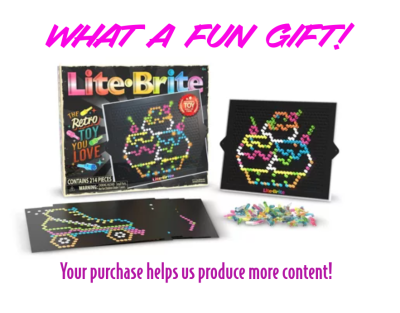
For over 50 years, Lite-Brite has been a beloved toy that has captivated children and adults alike. With its simple yet innovative design, this glowing masterpiece allows users to create vibrant, illuminated images using small colored pegs. But beyond being a nostalgic favorite, some versions of Lite-Brite have become valuable collector’s items, fetching hundreds of dollars in the resale market.
The History of Lite-Brite
Lite-Brite was invented in 1967 by Joseph M. Burck, a designer at Hasbro. Inspired by the dazzling effect of stained-glass windows, Burck wanted to create a toy that let children “paint with light.” The first models came with a lightbox, a black perforated screen, and colored translucent pegs that, when placed, created glowing images.
The toy became an instant success, with Hasbro releasing character-themed templates featuring Mickey Mouse, Scooby-Doo, and other popular figures. Over the years, Lite-Brite has evolved into digital versions, LED models, and even app-based designs, ensuring its continued relevance in a modern, tech-driven world.
The Lite Brite is still made and sold today! Pick up one with the same retro aesthetics here!
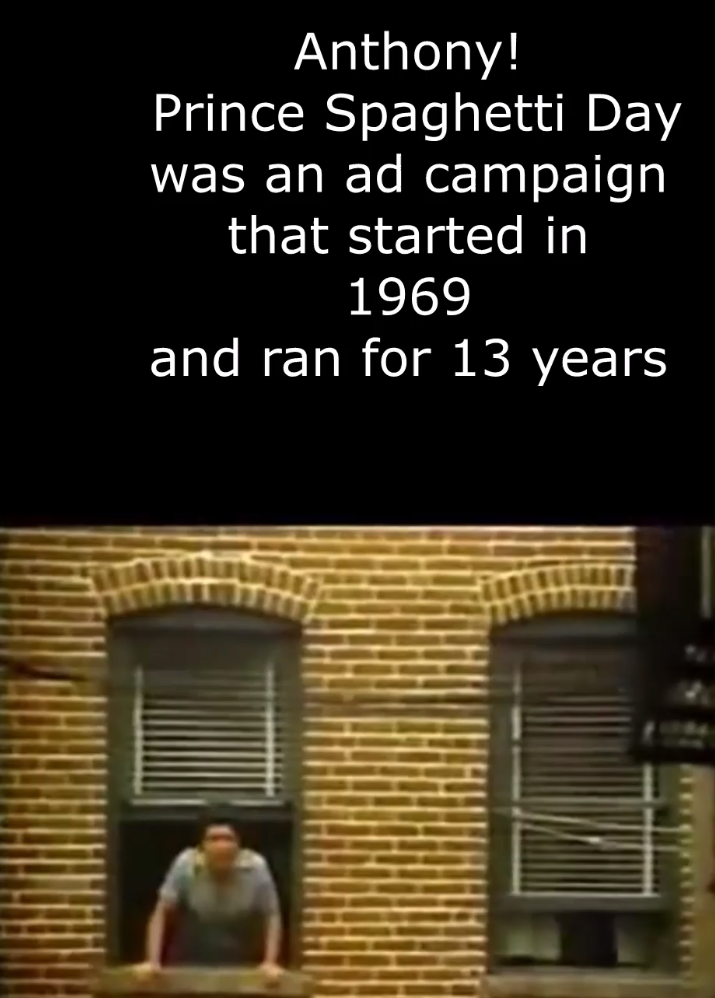
Anthony! The Prince Spaghetti Day ad ran for 13 years starting in 1969. Sadly, Anthony Martignetti passed in 2020 at the age of 63. Prince Pasta is now owned by New World Pasta. Would that make it the Pasta formerly known as Prince?
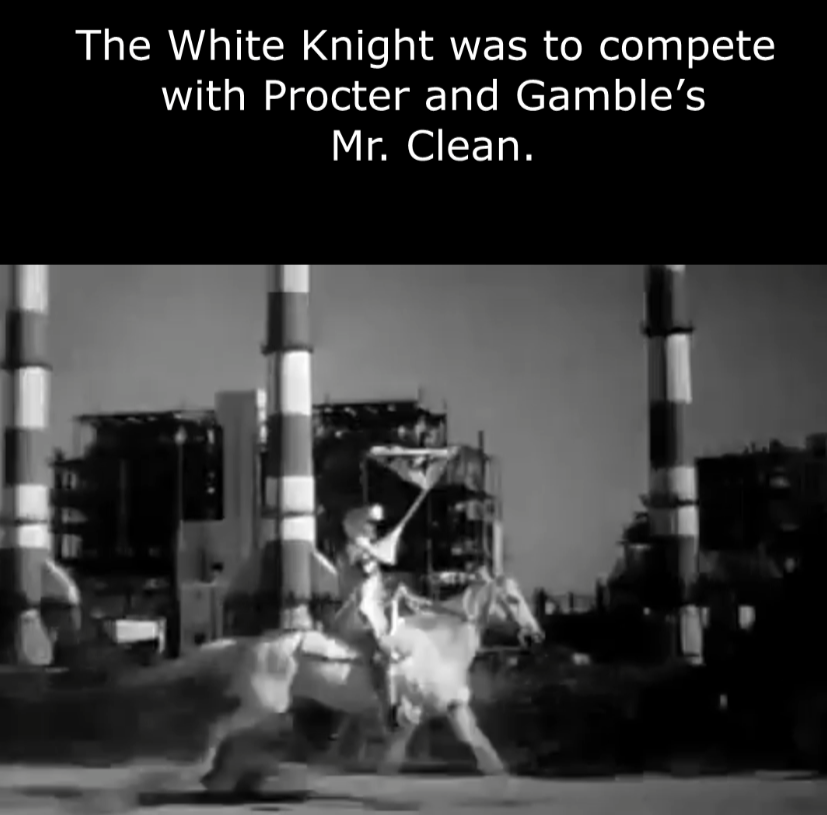
Ajax’s White Knight was a popular ad campaign in the 1960s to compete with Procter and Gamble’s Mr. Clean. Stronger Than Dirt ad campaign influenced the Doors to end their popular song Touch Me with that very phrase!