online community focused on sharing and reminiscing about video, audio, and images that stir our memories of the past – old television, theme songs, commercials, print advertisements, the sights and sounds you remember
With four other brothers to keep busy, Mom and Dad scored big with all of us when they brought home the Carry-All Action Playsets by Marx. These kept us entertained, and probably more importantly, quiet for hours.
You had to be careful with the pivot joints and mounting points, but other than that, these playsets could take a lot of abuse. I had Fort Apache, and one of my younger brothers had the Fighting Knights set.
Surprisingly, my Marine sergeant dad did not get us the Army Men set, but it did not matter much. No matter which one you had, these Carry-All playsets brought hours and hours of fun.
Luke and Laura’s wedding on General Hospital was not just a soap opera wedding. It was a television event. In 1981, about 30 million people watched a fictional couple get married in the middle of the afternoon, and for that moment, daytime TV felt bigger than prime time.
Today, Taylor and Travis are having the modern version of that same pop culture moment. Instead of everyone gathering around the TV at the same time, people are following it through news alerts, fan videos, social media posts, street closures, and crowds outside Madison Square Garden.
Luke and Laura were the wedding America watched.
Taylor and Travis are the wedding America is following.
Different era. Different screen. Same kind of fascination.
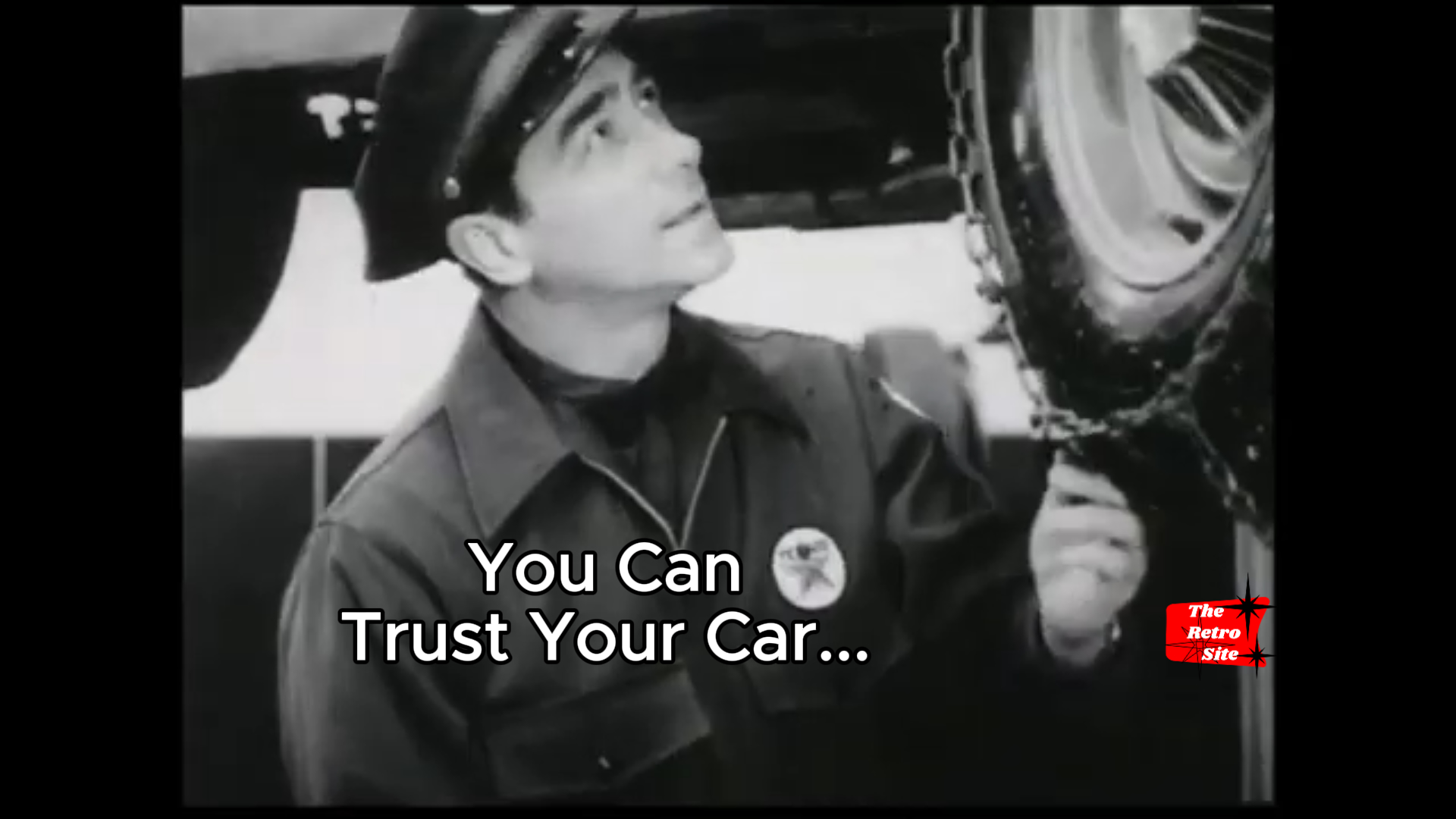
You Can Trust Your Car to the Man Who Wears the Star was one of those great old advertising lines that stuck in your head because it did exactly what a slogan was supposed to do: it made the brand feel safe, familiar, and dependable.
Texaco’s “star” was right there in the logo, and the “man who wears the star” was the service station attendant. Back then, gas stations were not just places where you pumped your own gas and left. An attendant might check your oil, clean your windshield, look at your tires, and give the car a quick once-over while you sat behind the wheel. The campaign sold Texaco as more than gasoline. It sold trust.
The slogan became closely tied to Texaco’s image during the full-service gas station era. The message was simple: pull into Texaco, look for the star, and you were in good hands. It fit perfectly with the time, when uniformed attendants and branded service stations were part of the American road trip experience.
The jingle is most commonly credited to Roy Eaton, a pioneering Black advertising composer who worked on major campaigns including Texaco and Chef Boyardee Beefaroni. One profile says Eaton created the Texaco jingle in 1962, and another notes it was recognized by Advertising Age as part of one of the top ad campaigns of the 20th century. As for who sang the original version, that part is less clear. The safest answer is that it was likely performed by commercial session singers over the years, with different versions used in different Texaco spots.
The line worked because it sounded almost like a jingle before you even heard the music. “You can trust your car to the man who wears the star” has that smooth, sing-song rhythm that made it easy to remember. Texaco also used another famous star-themed line, “Star of the American Road,” leaning heavily into the red star logo as a symbol of dependability.
Looking back, it is a reminder of when gas stations felt more personal. The “man who wears the star” was not just selling gas. He represented service, pride, and that old-school promise that somebody actually knew your car and cared whether you made it down the road.
Mahna Mahna is one of those nonsense songs that somehow parked itself in everyone’s brain forever.
Most of us remember it from The Muppets, with the shaggy little “Mahna Mahna” character singing the goofy lead while the two pink creatures, the Snowths, answer back. But the song actually started in a very different place. It was written by Italian composer Piero Umiliani for the 1968 Italian film Svezia, inferno e paradiso, released in English as Sweden: Heaven and Hell.
Then Jim Henson and company turned it into something completely different. The Muppets performed it on Sesame Street in 1969, then on The Ed Sullivan Show, and later it became one of the memorable sketches from the first episode of The Muppet Show in 1976.
The funny part is, the lyrics don’t mean anything. That’s the whole charm. It’s just a silly call-and-response tune, but once you hear it, good luck getting it out of your head. Like a lot of the best Muppet moments, it worked because it was simple, weird, and somehow hilarious without needing a real punchline.
The Farrah doll was part of full-blown Farrah Fawcett mania in the late 1970s, when her feathered hair, red swimsuit poster, and Charlie’s Angels fame were everywhere.
Mego released a Farrah Fawcett doll in 1977, right when she was one of the biggest TV and poster stars in America. The doll was about 12 inches tall, fully poseable, and came with Farrah’s famous long blonde hair. Some versions had outfits like a red top, denim shorts, white boots, and even accessories like a skateboard. The Smithsonian has a Farrah Fawcett doll with skateboards in its collection, describing it as a blonde doll dressed in a red shirt, blue denim shorts, and knee-high white boots.
There was also a Farrah’s Glamour Center toy made in 1977, showing how much her look was being sold as part of the fantasy. It wasn’t just “here’s a celebrity doll.” It was “here’s the hair, the style, the smile, and the whole Farrah look.”
What’s funny now is that the doll didn’t always capture Farrah perfectly. Like a lot of celebrity dolls from that era, it was close enough for kids and collectors to know who it was supposed to be, but not exactly museum-quality likeness. Still, that almost makes it more charming. Back then, if you had the Farrah doll, the poster, and maybe the haircut, you were officially living in 1977.
Farrah’s actual red swimsuit and related items were later donated to the Smithsonian, along with a 1977 Farrah Fawcett doll, which tells you how much that image and merchandising became part of pop culture history
Glen Campbell’s Country Special from January 11, 1972 was one of those old-school TV nights where the whole living room got a free country concert. Glen wasn’t alone either. He had Johnny Cash, June Carter, Merle Haggard, Buck Owens, Freddie Hart, Jerry Reed, Minnie Pearl, and Mel Tillis all showing up like it was nothing. Today, that would be a major streaming event. Back then, it was just Tuesday night television.
That’s what made variety shows so great. You didn’t have to buy a ticket, search YouTube, or subscribe to anything. You just turned on CBS and there was Glen Campbell, smooth as ever, picking and singing with some of the biggest country stars of the era. Do you remember watching Glen’s show, or were your parents the ones who had control of the TV when country music came on?
Tiny Tim took “Tiptoe Through the Tulips” and turned it into one of the most unforgettable TV moments of the late 1960s.
With his ukulele, long hair, nervous smile, and high falsetto voice, he came across like someone from another planet. His big break came on Rowan & Martin’s Laugh-In, and before long he was showing up on shows like The Tonight Show with Johnny Carson.
The public didn’t quite know what to do with him. Some people laughed, some were fascinated, and some thought he was just plain strange. But Tiny Tim was completely sincere. He loved old songs and performed them in a way nobody else could.
And whether you loved him or thought he was weird, once you heard “Tiptoe Through the Tulips,” you never forgot it.
Leave it to the early 1980s to give us a controversy over a baby doll’s bare bottom.
Mattel’s Tippee-Toes was one of those dolls that was supposed to look cute, innocent, and lifelike. She could crawl, and like a lot of toy commercials from back then, the ad was aimed right at kids sitting in front of the TV, probably during cartoons or family programming. But then came the part that got people talking: the commercial showed the doll’s little bare backside.
That may sound pretty tame today, but back then one viewer found it offensive enough to complain to David Horowitz, the consumer advocate best known for Fight Back! with David Horowitz. Horowitz was the guy people turned to when they felt a product, commercial, or company needed to be called out. He built a career on standing up for consumers, testing products, and bringing viewer complaints into the spotlight.
The issue even made its way to The Tonight Show Starring Johnny Carson in 1982. Horowitz appeared on Carson and discussed the Tippee-Toes commercial, reportedly showing both the original ad and the changed version after complaints were made. It was one of those perfect Johnny Carson moments where something small, silly, and strangely serious all came together on national television.
Looking back, it feels almost impossible to believe this was a controversy. We grew up with talking dolls, creepy ventriloquist dummies selling chocolate milk, clowns selling cereal, and commercials that would probably send today’s internet into a panic. But a baby doll’s bare bottom? That was enough to get a consumer advocate involved and Mattel’s attention.
It’s a funny little reminder of how much TV, advertising, and what people considered “offensive” has changed over the years. Tippee-Toes was just trying to crawl across the screen, but somehow she crawled right into consumer TV history.
I’d hear that song from upstairs, and I’d sneak halfway down the stairs just to peek at Mom’s show. I remember asking why he was sitting there all alone in that big room, because I didn’t understand what a courtroom was or why everyone looked so serious. Mom still tried to explain it to me, even though I’m sure I was bugging her. All she wanted to do was relax and watch a little TV before her own bedtime.
As a kid, I could not understand why Mom watched such a boring show. There were no monsters, no cartoons, no spaceships, and nobody was falling down a well for Lassie to rescue. Just Raymond Burr sitting there as Perry Mason, calmly figuring out who really did it while everyone else in the courtroom waited for him to prove it.
The show originally ran on CBS from 1957 to 1966, with Raymond Burr as defense attorney Perry Mason, Barbara Hale as his secretary Della Street, William Hopper as private detective Paul Drake, and William Talman as district attorney Hamilton Burger. The famous theme was called “Park Avenue Beat” and was written by Fred Steiner. That opening music had a cool, jazzy, serious sound that basically told every kid in the house, “Fun time is over. The adults have taken over the TV.”
The funny part is, despite the show being around forever and becoming one of the most famous courtroom dramas in television history, I don’t think I’ve ever sat down and watched a single full episode. But I still remember that theme like it was yesterday. That was the sound of Mom’s TV time, the sound of being told to go back upstairs, and the sound of knowing bedtime was coming whether I liked it or not.
Just hearing the opening whistle brings back a flood of childhood memories of Lassie. As a kid, I vowed that one day I would get a collie and name her Lassie. Yeah, that never happened. I also didn’t get a dolphin and name it Flipper. But back then, Lassie made it seem like every problem could be solved with loyalty, courage, and a very smart dog who somehow always knew exactly where to go for help. By 1959, Lassie was deep into the Timmy Martin years, with Jon Provost playing Timmy, June Lockhart as his mother, Ruth Martin, and Hugh Reilly as his father, Paul Martin. June Lockhart would later become another famous TV mom as Maureen Robinson on Lost in Space, but to me, she would always be Lassie and Timmy’s mom. No matter how serious the problem was, everything seemed to get wrapped up neatly within the 22 minutes of the show. Someone could be lost, trapped, injured, or in danger, and somehow Lassie would bark, run, lead the adults to the right place, and make everything okay again. And yes, Timmy actually did fall down a well, even though the old joke makes it sound like it happened every week. It happened in the 1960 episode “The Well,” where Timmy ends up trapped and, of course, Lassie has to get help. That one moment became the running gag everyone remembers: “What’s that, Lassie? Timmy fell down the well?” Having a rough childhood, I always wished I had Timmy’s family. There was something comforting about that show, even if life was not really like anything we saw on TV. The Martins seemed steady, kind, and safe, and Lassie was always there watching over everyone. For a kid, that kind of world was easy to want. Well, at least I have my cat Chassie, and yes, calling her reminds me of Lassie.