



Just hearing the opening whistle brings back a flood of childhood memories of Lassie.
As a kid, I vowed that one day I would get a collie and name her Lassie. Yeah, that never happened. I also didn’t get a dolphin and name it Flipper. But back then, Lassie made it seem like every problem could be solved with loyalty, courage, and a very smart dog who somehow always knew exactly where to go for help.
By 1959, Lassie was deep into the Timmy Martin years, with Jon Provost playing Timmy, June Lockhart as his mother, Ruth Martin, and Hugh Reilly as his father, Paul Martin. June Lockhart would later become another famous TV mom as Maureen Robinson on Lost in Space, but to me, she would always be Lassie and Timmy’s mom.
No matter how serious the problem was, everything seemed to get wrapped up neatly within the 22 minutes of the show. Someone could be lost, trapped, injured, or in danger, and somehow Lassie would bark, run, lead the adults to the right place, and make everything okay again.
And yes, Timmy actually did fall down a well, even though the old joke makes it sound like it happened every week. It happened in the 1960 episode “The Well,” where Timmy ends up trapped and, of course, Lassie has to get help. That one moment became the running gag everyone remembers: “What’s that, Lassie? Timmy fell down the well?”
Having a rough childhood, I always wished I had Timmy’s family. There was something comforting about that show, even if life was not really like anything we saw on TV. The Martins seemed steady, kind, and safe, and Lassie was always there watching over everyone. For a kid, that kind of world was easy to want.
Well, at least I have my cat Chassie, and yes, calling her reminds me of Lassie.
Tag: Retro TV

Did Miss Nancy Ever Call Your Name?
Did she ever call your name? Oh, the simple joys of Romper Room. That Magic Mirror had every kid sitting at home waiting, hoping Miss Nancy would say their name before the show ended. And if she did, you felt like you had just made national television from the living room floor.
I told you my father was a Marine, so we grew up in Virginia or North Carolina so we watched Miss Nancy on WBAL. But I never realized back then that there wasn’t just one “Miss Nancy.” Romper Room was franchised and syndicated, meaning different cities often had their own local hostesses using the same basic format.
The original Romper Room began in Baltimore in the early 1950s and was created by Bert and Nancy Claster, with Nancy Claster becoming the first well-known “Miss Nancy.” It was aimed at preschool children and felt like a TV nursery school, with songs, games, stories, manners, and those famous lessons about being a “Do Bee” instead of a “Don’t Bee.”
And then came the part we all remember: “Romper, bomper, stomper boo…” Miss Nancy would look through the Magic Mirror and start naming children she supposedly saw watching at home. We knew she probably couldn’t really see us, but at that age you weren’t taking chances. You sat there quietly, behaved like a Do Bee, and waited for your name.
That is what made the show work. She treated the camera like another child in the room, so the kids watching at home felt included too. It was simple television: a teacher, a few children, a Jack-in-the-box, a magic mirror, and lessons about being polite.
No explosions, no superheroes, no fast cuts (ok, maybe a clown in the Jack-in-the-box). Just Miss Nancy asking if we had fun at play.
And yes, I still remember waiting for my name. Did she ever call yours?

Hey Grandpa! What’s For Dinner?
It still wasn’t as bad as when Dad turned on Lawrence Welk, but Hee Haw always felt like the country cousin of Rowan & Martin’s Laugh-In. It had the same quick jokes, blackout skits, silly one-liners, and regular cast bits, just with more overalls, cornfields, banjos, and country music stars dropping by.
The show first aired in 1969, right around the same era when Laugh-In was still the cool, fast-moving comedy show everyone was talking about. Hee Haw took that same rapid-fire style and gave it a country spin, and somehow it stuck around for years. Even if you weren’t a big country music fan, you probably remember the corny jokes, the haystacks, the “salute” segments, and someone in the house laughing at lines that made the rest of us groan. And who can forget Grandpa?

The Pruitts Of Southampton
Oh, I can hear my mother singing along with Phyllis Diller on this one! Thanks to the viewer who requested this last week, it brought back a forgotten memory!
The Pruitts of Southampton was one of those 1960s sitcoms that had a wild setup and an even wilder star. It aired on ABC during the 1966-67 season and starred Phyllis Diller as Phyllis Pruitt, a supposedly rich Southampton widow trying to keep up appearances after the IRS discovers the family is actually broke. Instead of losing everything, she has to keep living like high society while secretly cutting corners and trying to hold the whole mansion together.
The show had a pretty impressive cast around her too, including Gypsy Rose Lee, Richard Deacon, Reginald Gardiner, and even Lisa Loring, who many of us remember as Wednesday from The Addams Family. Later in the season, the show was renamed The Phyllis Diller Show, but it still only lasted one season.
And yes, that catchy theme had a familiar name behind it: Vic Mizzy, the same composer who gave us The Addams Family theme. That probably explains why so many people remember the tune even if they barely remember the show itself. It was loud, silly, a little over-the-top, and totally Phyllis Diller. For a short-lived sitcom, it sure found a way to stick in people’s heads.
#ThePruittsOfSouthampton #PhyllisDiller #ClassicTV #RetroTV #1960sTV #TVNostalgia #TheRetroSite #BabyBoomerMemories #VintageTelevision #TVThemeSongs

Johnny Quest
Back in the mid-60s when Hanna-Barbera put this out, it wasn’t your typical cartoon. This felt different. It wasn’t just silly characters running around… this felt like a full-on adventure series. With the coolest sounding sound effects and an intro that was over a minute and thirty seconds, you knew you were in for something different!
You had Jonny, his dad Dr. Quest, Race Bannon—who every kid thought was the coolest guy alive—and then Hadji. And let’s be honest… Hadji was the one that really stuck with you. The mystery, the magic, that calm voice… he brought something totally different to the show.
What I remember most is how serious it felt. There were real dangers, real villains, and some episodes honestly felt a little intense for a cartoon back then. You didn’t just watch it… you kind of leaned in. It felt like you were going on the adventure with them.
And the music… that opening theme? You hear that today and it still pulls you right back. That’s how you know it stuck.
This wasn’t background TV. This was the kind of show where if it came on, you stopped what you were doing. No rewind, no streaming… you missed it, you missed it.
So I’m curious on this one… were you watching Jonny Quest when it aired, or did you catch it later in reruns? And where do you rank it compared to the other cartoons from that era?
Because for me… this one felt a step above.

The Moment TV Jumped The Shark
f you’ve ever heard someone say a show “jumped the shark,” this is the clip they’re talking about.
I mean… here’s Fonzie, cool as ever, leather jacket and all… out on water skis… and yeah… literally jumping over a shark on Happy Days.
And somewhere along the way, that moment turned into a phrase we still use today.
So here’s how that even happened.
Back in the late ’90s, a guy named Jon Hein created a website called Jump the Shark. The whole idea was to track the exact moment when a TV show starts to go downhill. Not slowly… not over time… but that one moment where you sit there and go, “Alright… what are we doing here?”
And the moment he pointed to?
This one. Fonzie. The shark. 1977. Episode “Hollywood: Part 3.”
From there, it just stuck. The phrase took off, and now people use it for everything. Not just TV… anything that goes too far trying to stay relevant. A show, a company, even people. When it stops feeling real and starts feeling forced… that’s when you hear it… “they jumped the shark.”
Now here’s the part a lot of people don’t realize… the people involved didn’t think it was some disaster at the time.
Henry Winkler has talked about it in interviews and basically said… look, the show had already done physical comedy, and to him, it was just another fun stunt. He’s even pointed out that ratings didn’t suddenly crash after that episode, so in his mind, it didn’t ruin anything.
Writer Fred Fox Jr. said something similar. They were trying to make those Hollywood episodes bigger… more exciting… something different. At the time, it wasn’t, “we’re out of ideas”… it was, “let’s top what we’ve already done.”
And even creator Garry Marshall defended it. He always said people forget just how big Fonzie was back then. The idea was to give him a larger-than-life moment. Something memorable.
Well… mission accomplished.
Because here we are, decades later, still talking about it.
And that’s the funny part. The phrase “jump the shark” is usually meant as a knock… like something went downhill. But this scene? It’s one of the most remembered moments in TV history.
So yeah… maybe it did jump the shark.
But it also made sure none of us would ever forget it.

Silly Millimeter Longer Ad- Did Your Parents Follow The Trend?
You ever look back at some of these old commercials and just shake your head?
This is one of those for me… the one where they made a big deal about a cigarette being just a little bit longer. We’re talking a millimeter… something you’d need a ruler to even notice. But back then? They sold it like it was a game changer.
Even as a kid I remember thinking, wait… that’s it? But the way they presented it, you’d think you were looking at a luxury item. Zoomed in shots, side-by-side comparisons, and that smooth voiceover selling the idea like it mattered.
Brands like Virginia Slims leaned hard into that image. It wasn’t just smoking… it was style, confidence, sophistication. And tied into that whole “You’ve come a long way, baby” vibe, it all felt bigger than it really was.
And then there’s the music.
That jingle always hit my ear like La Bamba… that same upbeat, bouncing rhythm that sticks in your head whether you want it to or not. Not the actual song… but close enough that your brain grabs onto it.
And somehow they wrapped all of that together and made cigarette size a trend.
Think about that.
There was a time when a slightly longer cigarette felt like a status move. Longer, slimmer… like you were keeping up with something. They took something barely noticeable and turned it into a whole thing.
Different times, right?
But here we are… still talking about it.
Let me ask you…
Were your parents into the trends… or once they picked a brand, that was it?


Go-Go-Gophers… Another Theme To Get Stuck In Your Head!

To this day, over 50 years later, most of us can still remember that chorus… “Go-Go Gophers!” You don’t even have to try. It just shows up. I’ll be rushing around doing something and boom… there it is playing in my head like it never left.
And listening to it now, with adult ears? I’ve gotta be honest… I’m kind of amazed this actually aired even back then. But that was the times. Different world, different standards. Still, no question about it… it sticks with you.
This was one of the most requested clips this week, so I figured I’d hold onto it for Saturday morning… feels like the right place for it.


Proof! Ward Hit The Beaver!
There’s a well-known scene from Leave It to Beaver where Ward Cleaver (Hugh Beaumont) is clearly frustrated with Beaver and starts to say something along the lines of disciplining him—what people later joke about as “hitting the Beaver.”
But what makes the moment memorable isn’t actual violence—it’s the awkward interruption and phrasing.
As Ward begins to sternly address Beaver, the situation shifts when others are present (or nearby), and the tone changes. Instead of following through with a harsh statement, Ward softens and redirects, choosing words more carefully. The writing leans into that classic 1950s TV dynamic: discipline is implied, but handled verbally and with restraint.
Over time, fans have latched onto these moments because of how they sound out of context. Lines like “Ward, don’t be too hard on the Beaver” became unintentionally funny decades later, especially when pulled away from the show’s wholesome tone.
The Reality
- Ward never actually hits Beaver on the show
- Discipline is almost always talk-based and lesson-driven
- The humor comes from phrasing + timing, not action
Why it stuck in pop culture
The combination of innocent writing and changing language meanings turned these scenes into internet-era jokes. What was once a straightforward family moment now gets remembered for its accidental double meanings.
If you want, I can track down the exact episode that line gets closest to what you’re remembering—there are a couple of similar scenes fans mix together.

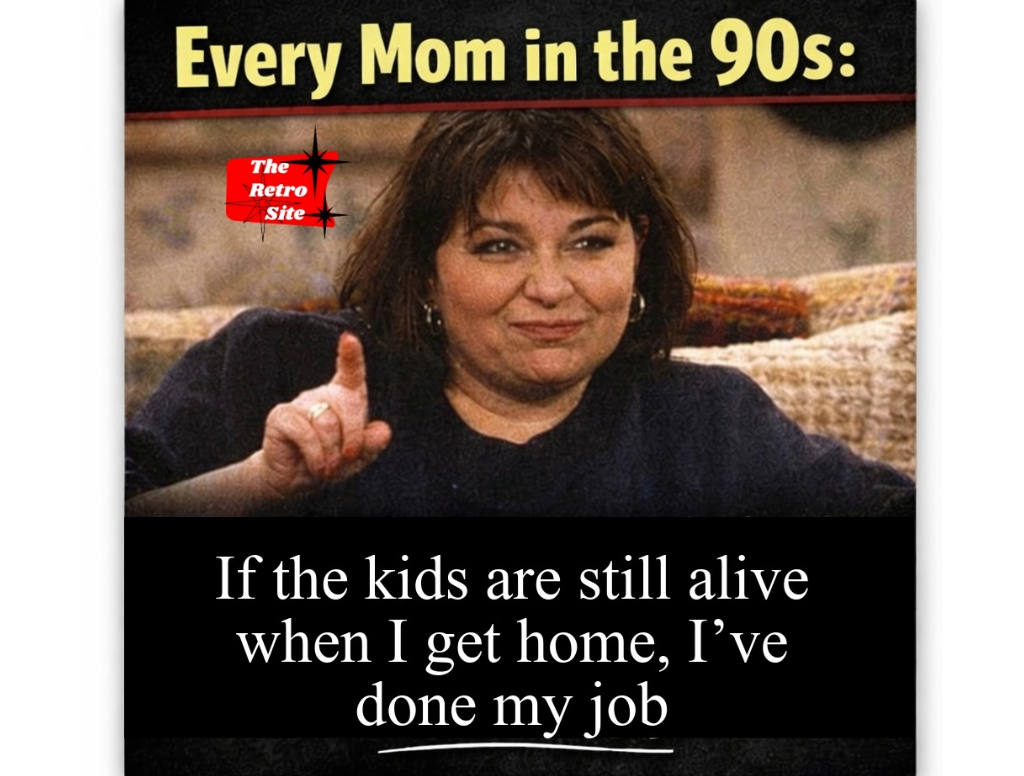
If the kids are still alive when I get home, I’ve done my job
Did your mom have a favorite saying? Share them in the comments!
The line often shared online — “If the kids are still alive when I get home, I’ve done my job” — is widely associated with Roseanne Barr and her iconic working-class mom persona. While it perfectly captures the tone of her humor, there is no confirmed record of this exact quote appearing in a specific episode of Roseanne or a documented stand-up routine.
Still, the reason the quote sticks is simple: it sounds exactly like her. In the 1980s, Barr’s stand-up comedy pushed back against the unrealistic “perfect mother” image that dominated television. Instead of spotless homes and flawless parenting, she delivered something different — sarcasm, exhaustion, and honesty. Her comedy gave voice to parents who were simply trying to get through the day, not win awards for perfection.
That same mindset carried into Roseanne, where the Conner family became one of television’s most relatable households. The show didn’t shy away from financial stress, messy homes, or parenting struggles. It reflected real life, and audiences responded because they saw themselves in it.
So while the quote itself may not be officially documented, its meaning is authentic to the era and to Barr’s impact. It represents a shift in how parenting was portrayed — less about perfection, and more about survival, humor, and keeping things together one day at a time.
#Roseanne #RetroTV #90sSitcom #ParentingHumor #RealLifeMom #ThrowbackTV #WorkingClass #TVHistory #Nostalgia #TheRetroSite