70’s Canister Set

We had this canister set, but ours was brown, or whatever that official 1970s brown color was called. You know the one, somewhere between chocolate, coffee, and “everything in the kitchen must look like earth tones.”

Seeing something like this is funny because it is just a simple photo, but it brings back a flood of childhood memories. I remember our tea canister stacked on top of the coffee canister, and the other three were all the same size. For some reason, I thought that was pretty cool. Then again, back then, most things seemed pretty cool.

The 1970s kitchen definitely had its own look. Avocado green, harvest gold, burnt orange, and those deep browns seemed to be everywhere, from appliances to countertops to dishes and canister sets like these. Nothing matched today’s idea of “modern,” but somehow it all felt warm, familiar, and homey.

It is amazing how one little thing from the kitchen counter can take you right back. You can almost picture the percolator, the Tupperware, the patterned wallpaper, and someone telling you not to touch anything because company was coming over.

Did your family have a canister set like this, and what color was yours?

Laugh-In Favorites

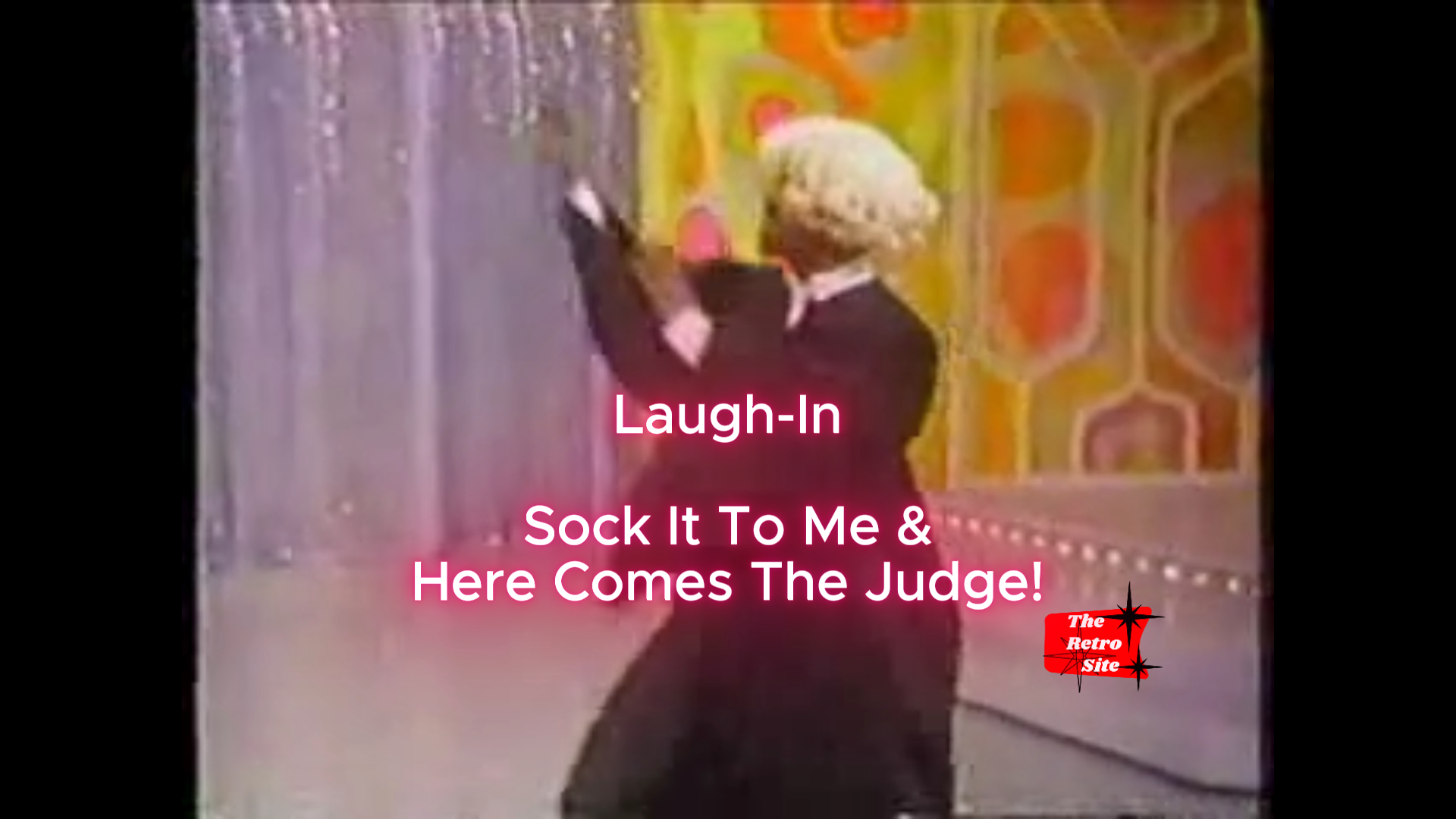
I still can’t believe my Marine sergeant dad, the same dad who hated hippies and anti-war protesters, the same dad who tuned into Lawrence Welk and Hee Haw, actually enjoyed Laugh-In.

That show was loud, weird, colorful, and full of the exact kind of counterculture humor you would think he’d complain about. But somehow, Rowan & Martin’s Laugh-In worked its way into living rooms like ours. Maybe it was the fast jokes, maybe it was the pretty girls, maybe it was the one-liners, or maybe it was just goofy enough that even the strict dads could laugh before they realized what they were laughing at.

For all the things my dad would not tolerate, somehow Laugh-In got a pass. And that may be one of the funniest things about the show. It was strange enough for the kids, fast enough for the adults, and somehow ridiculous enough to bring everybody into the same room.

Jeff’s Collie

https://www.theretrosite.com/wp-content/uploads/2026/05/0jeffx.mp4

After posting about Lassie, many of you asked about Jeff’s Collie, which I was totally unfamiliar with, so please share your memories about this one! I don’t know if it wasn’t shown in our area or if somehow this got by me.

When Lassie first came to television in 1954, the boy was not Timmy. It was Jeff Miller, played by Tommy Rettig. Jeff lived on a farm with his widowed mother, Ellen Miller, played by Jan Clayton, and his grandfather, George “Gramps” Miller, played by George Cleveland. Those early years are often called Jeff’s Collie, especially in reruns and DVD releases.

That version ran from 1954 to 1957, covering the first several seasons of the show. The setup was still the same basic formula we all remember: a boy, a farm, a loyal collie, and some kind of trouble that Lassie had to fix before the episode ended. Jeff would get into scrapes, someone would need help, and Lassie would bark, run, and somehow explain the whole emergency better than most adults could.

The show changed after actor George Cleveland, who played Gramps, died in 1957. His death was written into the series, and the Miller family eventually left the farm. That opened the door for Timmy Martin, played by Jon Provost, to become Lassie’s new boy. From there, the show became the more famous Timmy and Lassie era.

So Jeff’s Collie is basically the “before Timmy” Lassie. Same famous dog, same wholesome adventure style, but with Tommy Rettig as Jeff instead of Jon Provost as Timmy. For people who watched the reruns, it could be confusing because one day Lassie belonged to Jeff, and another day she belonged to Timmy, and as kids we probably just accepted that Lassie had more family changes than most soap operas.

Summary:
Before Timmy became Lassie’s best-known TV companion, there was Jeff Miller in the early years of the series, often remembered as Jeff’s Collie. It was the original boy-and-his-dog era of Lassie, and somehow this one got by me, so I’d love to hear who remembers watching it.

Perry Mason’s theme reminds me of bedtime!

https://www.theretrosite.com/wp-content/uploads/2026/05/0perry.mp4

I’d hear that song from upstairs, and I’d sneak halfway down the stairs just to peek at Mom’s show. I remember asking why he was sitting there all alone in that big room, because I didn’t understand what a courtroom was or why everyone looked so serious. Mom still tried to explain it to me, even though I’m sure I was bugging her. All she wanted to do was relax and watch a little TV before her own bedtime.

As a kid, I could not understand why Mom watched such a boring show. There were no monsters, no cartoons, no spaceships, and nobody was falling down a well for Lassie to rescue. Just Raymond Burr sitting there as Perry Mason, calmly figuring out who really did it while everyone else in the courtroom waited for him to prove it.

The show originally ran on CBS from 1957 to 1966, with Raymond Burr as defense attorney Perry Mason, Barbara Hale as his secretary Della Street, William Hopper as private detective Paul Drake, and William Talman as district attorney Hamilton Burger. The famous theme was called “Park Avenue Beat” and was written by Fred Steiner. That opening music had a cool, jazzy, serious sound that basically told every kid in the house, “Fun time is over. The adults have taken over the TV.”

The funny part is, despite the show being around forever and becoming one of the most famous courtroom dramas in television history, I don’t think I’ve ever sat down and watched a single full episode. But I still remember that theme like it was yesterday. That was the sound of Mom’s TV time, the sound of being told to go back upstairs, and the sound of knowing bedtime was coming whether I liked it or not.

Lassie

https://www.theretrosite.com/wp-content/uploads/2026/05/0-lassie.mp4

Just hearing the opening whistle brings back a flood of childhood memories of Lassie.
As a kid, I vowed that one day I would get a collie and name her Lassie. Yeah, that never happened. I also didn’t get a dolphin and name it Flipper. But back then, Lassie made it seem like every problem could be solved with loyalty, courage, and a very smart dog who somehow always knew exactly where to go for help.
By 1959, Lassie was deep into the Timmy Martin years, with Jon Provost playing Timmy, June Lockhart as his mother, Ruth Martin, and Hugh Reilly as his father, Paul Martin. June Lockhart would later become another famous TV mom as Maureen Robinson on Lost in Space, but to me, she would always be Lassie and Timmy’s mom.
No matter how serious the problem was, everything seemed to get wrapped up neatly within the 22 minutes of the show. Someone could be lost, trapped, injured, or in danger, and somehow Lassie would bark, run, lead the adults to the right place, and make everything okay again.
And yes, Timmy actually did fall down a well, even though the old joke makes it sound like it happened every week. It happened in the 1960 episode “The Well,” where Timmy ends up trapped and, of course, Lassie has to get help. That one moment became the running gag everyone remembers: “What’s that, Lassie? Timmy fell down the well?”
Having a rough childhood, I always wished I had Timmy’s family. There was something comforting about that show, even if life was not really like anything we saw on TV. The Martins seemed steady, kind, and safe, and Lassie was always there watching over everyone. For a kid, that kind of world was easy to want.
Well, at least I have my cat Chassie, and yes, calling her reminds me of Lassie.

There Was More For Your Life At Sears

https://www.theretrosite.com/wp-content/uploads/2026/05/04011.mp4

Back in the early 1980s, Sears was still one of the big American shopping destinations, and their “There’s More For Your Life At Sears” campaign tried to sell that feeling. It wasn’t just about buying appliances, tools, clothes, or lawn furniture. Sears wanted you to believe the whole family could find something there.

One of the familiar faces in the campaign was golf legend Arnold Palmer, who appeared alongside other recognizable sports figures of the time. The commercials had that upbeat, mall-era energy where everyone looked excited just to be shopping. Looking back now, they feel a little corny, but in the best possible nostalgic way.

For a lot of us, Sears was where you went for everything from back-to-school clothes to Craftsman tools, Kenmore appliances, Wish Book dreams, and maybe even a glimpse of Arnold Palmer telling us there was more to life at Sears.

Holy Clean Hands, Batman!

https://www.theretrosite.com/wp-content/uploads/2026/05/00.mp4

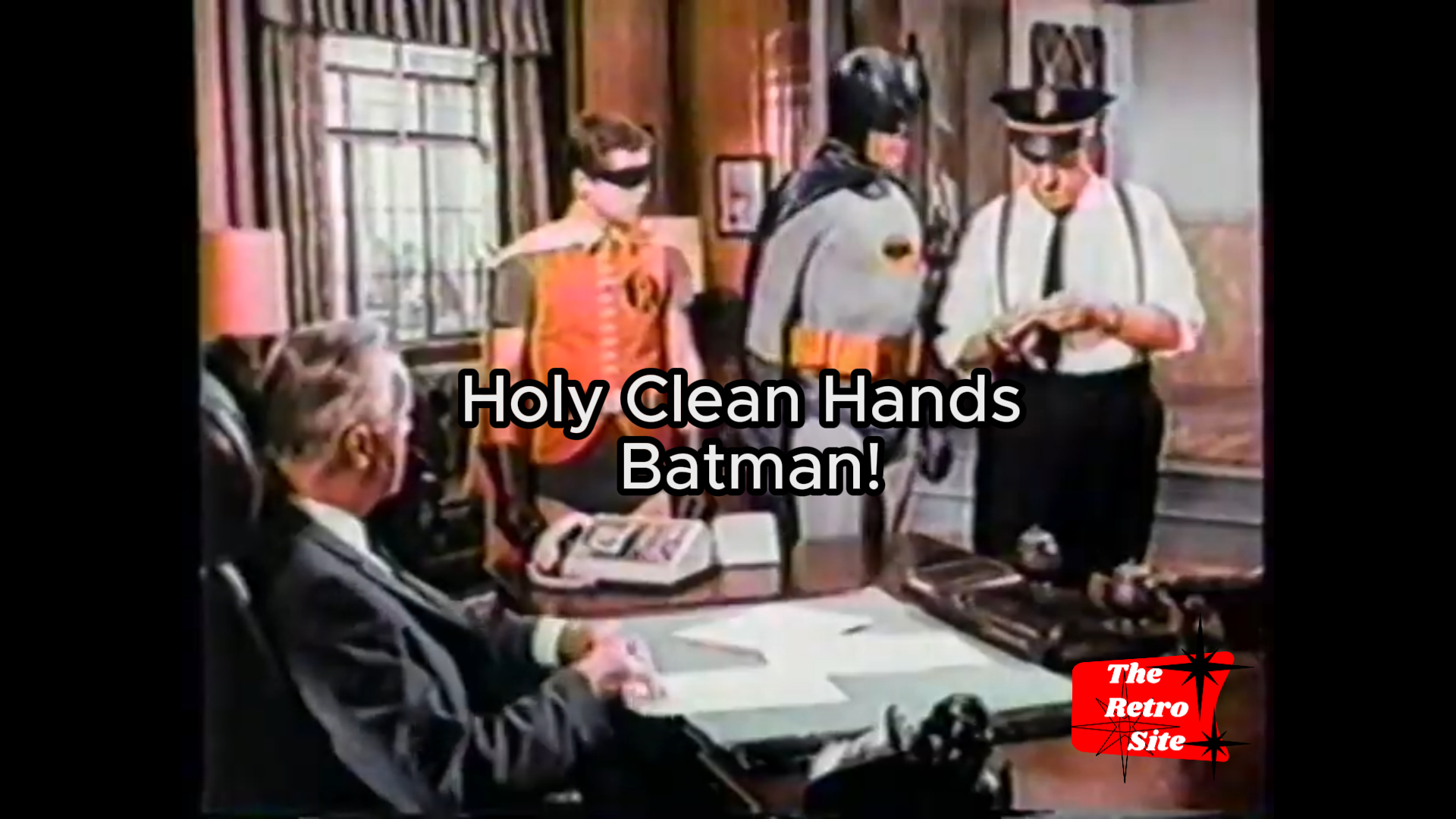
I remember seeing this commercial as a kid and wondering what Lava Soap even was. I don’t remember if my mom ever actually bought it for us, but if Batman was selling it, I wanted it!

That was the power of 1960s Batmania. Adam West’s Batman was everywhere, including commercials for Lava Soap, the gritty hand soap meant for grease, grime, and dirty hands. It was the kind of soap dads kept near the garage sink, but to a kid watching Batman and Robin pitch it, it suddenly looked like something every crimefighter needed.

Did your family ever have Lava Soap in the house, or were you like me, just wanting it because Batman said so?

Which of these lights did you own back in the day?

Before LED light strips and remotes, we had to do it the old-school way in the 1970s. If you wanted to make your room look cool, you went with black lights, lava lamps, strobe lights, flicker lights, and if you were really lucky, a color organ. This old Spiegel catalog page is a great reminder of just how different mood lighting was back then.

For me, it was number 7, the Listen-Light, also known as a color organ. You plugged it in, played your music, and the lights changed with the sound. Back then, that felt futuristic. Today it seems simple compared to all the LED lighting options out there, but in the 70s this stuff was magic. Which lights did you own?

Did Miss Nancy Ever Call Your Name?

https://www.theretrosite.com/wp-content/uploads/2026/05/00000000.mp4

Did she ever call your name? Oh, the simple joys of Romper Room. That Magic Mirror had every kid sitting at home waiting, hoping Miss Nancy would say their name before the show ended. And if she did, you felt like you had just made national television from the living room floor.

I told you my father was a Marine, so we grew up in Virginia or North Carolina so we watched Miss Nancy on WBAL. But I never realized back then that there wasn’t just one “Miss Nancy.” Romper Room was franchised and syndicated, meaning different cities often had their own local hostesses using the same basic format.

The original Romper Room began in Baltimore in the early 1950s and was created by Bert and Nancy Claster, with Nancy Claster becoming the first well-known “Miss Nancy.” It was aimed at preschool children and felt like a TV nursery school, with songs, games, stories, manners, and those famous lessons about being a “Do Bee” instead of a “Don’t Bee.”

And then came the part we all remember: “Romper, bomper, stomper boo…” Miss Nancy would look through the Magic Mirror and start naming children she supposedly saw watching at home. We knew she probably couldn’t really see us, but at that age you weren’t taking chances. You sat there quietly, behaved like a Do Bee, and waited for your name.

That is what made the show work. She treated the camera like another child in the room, so the kids watching at home felt included too. It was simple television: a teacher, a few children, a Jack-in-the-box, a magic mirror, and lessons about being polite.

No explosions, no superheroes, no fast cuts (ok, maybe a clown in the Jack-in-the-box). Just Miss Nancy asking if we had fun at play.

And yes, I still remember waiting for my name. Did she ever call yours?

Hey Grandpa! What’s For Dinner?

https://www.theretrosite.com/wp-content/uploads/2026/05/00grandpa.mp4

It still wasn’t as bad as when Dad turned on Lawrence Welk, but Hee Haw always felt like the country cousin of Rowan & Martin’s Laugh-In. It had the same quick jokes, blackout skits, silly one-liners, and regular cast bits, just with more overalls, cornfields, banjos, and country music stars dropping by.

The show first aired in 1969, right around the same era when Laugh-In was still the cool, fast-moving comedy show everyone was talking about. Hee Haw took that same rapid-fire style and gave it a country spin, and somehow it stuck around for years. Even if you weren’t a big country music fan, you probably remember the corny jokes, the haystacks, the “salute” segments, and someone in the house laughing at lines that made the rest of us groan. And who can forget Grandpa?

Exit mobile version