“My dog’s bigger than your dog, my dog’s faster than yours!”

https://www.theretrosite.com/wp-content/uploads/2026/05/Ken-L-ration.mp4

Here’s another earworm from the ’70s to get stuck in your head for the rest of the day.

Ken-L Ration was one of the big names in dog food for decades, dating back to the 1920s. The brand became known for canned dog food and later dry food, but most of us remember it because of that insanely catchy commercial jingle.

The song was based on “My Dog’s Bigger Than Your Dog” by folk singer Tom Paxton, and the ad turned it into a playground-style brag between kids. The idea was simple: my dog is bigger, faster, shinier, and better because he eats Ken-L Ration.

It was the kind of jingle advertisers loved because you didn’t just hear it — you repeated it. Kids could sing it, parents remembered it, and the brand name was baked right into the hook.

Ken-L Ration was eventually owned by Quaker Oats and later sold to H.J. Heinz in the 1990s, but the product faded from store shelves. The jingle, though? That survived. For a lot of us, all it takes is one line:

“My dog’s bigger than your dog…”

…and suddenly the whole thing comes running back like a dog hearing the can opener.

Sorry, Charlie!

https://www.theretrosite.com/wp-content/uploads/2026/05/Star-Kist.mp4

The StarKist “Sorry, Charlie” campaign started in 1961 and gave us one of the great advertising mascots: Charlie the Tuna. He was created by Tom Rogers of the Leo Burnett Agency as a beatnik-style tuna with a beret, thick glasses, and plenty of confidence. Charlie thought his “good taste” made him perfect for StarKist, but the joke was that StarKist did not want tuna with good taste — they wanted tuna that tastes good.

Charlie himself was originally voiced by actor Herschel Bernardi, who gave him that hip, New York, slightly theatrical sound. The famous announcer line “Sorry, Charlie” was voiced by Danny Dark, one of the biggest commercial voice-over artists of his era. StarKist’s own history page credits Dark as the narrator who delivered the line.

The commercials worked because Charlie was trying so hard to be chosen. He dressed sharp, talked cool, and acted like a sophisticated fish who deserved to end up in the can. Instead, he was rejected every time. Poor Charlie never understood that he was selling the product by not being good enough.

Looking back, it was a perfect old-school ad gag: one simple joke, a catchy phrase, and a character everyone remembered. “Sorry, Charlie” became bigger than tuna and turned into something people said whenever someone got rejected.

You Get A Quick Tan With QT !

https://www.theretrosite.com/wp-content/uploads/2026/05/QT.mp4

1963 was a little early for me to go out and get a quick tan. I just did it the old-fashioned way — by playing outside! But I sure remember the jingle.

Back then, nobody thought much about sunscreen warnings. You went outside, rode bikes, played ball, ran around the neighborhood, and by the end of summer you had the tan lines to prove it.

QT promised color without baking in the sun, which sounds funny now because self-tanners later became famous for streaks, blotches, and that dreaded orange look. But in that era, tanning was sold as healthy, glamorous, and fashionable.

Looking back, QT feels like a perfect little time capsule: a bottle promising summer color on demand, indoor or outdoor, rain or shine. Before spray tans, tanning beds, bronzers, and modern sunscreen warnings, there was Coppertone QT telling everyone they could hurry up and get tan.

“Brylcreem, a little dab’ll do ya…”

https://www.theretrosite.com/wp-content/uploads/2026/05/05072.mp4

That line was everywhere. The ads promised you didn’t need much, just a small dab, and suddenly you’d look sharp, smooth, and “debonair.” The jingle was credited to Hanley M. Norins of the Young & Rubicam advertising agency.

Of course, the best part was the promise that “the gals’ll all pursue ya” and love running their fingers through your hair. That was peak old-school advertising: use the product, look handsome, and suddenly romance is chasing you down the street.

By the 1960s, the Beatles and the dry, natural hair look started making heavily slicked hair seem old-fashioned, so Brylcreem had to adjust its pitch. But for anyone who grew up hearing that jingle, “a little dab’ll do ya” is still one of those lines that instantly brings back a whole era of bathroom mirrors, combs, crew cuts, and Dad’s medicine cabinet.

You Can Take Salem Out of the Country But….

https://www.theretrosite.com/wp-content/uploads/2026/05/0-salem.mp4

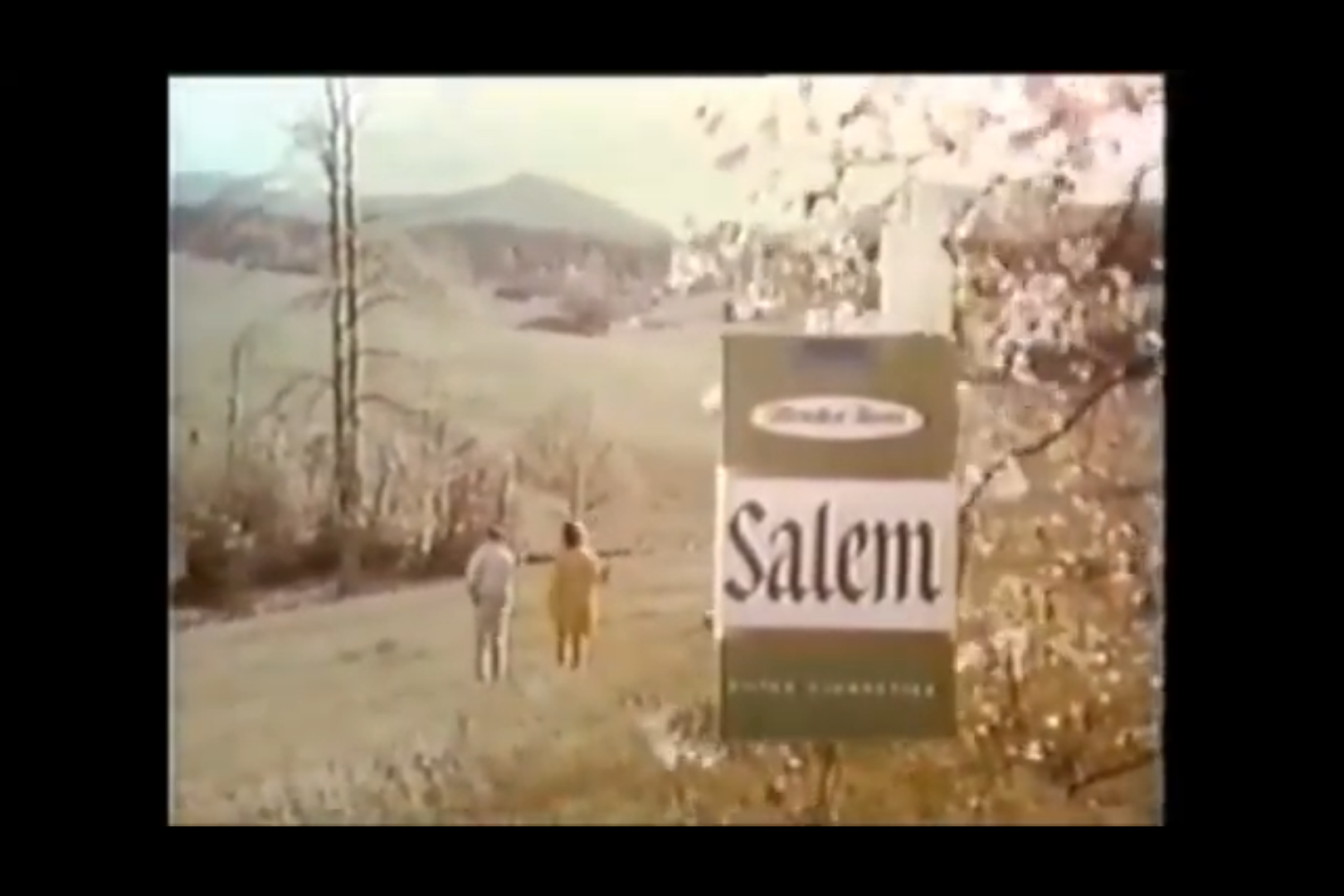
Here’s another forgotten jingle to get stuck in your head: “You can take Salem out of the country, but you can’t take the country out of Salem.”

Salem cigarettes leaned heavily on that fresh, outdoorsy image, using country scenery, easygoing music, and a catchy slogan to make menthol smoking feel cool, clean, and almost wholesome. That was the magic of old cigarette advertising. They weren’t just selling cigarettes, they were selling a mood.

And like so many jingles from back then, once you remember it, it sticks. These commercials were polished little earworms, made to stay with you long after the TV was turned off.

That all changed when cigarette commercials were banned from radio and television starting January 2, 1971, after President Richard Nixon signed the Public Health Cigarette Smoking Act. The ads disappeared, but some of those jingles never really left our heads.Here’s another forgotten jingle to get stuck in your head: “You can take Salem out of the country, but you can’t take the country out of Salem.”

Salem cigarettes leaned heavily on that fresh, outdoorsy image, using country scenery, easygoing music, and a catchy slogan to make menthol smoking feel cool, clean, and almost wholesome. That was the magic of old cigarette advertising. They weren’t just selling cigarettes, they were selling a mood.

And like so many jingles from back then, once you remember it, it sticks. These commercials were polished little earworms, made to stay with you long after the TV was turned off.

That all changed when cigarette commercials were banned from radio and television starting January 2, 1971, after President Richard Nixon signed the Public Health Cigarette Smoking Act. The ads disappeared, but some of those jingles never really left our heads.

How We Got Cat Videos Before The Internet

https://www.theretrosite.com/wp-content/uploads/2026/05/0cat.mp4

Before the internet gave us endless cat videos, we had to take them wherever we could get them, and sometimes that meant a Purina Cat Chow commercial. This old ad feels almost like the Joe Weider offers in the back of comic books, where you were always being promised something special if you paid attention, mailed away, or bought the product.

So Easy… It Became a TV Show? The GEICO Cavemen Story

https://www.theretrosite.com/wp-content/uploads/2026/04/Geico-.mp4

Keeping with the caveman topic, here is one of those ideas that probably sounded better in a boardroom than it played out on TV…

Back in the mid-2000s, GEICO struck gold with their caveman commercials. The whole joke was simple: “So easy, a caveman could do it.” But instead of cavemen being dumb, they were actually smart, modern, and completely fed up with being the punchline. That dry, almost uncomfortable humor is what made those ads stick. You didn’t laugh at them, you kind of laughed at how relatable their annoyance was.

And like a lot of popular ad campaigns, it didn’t take long before someone thought, “Let’s turn this into a show.”

So in 2007, Cavemen hit primetime on ABC. The idea was to expand the joke into a full sitcom—cavemen living in modern society, dealing with jobs, dating, and social issues, all while navigating the stigma of that famous slogan.

The problem was, what worked in quick 30-second bursts didn’t really translate into full episodes. The commercials were funny because they were short, subtle, and a little awkward. Stretch that out to 20+ minutes, and suddenly the joke starts to wear thin.

The show also leaned more into the “social commentary” angle—basically treating the cavemen like a misunderstood group facing prejudice. Interesting idea, but it felt heavier than what people signed up for when they remembered those ads.

End result? The show didn’t last. It was canceled after just one season.

But here’s the funny part—while the TV show faded pretty quickly, the original caveman commercials are still remembered today. They’re one of those rare ads where people instantly know exactly what you’re talking about.

So yeah, a simple insurance slogan turned into a cultural moment… and then into a TV experiment that didn’t quite survive evolution.

Exit mobile version