Speed Racer: Our First Taste of Anime Before We Knew the Word

https://www.theretrosite.com/wp-content/uploads/2026/05/speedPost.mp4

Speed Racer was one of those cartoons that felt different the second it came on. The theme song hit, the Mach 5 took off, and suddenly we were watching cliffs, crashes, secret buttons, masked racers, gangsters, and more danger than most Saturday morning cartoons dared to show.

The show began in Japan as Mach GoGoGo in 1967 before becoming Speed Racer for American audiences. Most of us didn’t know we were watching anime back then. We just knew it didn’t feel like Bugs Bunny, Scooby-Doo, or the usual superhero cartoons.

Compared to American cartoons of the time, Speed Racer was faster, stranger, and more dramatic. There were revenge plots, family secrets, real danger, and Racer X lurking around like something out of a spy movie. The animation could be limited, but the style made up for it with speed lines, dramatic close-ups, wild crashes, and that nonstop rapid-fire dialogue.

And of course, there was the Mach 5. What kid didn’t want a car with buttons that could jump, saw through trees, go underwater, and somehow survive every impossible race?

Looking back, Speed Racer was a lot of kids’ first introduction to anime, even if we didn’t have that word yet. It was loud, weird, exciting, and unforgettable.

When Aftershave Came With Self-Defense Instructions

https://www.theretrosite.com/wp-content/uploads/2026/05/0hai.mp4

Hai Karate was one of those aftershaves that sold the joke as much as the scent.

It launched in 1967 and the whole idea was that the stuff made a man so irresistible that women would practically attack him. That is why the package and commercials leaned into the gag that every man needed self-defense instructions after putting it on. The famous warning was: “Be careful how you use it.”

The commercials were pure 1960s and early 1970s male fantasy advertising. A regular guy splashes on Hai Karate, and suddenly a woman goes wild for him. He has to use goofy karate moves to fend her off. It was played for broad slapstick laughs, with the martial arts craze and the “irresistible aftershave” idea mashed together into one very memorable campaign.

The campaign came from the ad firm McCaffrey & McCall, and one of the people behind the marketing plan was George Newall, who later became famous as a co-creator and songwriter for Schoolhouse Rock!

Looking back, it feels like the granddaddy of those later body spray ads where one spritz supposedly turns you into a babe magnet. Back then, though, Hai Karate had the extra gimmick: not only would women chase you, but you might need to defend yourself afterward.

It was silly, sexist, over-the-top, and very much of its time. But that is exactly why people remember it. The bottle may have been aftershave, but the real product was the joke.

“Brylcreem, a little dab’ll do ya…”

https://www.theretrosite.com/wp-content/uploads/2026/05/05072.mp4

That line was everywhere. The ads promised you didn’t need much, just a small dab, and suddenly you’d look sharp, smooth, and “debonair.” The jingle was credited to Hanley M. Norins of the Young & Rubicam advertising agency.

Of course, the best part was the promise that “the gals’ll all pursue ya” and love running their fingers through your hair. That was peak old-school advertising: use the product, look handsome, and suddenly romance is chasing you down the street.

By the 1960s, the Beatles and the dry, natural hair look started making heavily slicked hair seem old-fashioned, so Brylcreem had to adjust its pitch. But for anyone who grew up hearing that jingle, “a little dab’ll do ya” is still one of those lines that instantly brings back a whole era of bathroom mirrors, combs, crew cuts, and Dad’s medicine cabinet.

Pop-Tarts were introduced by Kellogg’s in 1964

https://www.theretrosite.com/wp-content/uploads/2026/05/05071.mp4

Pop-Tarts were introduced by Kellogg’s in 1964.

They were first sold as a quick toaster pastry and originally came in four flavors: strawberry, blueberry, brown sugar cinnamon, and apple currant. The frosted versions came a few years later, after Kellogg’s figured out the icing could survive the toaster

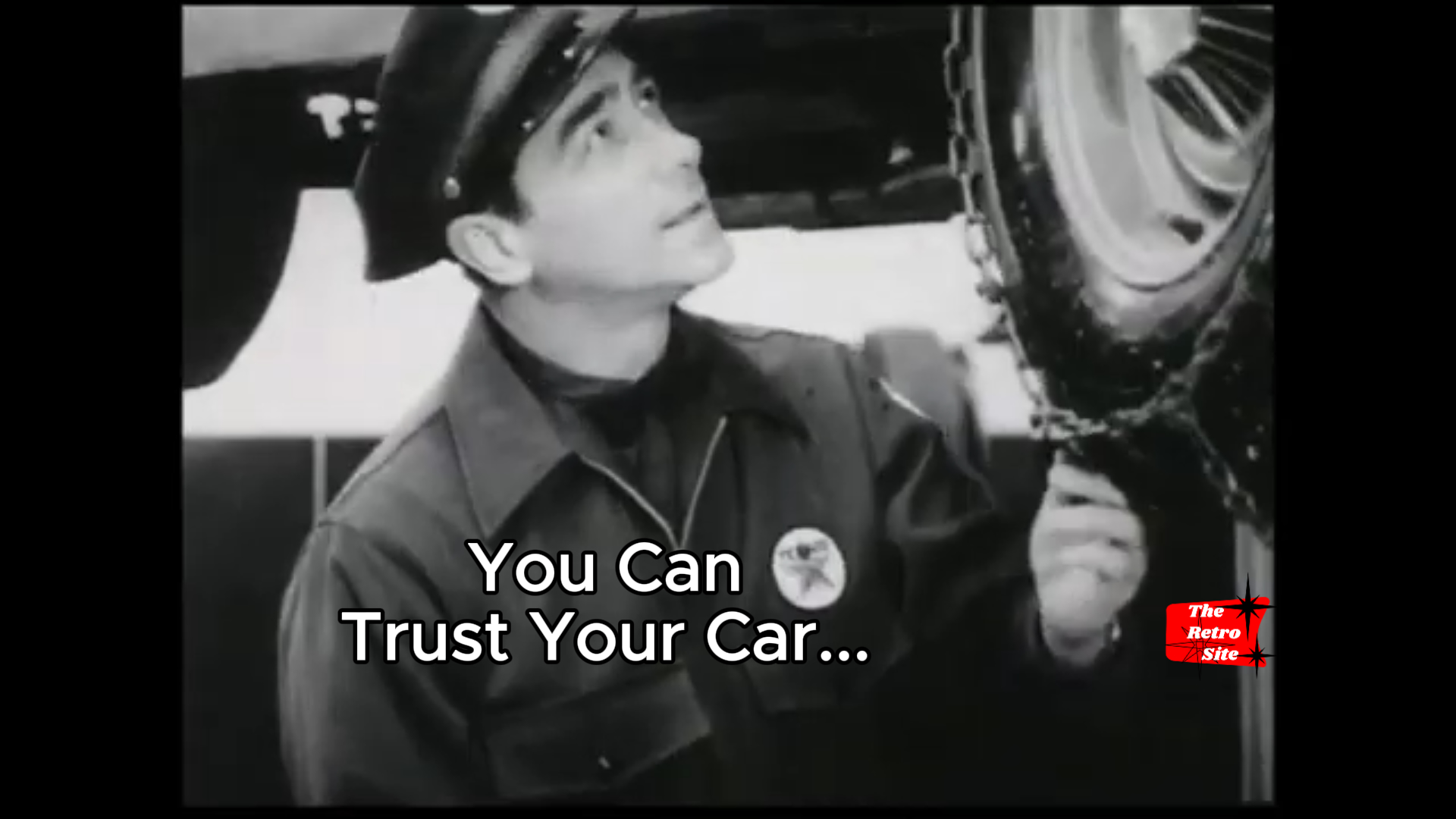
You Can Trust Your Car…can you finish it?

https://www.theretrosite.com/wp-content/uploads/2026/05/0texaco.mp4

You Can Trust Your Car to the Man Who Wears the Star was one of those great old advertising lines that stuck in your head because it did exactly what a slogan was supposed to do: it made the brand feel safe, familiar, and dependable.

Texaco’s “star” was right there in the logo, and the “man who wears the star” was the service station attendant. Back then, gas stations were not just places where you pumped your own gas and left. An attendant might check your oil, clean your windshield, look at your tires, and give the car a quick once-over while you sat behind the wheel. The campaign sold Texaco as more than gasoline. It sold trust.

The slogan became closely tied to Texaco’s image during the full-service gas station era. The message was simple: pull into Texaco, look for the star, and you were in good hands. It fit perfectly with the time, when uniformed attendants and branded service stations were part of the American road trip experience.

The jingle is most commonly credited to Roy Eaton, a pioneering Black advertising composer who worked on major campaigns including Texaco and Chef Boyardee Beefaroni. One profile says Eaton created the Texaco jingle in 1962, and another notes it was recognized by Advertising Age as part of one of the top ad campaigns of the 20th century. As for who sang the original version, that part is less clear. The safest answer is that it was likely performed by commercial session singers over the years, with different versions used in different Texaco spots.

The line worked because it sounded almost like a jingle before you even heard the music. “You can trust your car to the man who wears the star” has that smooth, sing-song rhythm that made it easy to remember. Texaco also used another famous star-themed line, “Star of the American Road,” leaning heavily into the red star logo as a symbol of dependability.

Looking back, it is a reminder of when gas stations felt more personal. The “man who wears the star” was not just selling gas. He represented service, pride, and that old-school promise that somebody actually knew your car and cared whether you made it down the road.

Exit mobile version