From Scary To Racist

https://www.theretrosite.com/wp-content/uploads/2026/05/0rice.mp4

Post Rice Krinkles is one of those cereals that makes you wonder what exactly was going on in the advertising room.

It started as Sugar Rice Krinkles, a sweet puffed rice cereal, and Post first sold it with circus-style ads and Krinkles the Clown. Back then, clowns were still considered fun, friendly, and perfect for kids. Looking at him now, though, he has that unsettling “why is this staring at me during breakfast?” energy.

Then around 1960, Post replaced the clown with So-Hi, a small Asian boy character used to sell a rice cereal. The name was a play on “so high,” because he was short, but the character leaned hard into Asian stereotypes that would never fly today. It was the kind of lazy advertising shortcut that was common at the time: rice cereal, so they reached for an Asian caricature.

And no, this did not evolve into Snap, Crackle, and Pop. That was Kellogg’s Rice Krispies, a different cereal from a different company. Post Rice Krinkles was more connected to Post’s later rice cereal ideas, especially the road that eventually led toward Pebbles.

So it basically went from creepy clown to racial stereotype, all in the name of making cereal memorable to kids. And that’s the part that sticks out today. These mascots were meant to be cute and catchy, but looking back, they show how different, and often tone-deaf, advertising could be.

Rice Krinkles eventually faded away by the end of the 1960s, but the mascots are still remembered because they’re so bizarre. One scared kids by accident. The other should have made adults know better.

Stop the Pigeon!

https://www.theretrosite.com/wp-content/uploads/2026/05/Dasterd-to-post.mp4

Dastardly and Muttley in Their Flying Machines was one of those cartoons built around one simple idea that somehow worked every time: stop the pigeon.

The show came from Hanna-Barbera in 1969 and brought back Dick Dastardly and Muttley from Wacky Races. This time, they were part of the Vulture Squadron, flying ridiculous contraptions and trying every week to catch Yankee Doodle Pigeon.

Of course, they never did.

The real star was Muttley. That wheezy little laugh was funnier than half the script, and his constant demand for medals made him even better. Dastardly would scheme, Muttley would snicker, the plane would fall apart, and the pigeon would fly away.

Looking back, most of us probably weren’t rooting for the pigeon. We were watching for Dastardly to lose his temper, Muttley to laugh, and that theme song to get stuck in our heads all over again.

Stop the pigeon, stop the pigeon!

Speed Racer: Our First Taste of Anime Before We Knew the Word

https://www.theretrosite.com/wp-content/uploads/2026/05/speedPost.mp4

Speed Racer was one of those cartoons that felt different the second it came on. The theme song hit, the Mach 5 took off, and suddenly we were watching cliffs, crashes, secret buttons, masked racers, gangsters, and more danger than most Saturday morning cartoons dared to show.

The show began in Japan as Mach GoGoGo in 1967 before becoming Speed Racer for American audiences. Most of us didn’t know we were watching anime back then. We just knew it didn’t feel like Bugs Bunny, Scooby-Doo, or the usual superhero cartoons.

Compared to American cartoons of the time, Speed Racer was faster, stranger, and more dramatic. There were revenge plots, family secrets, real danger, and Racer X lurking around like something out of a spy movie. The animation could be limited, but the style made up for it with speed lines, dramatic close-ups, wild crashes, and that nonstop rapid-fire dialogue.

And of course, there was the Mach 5. What kid didn’t want a car with buttons that could jump, saw through trees, go underwater, and somehow survive every impossible race?

Looking back, Speed Racer was a lot of kids’ first introduction to anime, even if we didn’t have that word yet. It was loud, weird, exciting, and unforgettable.

Pop-Tarts were introduced by Kellogg’s in 1964

https://www.theretrosite.com/wp-content/uploads/2026/05/05071.mp4

Pop-Tarts were introduced by Kellogg’s in 1964.

They were first sold as a quick toaster pastry and originally came in four flavors: strawberry, blueberry, brown sugar cinnamon, and apple currant. The frosted versions came a few years later, after Kellogg’s figured out the icing could survive the toaster

Mystery Date

https://www.theretrosite.com/wp-content/uploads/2026/04/0mystery.mp4

If you grew up in the 60s or caught reruns later on, that first Mystery Date commercial was one of those you didn’t forget. It came out right around 1965, and the whole hook was simple but genius—pick your outfit, open the door… and find out if you got the “dreamy date” or the dreaded “dud.”

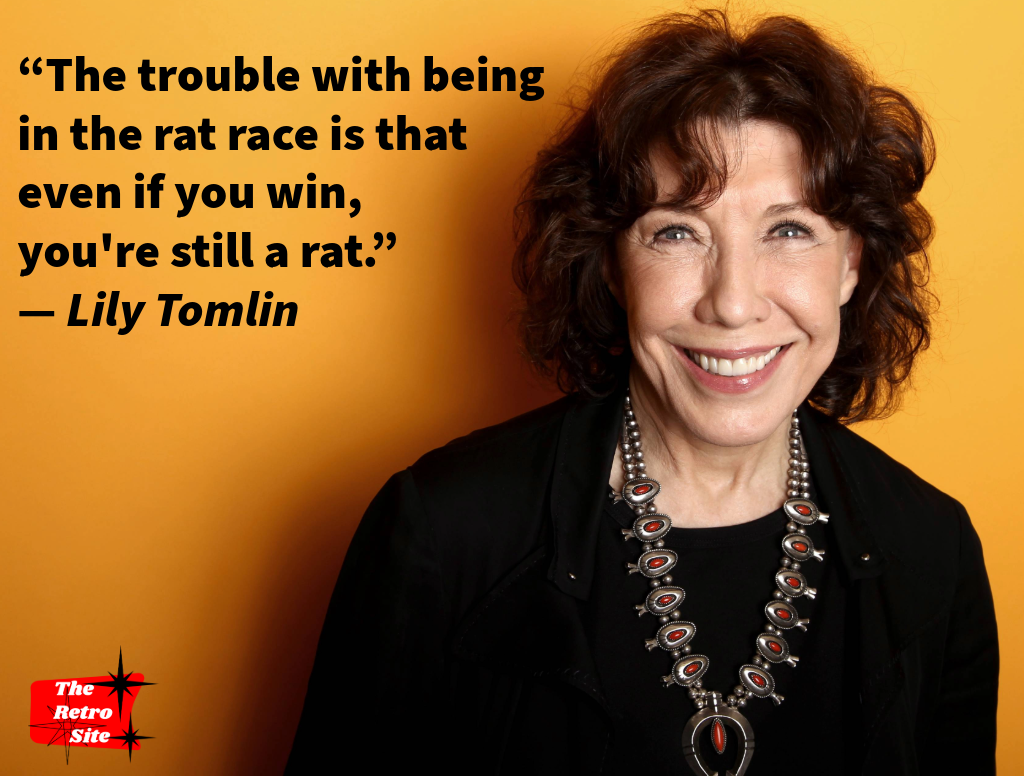
Lily Tomlin, the Rat Race, and the Comedy That Questioned It All

Lily Tomlin rose to national fame on Rowan & Martin’s Laugh-In, where her unforgettable characters—especially Ernestine, the sharp-tongued telephone operator—took aim at corporate culture and the absurdities of everyday life. With biting wit and a playful delivery, Tomlin made audiences laugh while quietly exposing the frustrations of modern systems and institutions.

Her famous quote, “The trouble with being in the rat race is that even if you win, you’re still a rat,” perfectly reflects the cultural mood of that era. During the late 1960s and early 1970s, comedians were increasingly challenging traditional ideas about success, conformity, and the so-called American Dream. Tomlin stood out by blending humor with insight, offering commentary that was both relatable and thought-provoking.

While there is no widely confirmed record of exactly when or where she first delivered the line, it is believed to have circulated during her early stand-up routines and television appearances in that period. Like much of her work, the quote captures a broader truth rather than a single moment—one that continues to resonate in conversations about ambition, identity, and what it really means to “win.”

Exit mobile version