online community focused on sharing and reminiscing about video, audio, and images that stir our memories of the past – old television, theme songs, commercials, print advertisements, the sights and sounds you remember
They were first sold as a quick toaster pastry and originally came in four flavors: strawberry, blueberry, brown sugar cinnamon, and apple currant. The frosted versions came a few years later, after Kellogg’s figured out the icing could survive the toaster
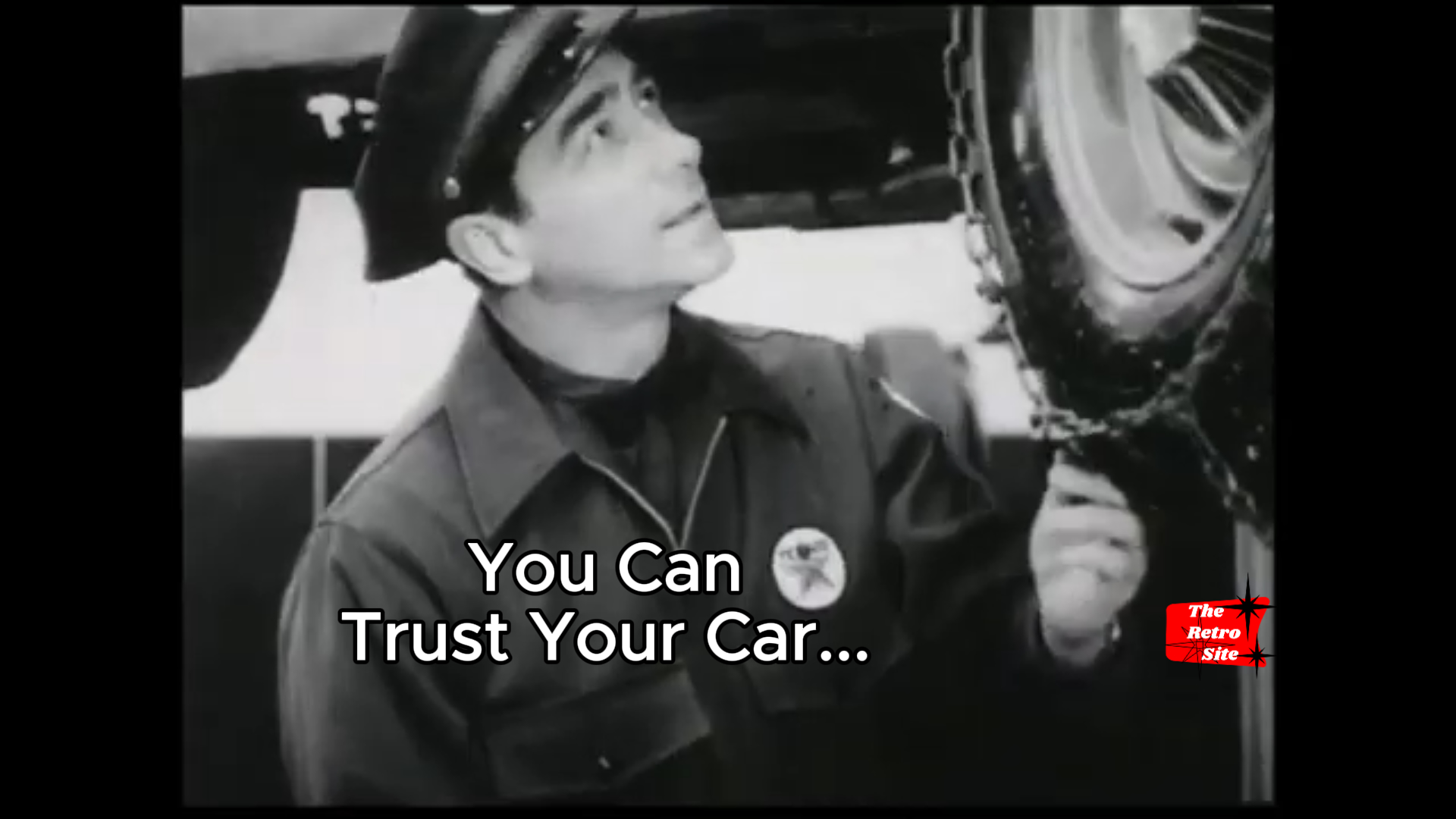
You Can Trust Your Car to the Man Who Wears the Star was one of those great old advertising lines that stuck in your head because it did exactly what a slogan was supposed to do: it made the brand feel safe, familiar, and dependable.
Texaco’s “star” was right there in the logo, and the “man who wears the star” was the service station attendant. Back then, gas stations were not just places where you pumped your own gas and left. An attendant might check your oil, clean your windshield, look at your tires, and give the car a quick once-over while you sat behind the wheel. The campaign sold Texaco as more than gasoline. It sold trust.
The slogan became closely tied to Texaco’s image during the full-service gas station era. The message was simple: pull into Texaco, look for the star, and you were in good hands. It fit perfectly with the time, when uniformed attendants and branded service stations were part of the American road trip experience.
The jingle is most commonly credited to Roy Eaton, a pioneering Black advertising composer who worked on major campaigns including Texaco and Chef Boyardee Beefaroni. One profile says Eaton created the Texaco jingle in 1962, and another notes it was recognized by Advertising Age as part of one of the top ad campaigns of the 20th century. As for who sang the original version, that part is less clear. The safest answer is that it was likely performed by commercial session singers over the years, with different versions used in different Texaco spots.
The line worked because it sounded almost like a jingle before you even heard the music. “You can trust your car to the man who wears the star” has that smooth, sing-song rhythm that made it easy to remember. Texaco also used another famous star-themed line, “Star of the American Road,” leaning heavily into the red star logo as a symbol of dependability.
Looking back, it is a reminder of when gas stations felt more personal. The “man who wears the star” was not just selling gas. He represented service, pride, and that old-school promise that somebody actually knew your car and cared whether you made it down the road.
Jesse White was the original “Ol’ Lonely,” the bored Maytag repairman with nothing to do because Maytag appliances were supposed to be so dependable. He began appearing in the role in 1967 and became one of the most recognizable commercial faces on TV. His whole act was simple but brilliant: a repairman sitting around, desperate for a service call that never came. White played the role until 1988, and for a lot of us, he was the Maytag man.
Gordon Jump took over the role in 1989. He was already familiar to TV viewers as Arthur “Big Guy” Carlson on WKRP in Cincinnati, which made him a natural fit. Jump had that warm, slightly befuddled, friendly presence that made the character feel like an old neighbor instead of just a salesman. He appeared as the Maytag repairman until retiring in 2003.
Mahna Mahna is one of those nonsense songs that somehow parked itself in everyone’s brain forever.
Most of us remember it from The Muppets, with the shaggy little “Mahna Mahna” character singing the goofy lead while the two pink creatures, the Snowths, answer back. But the song actually started in a very different place. It was written by Italian composer Piero Umiliani for the 1968 Italian film Svezia, inferno e paradiso, released in English as Sweden: Heaven and Hell.
Then Jim Henson and company turned it into something completely different. The Muppets performed it on Sesame Street in 1969, then on The Ed Sullivan Show, and later it became one of the memorable sketches from the first episode of The Muppet Show in 1976.
The funny part is, the lyrics don’t mean anything. That’s the whole charm. It’s just a silly call-and-response tune, but once you hear it, good luck getting it out of your head. Like a lot of the best Muppet moments, it worked because it was simple, weird, and somehow hilarious without needing a real punchline.
The Farrah doll was part of full-blown Farrah Fawcett mania in the late 1970s, when her feathered hair, red swimsuit poster, and Charlie’s Angels fame were everywhere.
Mego released a Farrah Fawcett doll in 1977, right when she was one of the biggest TV and poster stars in America. The doll was about 12 inches tall, fully poseable, and came with Farrah’s famous long blonde hair. Some versions had outfits like a red top, denim shorts, white boots, and even accessories like a skateboard. The Smithsonian has a Farrah Fawcett doll with skateboards in its collection, describing it as a blonde doll dressed in a red shirt, blue denim shorts, and knee-high white boots.
There was also a Farrah’s Glamour Center toy made in 1977, showing how much her look was being sold as part of the fantasy. It wasn’t just “here’s a celebrity doll.” It was “here’s the hair, the style, the smile, and the whole Farrah look.”
What’s funny now is that the doll didn’t always capture Farrah perfectly. Like a lot of celebrity dolls from that era, it was close enough for kids and collectors to know who it was supposed to be, but not exactly museum-quality likeness. Still, that almost makes it more charming. Back then, if you had the Farrah doll, the poster, and maybe the haircut, you were officially living in 1977.
Farrah’s actual red swimsuit and related items were later donated to the Smithsonian, along with a 1977 Farrah Fawcett doll, which tells you how much that image and merchandising became part of pop culture history
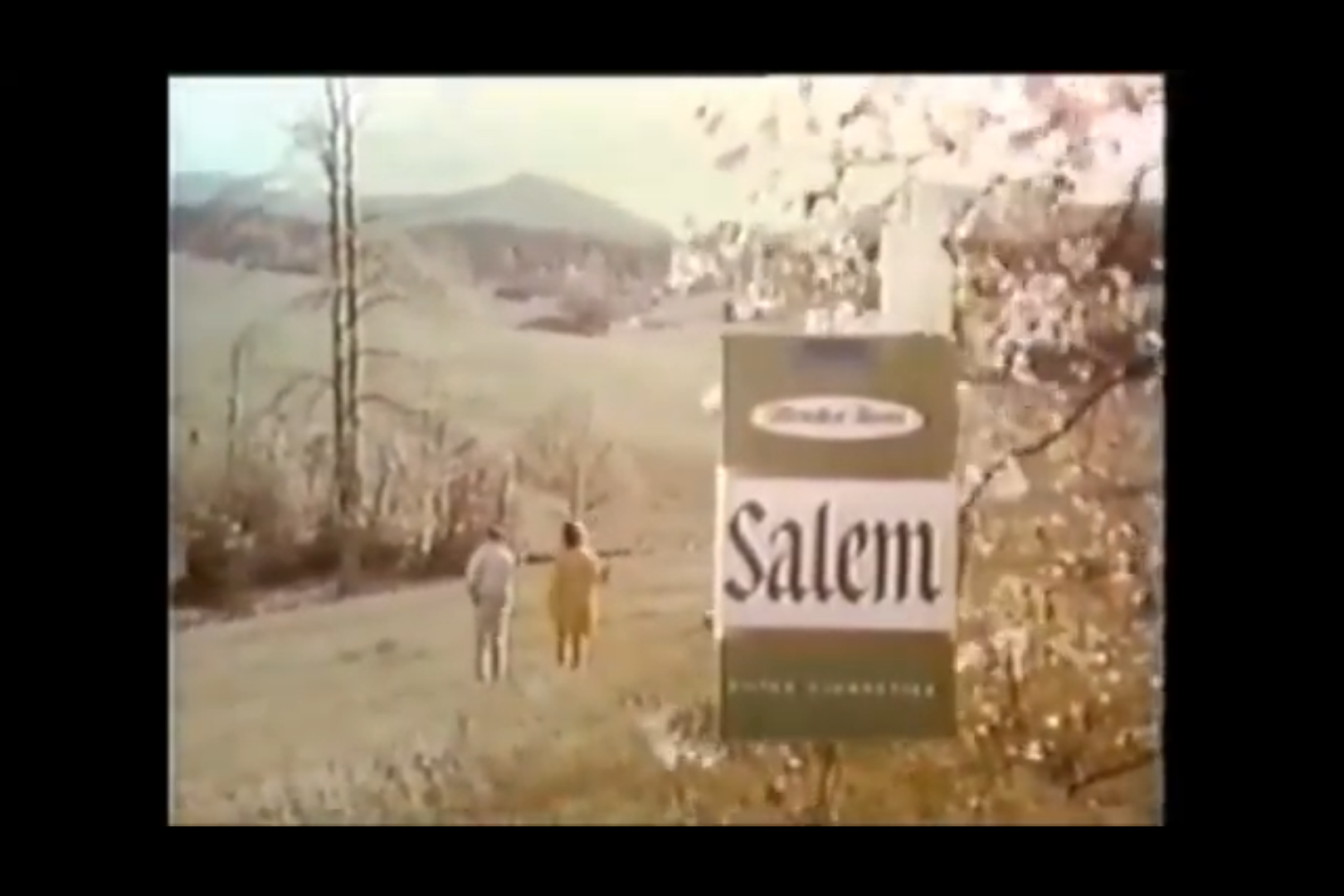
Here’s another forgotten jingle to get stuck in your head: “You can take Salem out of the country, but you can’t take the country out of Salem.”
Salem cigarettes leaned heavily on that fresh, outdoorsy image, using country scenery, easygoing music, and a catchy slogan to make menthol smoking feel cool, clean, and almost wholesome. That was the magic of old cigarette advertising. They weren’t just selling cigarettes, they were selling a mood.
And like so many jingles from back then, once you remember it, it sticks. These commercials were polished little earworms, made to stay with you long after the TV was turned off.
That all changed when cigarette commercials were banned from radio and television starting January 2, 1971, after President Richard Nixon signed the Public Health Cigarette Smoking Act. The ads disappeared, but some of those jingles never really left our heads.Here’s another forgotten jingle to get stuck in your head: “You can take Salem out of the country, but you can’t take the country out of Salem.”
Salem cigarettes leaned heavily on that fresh, outdoorsy image, using country scenery, easygoing music, and a catchy slogan to make menthol smoking feel cool, clean, and almost wholesome. That was the magic of old cigarette advertising. They weren’t just selling cigarettes, they were selling a mood.
And like so many jingles from back then, once you remember it, it sticks. These commercials were polished little earworms, made to stay with you long after the TV was turned off.
That all changed when cigarette commercials were banned from radio and television starting January 2, 1971, after President Richard Nixon signed the Public Health Cigarette Smoking Act. The ads disappeared, but some of those jingles never really left our heads.
The New Zoo Revue premiered on Monday, January 24, 1972, and ran in first-run syndication until 1977, with reruns keeping it around for years after that.
It was one of those bright, colorful 1970s kids’ shows that seemed to be on when we were home from school or planted in front of the TV in the morning. Doug and Emmy Jo led the fun with Freddie the Frog, Henrietta Hippo, and Charlie the Owl, teaching little lessons through songs, jokes, and make-believe. Like a lot of shows from that era, it stuck in the memories of kids who grew up with that catchy theme song and those larger-than-life animal characters.
Super Chicken was one of those cartoons that felt like it was made for kids, but the jokes were flying right over our little heads and landing with the grown-ups. It was part of George of the Jungle, which aired on ABC starting in 1967, along with the other segments Tom Slick and Super Chicken. It came from Jay Ward Productions, the same folks behind Rocky and Bullwinkle, so you knew it was going to be loaded with silly names, smart-aleck humor, and jokes that moved faster than most of us realized at the time.
Super Chicken’s real name was Henry Cabot Henhouse III, because of course it was. He was a wealthy chicken superhero who would head off to fight crime with his lion sidekick Fred. And poor Fred always seemed to take the worst of it, which led to that famous line: “You knew the job was dangerous when you took it, Fred!” That was the kind of cartoon writing I appreciate more now than I probably did back then.
The whole thing only had 17 original episodes as part of George of the Jungle, but like so many Saturday morning cartoons, it lived a lot longer in reruns and in our memories. Between the theme song, the goofy superhero setup, and that classic Jay Ward humor, Super Chicken was one of those quick little cartoons that didn’t need much time to leave a mark.
Who remembers Super Chicken? And did you watch it for him, George of the Jungle, or Tom Slick?
Glen Campbell’s Country Special from January 11, 1972 was one of those old-school TV nights where the whole living room got a free country concert. Glen wasn’t alone either. He had Johnny Cash, June Carter, Merle Haggard, Buck Owens, Freddie Hart, Jerry Reed, Minnie Pearl, and Mel Tillis all showing up like it was nothing. Today, that would be a major streaming event. Back then, it was just Tuesday night television.
That’s what made variety shows so great. You didn’t have to buy a ticket, search YouTube, or subscribe to anything. You just turned on CBS and there was Glen Campbell, smooth as ever, picking and singing with some of the biggest country stars of the era. Do you remember watching Glen’s show, or were your parents the ones who had control of the TV when country music came on?
I remember my mom coming home from the grocery store, excited that they had just started selling pantyhose right there in the supermarket. Now, a lot of boys my age could have cared less, but even as a kid, I immediately saw the genius in this.
Before L’eggs, pantyhose usually meant a trip to a department store or some other clothing section. Then suddenly they were sitting there in the grocery store, packed in those unforgettable plastic eggs, right where moms were already shopping for milk, bread, coffee, and cereal. It was one of those simple ideas that made you wonder, “Why didn’t somebody do this sooner?”
And the display was just as smart as the product. Those big spinning racks of egg-shaped containers practically begged you to look at them. Even if you didn’t know much about pantyhose, you remembered the packaging. That was the genius of L’eggs. They didn’t just sell pantyhose, they turned it into an everyday grocery-store item.
Of course, once the pantyhose were out, those plastic eggs often got a second life around the house. Storage, toys, crafts, Easter decorations, you name it. Back then, nothing that useful-looking got thrown away right away.