online community focused on sharing and reminiscing about video, audio, and images that stir our memories of the past – old television, theme songs, commercials, print advertisements, the sights and sounds you remember
They were first sold as a quick toaster pastry and originally came in four flavors: strawberry, blueberry, brown sugar cinnamon, and apple currant. The frosted versions came a few years later, after Kellogg’s figured out the icing could survive the toaster
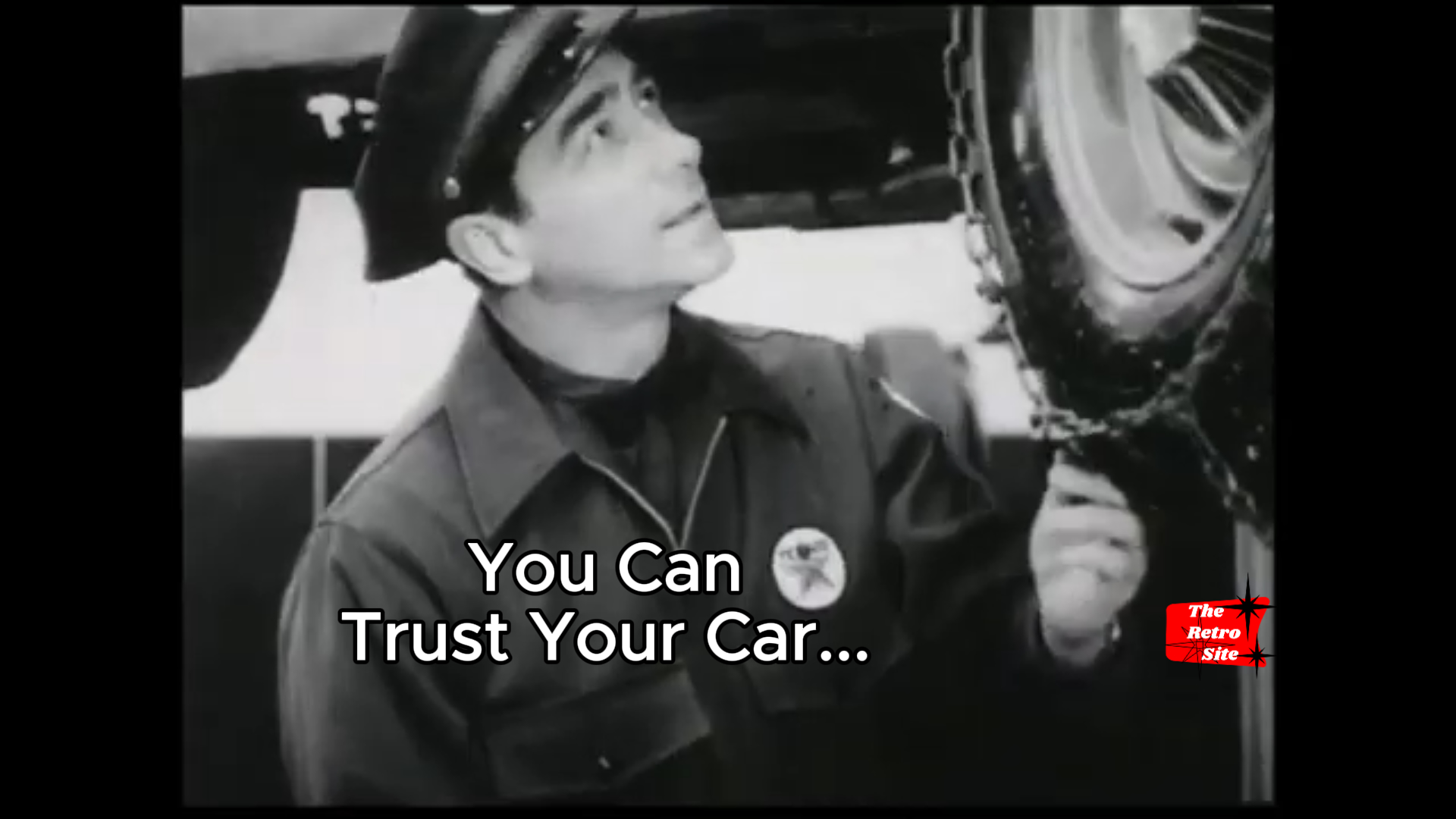
You Can Trust Your Car to the Man Who Wears the Star was one of those great old advertising lines that stuck in your head because it did exactly what a slogan was supposed to do: it made the brand feel safe, familiar, and dependable.
Texaco’s “star” was right there in the logo, and the “man who wears the star” was the service station attendant. Back then, gas stations were not just places where you pumped your own gas and left. An attendant might check your oil, clean your windshield, look at your tires, and give the car a quick once-over while you sat behind the wheel. The campaign sold Texaco as more than gasoline. It sold trust.
The slogan became closely tied to Texaco’s image during the full-service gas station era. The message was simple: pull into Texaco, look for the star, and you were in good hands. It fit perfectly with the time, when uniformed attendants and branded service stations were part of the American road trip experience.
The jingle is most commonly credited to Roy Eaton, a pioneering Black advertising composer who worked on major campaigns including Texaco and Chef Boyardee Beefaroni. One profile says Eaton created the Texaco jingle in 1962, and another notes it was recognized by Advertising Age as part of one of the top ad campaigns of the 20th century. As for who sang the original version, that part is less clear. The safest answer is that it was likely performed by commercial session singers over the years, with different versions used in different Texaco spots.
The line worked because it sounded almost like a jingle before you even heard the music. “You can trust your car to the man who wears the star” has that smooth, sing-song rhythm that made it easy to remember. Texaco also used another famous star-themed line, “Star of the American Road,” leaning heavily into the red star logo as a symbol of dependability.
Looking back, it is a reminder of when gas stations felt more personal. The “man who wears the star” was not just selling gas. He represented service, pride, and that old-school promise that somebody actually knew your car and cared whether you made it down the road.
I remember my mom coming home from the grocery store, excited that they had just started selling pantyhose right there in the supermarket. Now, a lot of boys my age could have cared less, but even as a kid, I immediately saw the genius in this.
Before L’eggs, pantyhose usually meant a trip to a department store or some other clothing section. Then suddenly they were sitting there in the grocery store, packed in those unforgettable plastic eggs, right where moms were already shopping for milk, bread, coffee, and cereal. It was one of those simple ideas that made you wonder, “Why didn’t somebody do this sooner?”
And the display was just as smart as the product. Those big spinning racks of egg-shaped containers practically begged you to look at them. Even if you didn’t know much about pantyhose, you remembered the packaging. That was the genius of L’eggs. They didn’t just sell pantyhose, they turned it into an everyday grocery-store item.
Of course, once the pantyhose were out, those plastic eggs often got a second life around the house. Storage, toys, crafts, Easter decorations, you name it. Back then, nothing that useful-looking got thrown away right away.
Tiny Tim took “Tiptoe Through the Tulips” and turned it into one of the most unforgettable TV moments of the late 1960s.
With his ukulele, long hair, nervous smile, and high falsetto voice, he came across like someone from another planet. His big break came on Rowan & Martin’s Laugh-In, and before long he was showing up on shows like The Tonight Show with Johnny Carson.
The public didn’t quite know what to do with him. Some people laughed, some were fascinated, and some thought he was just plain strange. But Tiny Tim was completely sincere. He loved old songs and performed them in a way nobody else could.
And whether you loved him or thought he was weird, once you heard “Tiptoe Through the Tulips,” you never forgot it.
I’ll never forget when my mom pointed out during an episode of Hollywood Squares that Wally Cox was the voice of Underdog. Oh, the world was so complicated back then, so many thanks to our moms who had the patience and love to guide us through the important stuff, like cartoon trivia.
Underdog debuted in 1964 and gave us Shoeshine Boy, the mild-mannered little dog who became a rhyming superhero whenever trouble showed up. With Sweet Polly Purebred usually in danger and villains like Simon Bar Sinister causing trouble, Underdog would come flying in with that famous line that still sticks in our heads all these years later.
Oh, the magical opening for The Wonderful World of Disney and the wonderful world of color! This was the time when we got our first color TV, and we would sing this whenever a TV show was in color. Growing up, we didn’t have much money on Dad’s salary as a Marine, but we had one of the first color TVs on the market. What a hero he was bringing this big 21-inch console into our home! Between our toys and TV, we were all set.
We always looked forward to Sundays with The Wonderful World Of Disney to wrap up our weekend. Then came that sad little realization: the show was ending, bedtime was coming, and school was waiting for us the next morning.
The Disney anthology show first began on ABC in 1954 as Walt Disney’s Disneyland. It later became Walt Disney Presents, then moved to NBC in 1961 as Walt Disney’s Wonderful World of Color, which was a perfect title for the era when color TV still felt like magic. By 1969, it became The Wonderful World of Disney, the name so many of us remember. Over the years it moved between ABC, NBC, and CBS, with different titles including The Disney Sunday Movie and The Magical World of Disney. The series has continued in different forms and special presentations for decades, making it one of the longest-running prime-time programs in American television history.
For a lot of us, it wasn’t just a TV show. It was part of the Sunday night routine, that last bit of weekend magic before Monday morning came knocking.
My Mother The Car is another show that kept parents explaining what is fake, even though we were seeing it with our own eyes! We had a talking horse with Mister Ed, a witch with Bewitched, a genie with I Dream of Jeannie, a Martian with My Favorite Martian, and then somehow NBC said, “What about your mother… but as a car?”
The show aired on NBC from 1965 to 1966 and only lasted one season with 30 episodes. It starred Jerry Van Dyke as Dave Crabtree, a man who buys an old 1928 Porter automobile and discovers that his late mother has been reincarnated as the car. She talks to him through the radio, because apparently in the 1960s even the afterlife had AM reception.
The voice of the mother was Ann Sothern, which gave the whole thing a little more class than the idea probably deserved. But that was 1960s television for you. If a show had a wild enough gimmick, somebody was willing to put it on the air and see if families would go along with it.
Of course, My Mother The Car became famous, but not exactly in the way anyone at NBC probably hoped. For years it was used as the punchline for bad TV, often showing up whenever people talked about the worst sitcoms ever made. But looking back now, there is something wonderfully ridiculous about it. It was silly, strange, and very 1965. You almost have to admire a show that went all-in on a talking mother-car and expected America to just ride along.
Did you ever watch My Mother The Car, or was this one of those shows you only heard people joke about later?
It amazes me how we hear a sound, song, or even a phrase like “It’s Shake and Bake and I Helped in an adorable southern accent. No real story comes to mind for me. How about you?
I remember wanting Mouse Trap so bad because it looked so cool in the commercial. What kid wouldn’t want their very own Rube Goldberg machine right there on the kitchen table?
Mouse Trap came out in 1963, and the whole attraction wasn’t just the board game itself. It was that crazy contraption you built while playing. The crank, the gears, the marble, the bathtub, the diving man, the cage, and all those little plastic pieces that had to line up just right. On TV, it looked like the greatest thing ever invented.
The neighbor kid had one, we played it, and I was excited to try it for real. It was fun, but I’ll be honest, it wasn’t quite as exciting as I had built it up to be in my head. Maybe it needed that wacky music from the commercial playing in the background! Without the TV magic, it was still a neat game, but the commercial may have sold it better than the actual game.
Still, you have to give Mouse Trap credit. Every kid who saw that commercial wanted to see that trap go off. Whether it worked perfectly or needed a little help, it was one of those games that made you say, “I want that!”