The Rat Patrol

The Rat Patrol was another one of those shows Dad loved to watch, and to a kid, it sure looked promising. Jeeps tearing across the desert, guns mounted in the back, bombs going off, aircraft overhead — it had all the ingredients that should have grabbed a young viewer right away.

But at that age, the dialogue went right over my head. I was there for the action, not the strategy. The show followed a small Allied commando unit during World War II, racing through the North African desert and taking on German forces in fast-moving missions. It was part war show, part adventure series, and part Saturday afternoon action movie squeezed into a half-hour.

The Rat Patrol aired from 1966 to 1968 and starred Christopher George as Sgt. Sam Troy. One of the more interesting cast members was Hans Gudegast, who played German Capt. Dietrich. Soap fans would later know him much better as Eric Braeden from The Young and the Restless.

The show was loosely inspired by real desert raiding units like the British SAS and the Long Range Desert Group, but Hollywood gave it a very American spin. That bothered some viewers overseas because the real North African desert raids were largely a British and Commonwealth story, while the TV version put American characters front and center. The BBC reportedly pulled the show after only a few episodes because of complaints about that Americanized version of the war.

Looking back, I can see why Dad liked it. It had action, military drama, and just enough grit to feel grown-up. For us kids, it was the jeeps and explosions that pulled us in, even if we didn’t always understand what they were talking about once the shooting stopped.

Stop the Pigeon!

https://www.theretrosite.com/wp-content/uploads/2026/05/Dasterd-to-post.mp4

Dastardly and Muttley in Their Flying Machines was one of those cartoons built around one simple idea that somehow worked every time: stop the pigeon.

The show came from Hanna-Barbera in 1969 and brought back Dick Dastardly and Muttley from Wacky Races. This time, they were part of the Vulture Squadron, flying ridiculous contraptions and trying every week to catch Yankee Doodle Pigeon.

Of course, they never did.

The real star was Muttley. That wheezy little laugh was funnier than half the script, and his constant demand for medals made him even better. Dastardly would scheme, Muttley would snicker, the plane would fall apart, and the pigeon would fly away.

Looking back, most of us probably weren’t rooting for the pigeon. We were watching for Dastardly to lose his temper, Muttley to laugh, and that theme song to get stuck in our heads all over again.

Stop the pigeon, stop the pigeon!

Speed Racer: Our First Taste of Anime Before We Knew the Word

https://www.theretrosite.com/wp-content/uploads/2026/05/speedPost.mp4

Speed Racer was one of those cartoons that felt different the second it came on. The theme song hit, the Mach 5 took off, and suddenly we were watching cliffs, crashes, secret buttons, masked racers, gangsters, and more danger than most Saturday morning cartoons dared to show.

The show began in Japan as Mach GoGoGo in 1967 before becoming Speed Racer for American audiences. Most of us didn’t know we were watching anime back then. We just knew it didn’t feel like Bugs Bunny, Scooby-Doo, or the usual superhero cartoons.

Compared to American cartoons of the time, Speed Racer was faster, stranger, and more dramatic. There were revenge plots, family secrets, real danger, and Racer X lurking around like something out of a spy movie. The animation could be limited, but the style made up for it with speed lines, dramatic close-ups, wild crashes, and that nonstop rapid-fire dialogue.

And of course, there was the Mach 5. What kid didn’t want a car with buttons that could jump, saw through trees, go underwater, and somehow survive every impossible race?

Looking back, Speed Racer was a lot of kids’ first introduction to anime, even if we didn’t have that word yet. It was loud, weird, exciting, and unforgettable.

“Brylcreem, a little dab’ll do ya…”

https://www.theretrosite.com/wp-content/uploads/2026/05/05072.mp4

That line was everywhere. The ads promised you didn’t need much, just a small dab, and suddenly you’d look sharp, smooth, and “debonair.” The jingle was credited to Hanley M. Norins of the Young & Rubicam advertising agency.

Of course, the best part was the promise that “the gals’ll all pursue ya” and love running their fingers through your hair. That was peak old-school advertising: use the product, look handsome, and suddenly romance is chasing you down the street.

By the 1960s, the Beatles and the dry, natural hair look started making heavily slicked hair seem old-fashioned, so Brylcreem had to adjust its pitch. But for anyone who grew up hearing that jingle, “a little dab’ll do ya” is still one of those lines that instantly brings back a whole era of bathroom mirrors, combs, crew cuts, and Dad’s medicine cabinet.

Pop-Tarts were introduced by Kellogg’s in 1964

https://www.theretrosite.com/wp-content/uploads/2026/05/05071.mp4

Pop-Tarts were introduced by Kellogg’s in 1964.

They were first sold as a quick toaster pastry and originally came in four flavors: strawberry, blueberry, brown sugar cinnamon, and apple currant. The frosted versions came a few years later, after Kellogg’s figured out the icing could survive the toaster

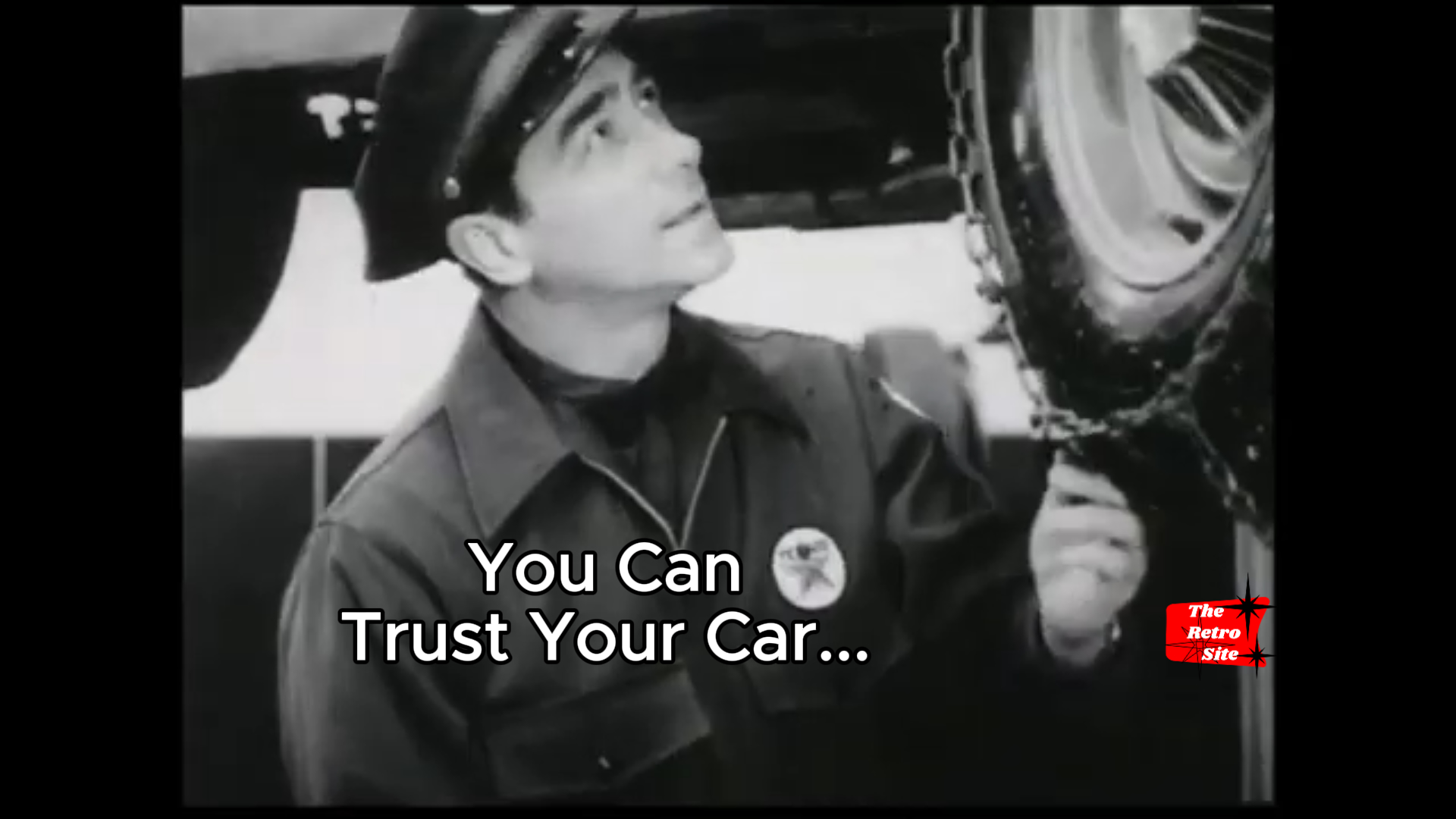
You Can Trust Your Car…can you finish it?

https://www.theretrosite.com/wp-content/uploads/2026/05/0texaco.mp4

You Can Trust Your Car to the Man Who Wears the Star was one of those great old advertising lines that stuck in your head because it did exactly what a slogan was supposed to do: it made the brand feel safe, familiar, and dependable.

Texaco’s “star” was right there in the logo, and the “man who wears the star” was the service station attendant. Back then, gas stations were not just places where you pumped your own gas and left. An attendant might check your oil, clean your windshield, look at your tires, and give the car a quick once-over while you sat behind the wheel. The campaign sold Texaco as more than gasoline. It sold trust.

The slogan became closely tied to Texaco’s image during the full-service gas station era. The message was simple: pull into Texaco, look for the star, and you were in good hands. It fit perfectly with the time, when uniformed attendants and branded service stations were part of the American road trip experience.

The jingle is most commonly credited to Roy Eaton, a pioneering Black advertising composer who worked on major campaigns including Texaco and Chef Boyardee Beefaroni. One profile says Eaton created the Texaco jingle in 1962, and another notes it was recognized by Advertising Age as part of one of the top ad campaigns of the 20th century. As for who sang the original version, that part is less clear. The safest answer is that it was likely performed by commercial session singers over the years, with different versions used in different Texaco spots.

The line worked because it sounded almost like a jingle before you even heard the music. “You can trust your car to the man who wears the star” has that smooth, sing-song rhythm that made it easy to remember. Texaco also used another famous star-themed line, “Star of the American Road,” leaning heavily into the red star logo as a symbol of dependability.

Looking back, it is a reminder of when gas stations felt more personal. The “man who wears the star” was not just selling gas. He represented service, pride, and that old-school promise that somebody actually knew your car and cared whether you made it down the road.

It’s Shake and Bake and I Helped!

https://www.theretrosite.com/wp-content/uploads/2026/05/0snb.mp4

It amazes me how we hear a sound, song, or even a phrase like “It’s Shake and Bake and I Helped in an adorable southern accent. No real story comes to mind for me. How about you?

Mouse Trap Game

https://www.theretrosite.com/wp-content/uploads/2026/05/0mouse.mp4

I remember wanting Mouse Trap so bad because it looked so cool in the commercial. What kid wouldn’t want their very own Rube Goldberg machine right there on the kitchen table?

Mouse Trap came out in 1963, and the whole attraction wasn’t just the board game itself. It was that crazy contraption you built while playing. The crank, the gears, the marble, the bathtub, the diving man, the cage, and all those little plastic pieces that had to line up just right. On TV, it looked like the greatest thing ever invented.

The neighbor kid had one, we played it, and I was excited to try it for real. It was fun, but I’ll be honest, it wasn’t quite as exciting as I had built it up to be in my head. Maybe it needed that wacky music from the commercial playing in the background! Without the TV magic, it was still a neat game, but the commercial may have sold it better than the actual game.

Still, you have to give Mouse Trap credit. Every kid who saw that commercial wanted to see that trap go off. Whether it worked perfectly or needed a little help, it was one of those games that made you say, “I want that!”

70’s Canister Set

We had this canister set, but ours was brown, or whatever that official 1970s brown color was called. You know the one, somewhere between chocolate, coffee, and “everything in the kitchen must look like earth tones.”

Seeing something like this is funny because it is just a simple photo, but it brings back a flood of childhood memories. I remember our tea canister stacked on top of the coffee canister, and the other three were all the same size. For some reason, I thought that was pretty cool. Then again, back then, most things seemed pretty cool.

The 1970s kitchen definitely had its own look. Avocado green, harvest gold, burnt orange, and those deep browns seemed to be everywhere, from appliances to countertops to dishes and canister sets like these. Nothing matched today’s idea of “modern,” but somehow it all felt warm, familiar, and homey.

It is amazing how one little thing from the kitchen counter can take you right back. You can almost picture the percolator, the Tupperware, the patterned wallpaper, and someone telling you not to touch anything because company was coming over.

Did your family have a canister set like this, and what color was yours?

Which of these lights did you own back in the day?

Before LED light strips and remotes, we had to do it the old-school way in the 1970s. If you wanted to make your room look cool, you went with black lights, lava lamps, strobe lights, flicker lights, and if you were really lucky, a color organ. This old Spiegel catalog page is a great reminder of just how different mood lighting was back then.

For me, it was number 7, the Listen-Light, also known as a color organ. You plugged it in, played your music, and the lights changed with the sound. Back then, that felt futuristic. Today it seems simple compared to all the LED lighting options out there, but in the 70s this stuff was magic. Which lights did you own?

Exit mobile version